




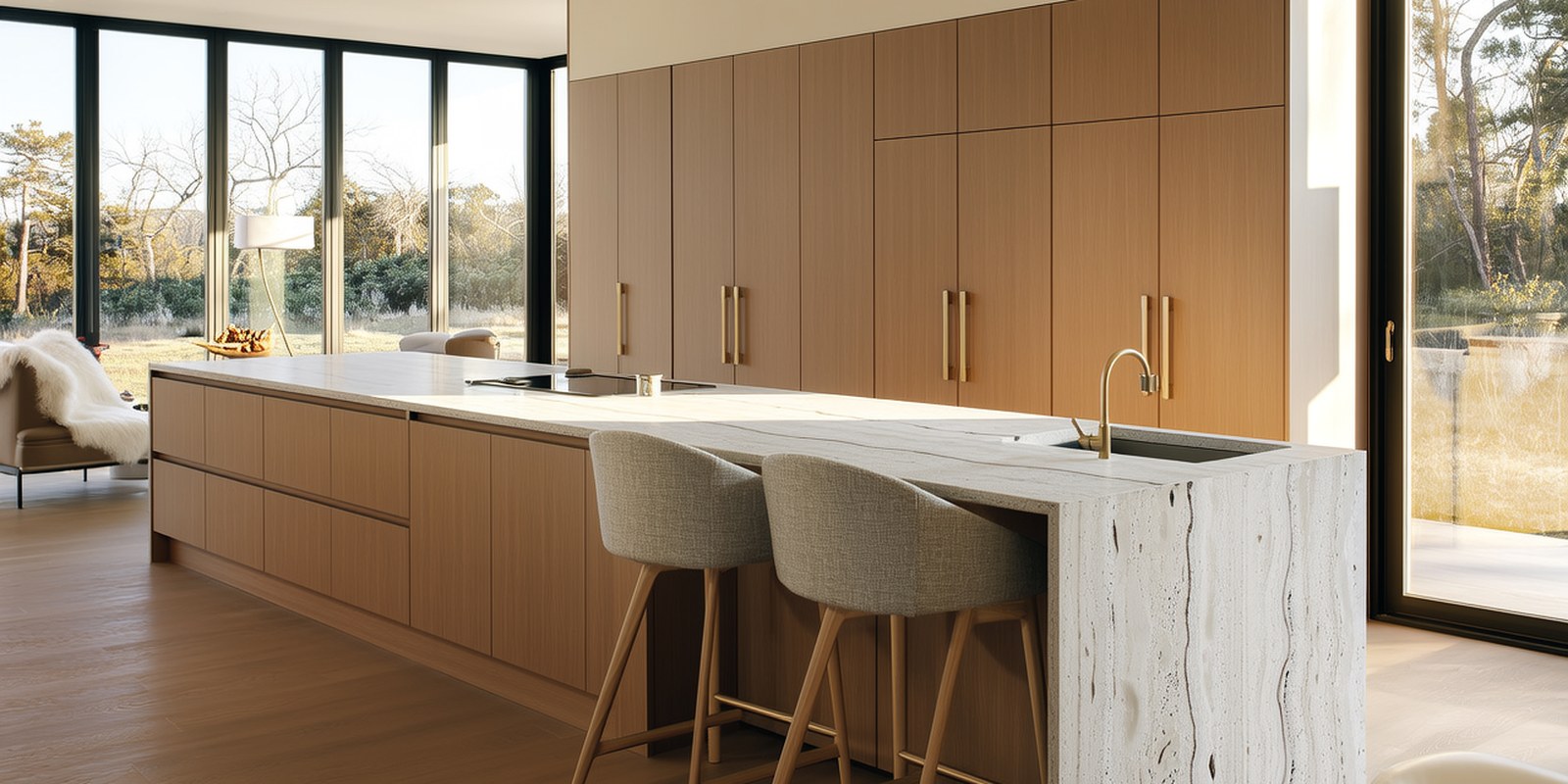
Table of Content
- Compare kitchen countertop materials on the decisions that affect project delivery
- Cost: measure total project cost, not only material unit price
- Fabrication yield: slab size, layout, and breakage decide usable material
- Supply risk: consistency, lead time, and reorder capacity
- Side-by-side view: cost, yield, and supply risk by material
- Choose by buyer role: wholesaler, fabricator, or project contractor
- Put cost, yield, and supply risk into one buying checklist
For U.S. quartz wholesalers, fabricators, and project contractors, comparing kitchen countertop materials is not a homeowner pros-and-cons list. The decision that affects margin and delivery is how each material behaves on three variables: procurement cost, fabrication yield, and supply risk.
This post compares engineered quartz, quartzite, granite, porcelain or ultra-compact surfaces, solid surface, laminate, butcher block, and marble through that B2B lens. Material performance still matters for the end kitchen, but unit price alone does not equal project cost, and no material can be declared cheaper or higher-yielding without a shared calculation method.
Compare kitchen countertop materials on the decisions that affect project delivery
Consumer articles usually rank materials by durability, look, and maintenance. Those pages answer a real search need. They do not tell a wholesale buyer or fab shop how a material choice changes scrap, remakes, schedule slip, or reorder risk.

Use three questions before you shortlist SKUs:
- Cost: What is the landed cost after waste, edge work, cutouts, freight, and job-site delivery—not only the slab or sheet price?
- Yield: How do slab size, pattern layout, seams, and breakage risk change usable square footage on typical kitchen nests?
- Supply risk: Can you repeat color and texture across lots, hit lead times, and match the specified format for multi-unit or phased projects?
Engineered quartz is crushed quartz aggregate bound with polymer resin and pigments. Quartzite is natural stone. The names sound alike, but they are not interchangeable for quoting, nesting, or replenishment planning.
Cost: measure total project cost, not only material unit price
A low square-foot headline can hide the costs that decide whether a bid holds. For wholesale and fabrication buyers, compare materials on the full cost stack.

What belongs in a landed-cost checklist
Ask suppliers and your own shop to itemize:
- Slab or sheet price and minimum order quantities
- Freight, crating, insurance, and port or warehouse handling
- Waste allowance and remnant policy
- Templating, cutting, polishing, and edge upgrades
- Sink, faucet, and cooktop cutouts
- Seam finishing and backsplash pieces
- Delivery to the job, demolition, installation labor, and reconnect work where you own those scopes
- Taxes, duties, and any permit-related charges
Small kitchens often carry a high effective cost when a full slab is required and no remnant fits. Large islands may need jumbo formats, extra support, or fewer seam options. Each of those moves the real number even when the published material rate looks competitive.
How common kitchen countertop materials tend to load cost
Relative positions shift by region, finish, thickness, and labor rates. Treat the notes below as cost-structure cues, not fixed price ranks:
| Material | Cost structure to watch | Typical B2B cost risk |
|---|---|---|
| Engineered quartz | Mid to high slab cost; usually no routine sealing; predictable SKU pricing | Remakes from heat, chemical, or handling damage; waste from poor nesting |
| Quartzite | High stone cost; sealing and careful selection add labor | Slab-to-slab variation can force re-selection mid-project |
| Granite | Mid to high; sealing and natural variation affect shop time | Rematch difficulty on phased or multi-kitchen orders |
| Porcelain / ultra-compact | Mid to high; careful handling and edge work raise fab cost | Breakage and edge repair difficulty can erase a low material quote |
| Solid surface | Mid; seams and shaping are labor-heavy | Heat sensitivity can drive callbacks |
| Laminate | Budget material; lower complexity installs | Limited repair options; weaker for premium project specs |
| Butcher block | Budget to mid; finish upkeep continues after install | Moisture and maintenance claims in commercial kitchens |
| Marble | High; sealing and delicate surface care add process cost | Etching and staining increase warranty and remake exposure |
Do not equate the cheapest material category with the lowest project cost. A lower sheet price with high scrap, fragile edges, or frequent remakes can lose money against a higher-priced slab that nests cleanly and ships consistently.
Fabrication yield: slab size, layout, and breakage decide usable material
Yield is the share of purchased material that becomes installable counters after nesting, pattern matching, cutouts, and breakage. Two materials with similar purchase prices can produce very different usable footage.

What drives fabrication yield
Compare these factors on every kitchen or multi-unit nest:
- Slab or sheet dimensions: Larger formats can reduce seams on islands, but only if the shop can handle weight, transport, and cut paths.
- Pattern direction and bookmatching: Strong veins and bookmatched pairs raise scrap when sinks, cooktops, or L-shapes cut through the best visual area.
- Seam plan: Approved seam locations protect appearance and can improve or reduce yield depending on how pieces share a slab.
- Edge profile: Mitered and waterfall edges consume more material and demand tighter tolerances than eased edges.
- Breakage and chip risk: Brittle edges, fissures in natural stone, or awkward cutouts raise the chance of scrap after the material is already paid for.
- Thickness and support: 2 cm slabs may need laminated edges or extra substrate. That adds material and labor even when the face area looks efficient.
Material notes for yield planning
- Engineered quartz: Controlled patterning can improve nest predictability versus highly variable natural stone. Directional printed or vein designs still need layout approval before cutting.
- Quartzite and granite: Natural movement can force you to discard otherwise usable areas to protect a continuous look across an island or run.
- Porcelain / ultra-compact: Hard surfaces can deliver clean cuts, but edge vulnerability and handling damage can erase yield gains.
- Solid surface: Sheet goods and repairability help on some jobs, but heat-sensitive zones and seam strategy still affect usable output.
- Laminate and butcher block: Often simpler nests for budget work, with different limits on premium edge and commercial durability specs.
- Marble: Soft etching and scratch sensitivity matter more after install, but fissures and careful selection still affect shop yield.
A shared yield method matters more than a ranking claim. Use the same nest rules, waste percentage assumptions, and breakage contingency for every material on a bid. Without that, “higher yield” is marketing language, not a procurement metric.
Supply risk: consistency, lead time, and reorder capacity
Supply risk is the chance that the next lot, the next phase, or the next building will not match what you sold. Wholesalers and contractors absorb that risk when color drifts, lead times slip, or a specified format goes unavailable.

Consistency and batch continuity
Ask how the supplier controls:
- Color and texture matching across production lots
- Full-slab documentation for the lot you will receive, not only a sample chip
- Replacement path if a slab fails inspection or breaks in transit
- Ability to hold or allocate inventory for phased residential or commercial schedules
Natural stone categories—quartzite, granite, and marble—carry inherent slab variation. That can be a design advantage for a single statement kitchen and a liability for multi-unit housing, hospitality floors, or builder packages that need visual continuity. Engineered quartz and many solid-surface or laminate programs are built for SKU consistency, though exact lot control still depends on the manufacturer.
Lead time, format fit, and project matching
Before you lock a material into a project schedule, confirm:
- Current stock versus made-to-order lead time
- Available slab or sheet sizes and thicknesses for the kitchen layouts you sell most
- Export, warehouse, and local distribution paths for repeat orders
- Spec documents: technical data sheet, care guide, warranty exclusions, and safety data where relevant
- For engineered quartz shops: silica dust controls during cutting and grinding. Respirable crystalline silica is a fabrication hazard, not a claim about living with an intact installed surface. OSHA publishes guidance on crystalline silica hazards and controls.
Porcelain and some outdoor-rated surfaces may fit sun-exposed or exterior kitchens better than standard interior quartz. Confirm UV and exterior ratings on the exact product. Do not assume category-level outdoor suitability.
Planning a Quartz Project?
Explore slab options, colors, formats, and wholesale programs.
Side-by-side view: cost, yield, and supply risk by material
Use this table to shortlist materials for wholesale stocking or project specs. Scores are relative planning cues. They are not lab results or a promise that one category always wins.

| Material | Cost focus | Yield focus | Supply-risk focus | Best-fit B2B use |
|---|---|---|---|---|
| Engineered quartz | Mid–high landed cost; strong when remakes stay low | Good nest predictability on controlled patterns; watch directional designs | Strong when lot continuity and replenishment are documented | Indoor residential and commercial packages needing repeatable SKUs |
| Quartzite | High; selection labor adds cost | Variable; pattern matching can raise scrap | Higher lot variation; rematch can be hard | Premium one-off kitchens that accept unique slabs |
| Granite | Mid–high | Variable with stone and layout | Moderate to high variation across lots | Projects that want natural stone and can approve each slab |
| Porcelain / ultra-compact | Mid–high; handling raises true cost | Can nest well; breakage and edges can cut yield | Check format stock and outdoor ratings | Outdoor-rated or high-heat design briefs when product docs support it |
| Solid surface | Mid | Sheet nesting can help; seams add process | Generally repeatable SKUs | Repairable indoor programs with controlled heat exposure |
| Laminate | Budget | Efficient for simple layouts | Broad availability on common patterns | Entry-level packages where premium stone specs are not required |
| Butcher block | Budget–mid | Straightforward cuts; moisture care after install | Species and finish continuity vary | Warm worktable looks with clear maintenance ownership |
| Marble | عالي | Selection and fissures affect usable area | High variation; delicate surface raises callback risk | Feature kitchens where the client accepts etching and sealing care |
Choose by buyer role: wholesaler, fabricator, or project contractor
No material wins every kitchen countertop materials comparison. Match the material to the commercial role and the risk you can carry.

Wholesalers and distributors
Prioritize SKU velocity, lot continuity, and replenishment. Engineered quartz and other controlled-surface programs often fit stock programs better than highly unique natural slabs. Ask for full-slab images, batch information, packaging standards, and a reorder path before you put a color into regional inventory.
Fabrication shops
Prioritize nest predictability, edge behavior, cutout reliability, and remake rate. Price the waste allowance you actually see on your most common kitchen templates. Approve seam maps and vein direction in writing before CNC time starts.
Project contractors and commercial bids
Prioritize schedule certainty, multi-unit visual consistency, and documentation. Phased housing, hospitality, and multi-kitchen packages punish materials that cannot be reordered close to the approved look. Confirm lead time, thickness, slab format, and warranty exclusions against the project specification—not against a brochure claim.
Decision shortcuts:
- If repeatable indoor packages matter most, start with engineered quartz and verify lot continuity.
- If unique natural drama matters more than rematch ability, compare quartzite and granite slab by slab.
- If outdoor sun is part of the brief, compare outdoor-rated porcelain or other UV-documented products.
- If the bid is budget-led and the spec allows it, compare laminate or solid surface with clear maintenance limits.
- If the client wants marble’s look, price sealing, etch risk, and selection time into the quote.
Put cost, yield, and supply risk into one buying checklist
Before you approve a kitchen countertop material for stock or a project, require the same evidence pack from every supplier:
Certiication & Free Sample:


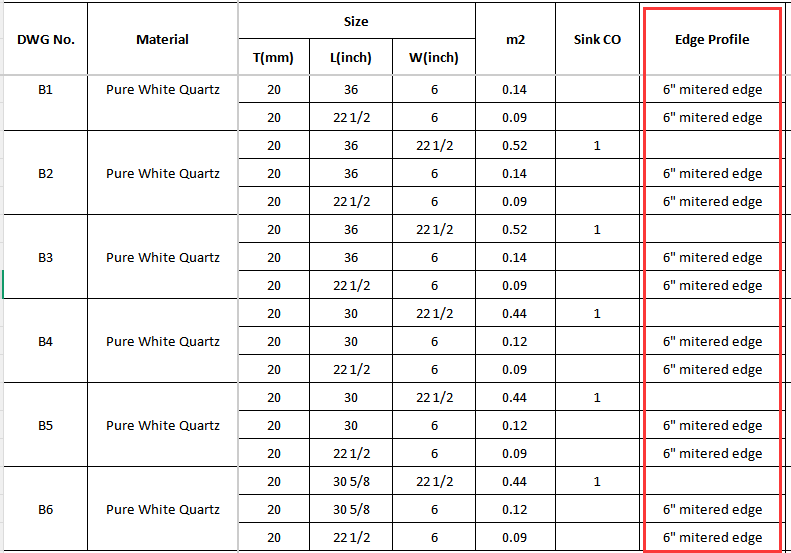
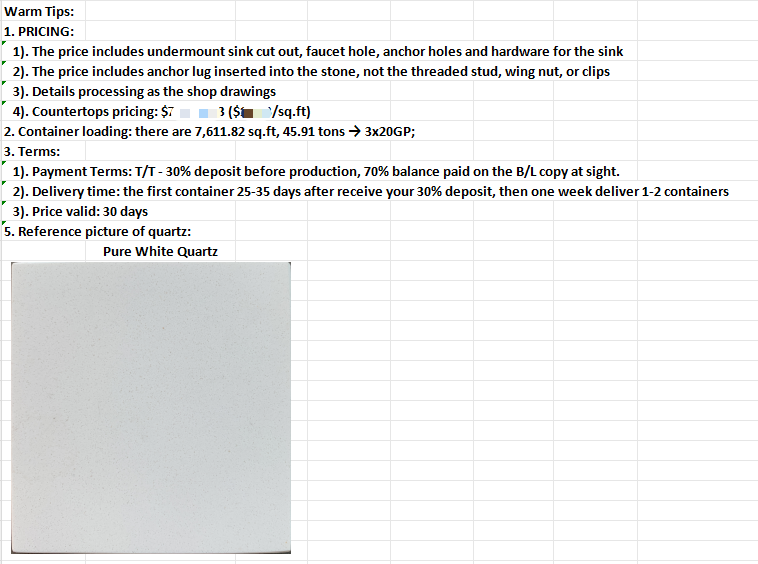
GQT’s real project quote:
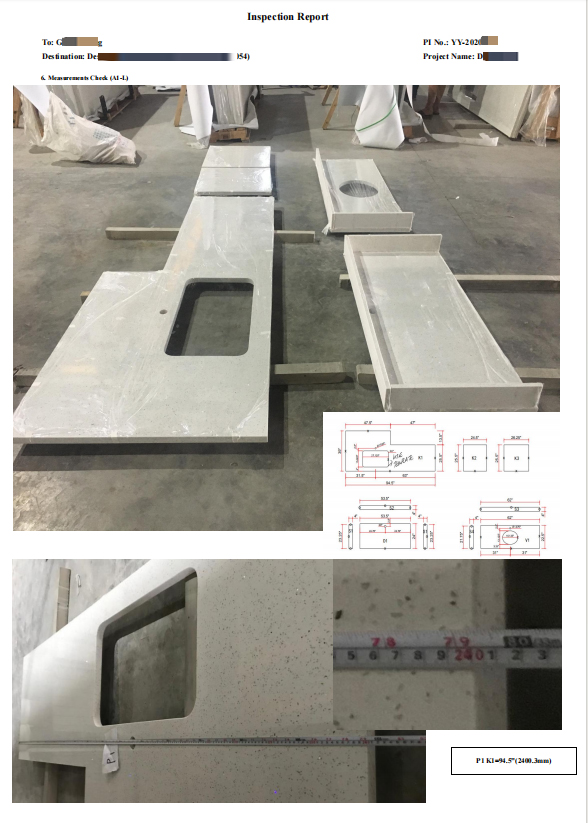
GQT’s product spec & inspection report:

- Exact product name, color code, finish, thickness, and slab or sheet size
- Landed-cost breakdown that includes waste, freight, and fabrication scope you own
- Nest or layout assumptions used to estimate yield
- Lot or batch continuity plan for reorders and phased installs
- Current lead time and allocation terms
- Technical data sheet, care guide, warranty exclusions, and safety data sheet where applicable
- Full-slab or full-sheet review under lighting similar to the install environment
If engineered quartz fits the brief, GrandQuartz Tech’s products list slabs by code with feature, application, and full-slab views. That helps wholesalers and fabricators judge pattern scale before requesting samples. For a quartzite-inspired look with engineered consistency, review Belvedere Quartzite Look Quartz GQ-R0258 for Wholesale – Quartz Slab and Countertop Manufacturer. Confirm availability, thickness, lead time, and documentation for your order size. Ask for the technical data sheet, care guide, and warranty before you commit.
The strongest kitchen countertop materials choice for B2B buyers is the one that holds margin after waste, survives the fabrication plan, and can be supplied again when the next phase or the next kitchen needs the same look.
Frequently Asked Questions
قارن العيّنات وصور اللوح الكامل والمواصفات ومهلة التوريد والدعم.
نعم. أكّد النقش واتجاه التعريق والفواصل والتشطيب وتفاصيل الحافة.
نعم. تساعد العيّنات على تأكيد اللون والدرجة تحت إضاءة المشروع.
أكّد مقاس اللوح والسماكة والتشطيب والكمية وبيانات الاختبار المنطبقة.
افحص الملصقات والكمية والأبعاد واتساق اللون والضرر الظاهر.
شاركوا التصميم المستهدف والأبعاد والكمية والوجهة والجدول الزمني.
Begin before final fabrication planning so samples and approvals fit the schedule.
Ready to Source Quartz Slabs?
Contact Grand Quartz Tech for samples, specifications, pricing, and lead times.