



Table of Content
For many modern indoor kitchens, quartz countertop is a strong yes: consistent color, clean lines, low routine sealing, and a surface that wipes with mild soap. The answer flips only when the way you cook fights the material—hot pans on the deck every day, hours of hard direct sun on the run, or a need for one-of-a-kind natural stone movement.
We manufacture engineered quartz stone in Thailand. Below is the same fit check we walk through before anyone shops colors—so you say yes with clear limits, not with surprises after install.
Direct answer for a modern kitchen
Quartz countertop fits a modern kitchen when all of these are true:
- Interior decoration: The kitchen is indoors, away from intense all-day sun on the counter.
Slab Matching: Multiple slabs need to match in color and veining.
Cutting Efficiency: Slab dimensions and quality help reduce cutting waste.
Color Consistency: Popular colors(speckled, quartzite-look, or marble-look) can be reordered without major changes in appearance.
Cost & Lead Time: Material costs and delivery schedules fit the project budget and timeline.

| Test Item | Result | Interpretation |
|---|---|---|
| Absorption | 0.02% | Excellent. General industry requirement ≤0.1%. This ultra-low value means barely any water absorption, great resistance to staining, soiling and mould growth. It performs well against oil, coffee, sauce and other spills. |
| Bulk Specific Gravity | 2.358 | Falls within the normal quartz range (2.3~2.4), dense and compact structure. |
| Modulus of Rupture (3-point bending) | Dry: 50.0 MPa Wet: 55.6 MPa | High strength. Strength rises after soaking, no softening or brittleness when wet, excellent stability. |
| Compressive Strength | Dry: 230 MPa Wet: 234 MPa | Very strong. Most quartz on the market qualifies at ≥150MPa. 230MPa is high compressive strength, resistant to cracking under heavy load and impact. |
| Abrasion Resistance (ASTM C241) | 46.8 | ASTM C241 is a stone abrasion test for walking surfaces. Lower value = less abrasion & better wear resistance. 46.8 is a good result, suitable for residential kitchens and high-traffic commercial areas. |
| Flexural Strength (4-point bending, ASTM C880) | Dry: 42.8 MPa Wet: 53.2 MPa | Outstanding flexural performance. Less risk of breakage for countertop overhangs and sink cutout zones. |
Quartz countertop is engineered stone: crushed quartz with resin and pigments. That mix is why designs can repeat from slab to slab, and why many products need no routine sealing. The same resin is why the surface is heat resistant, not heatproof.
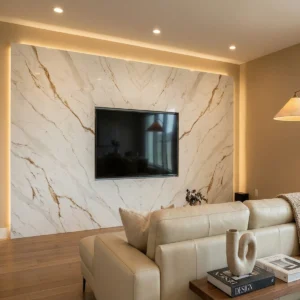
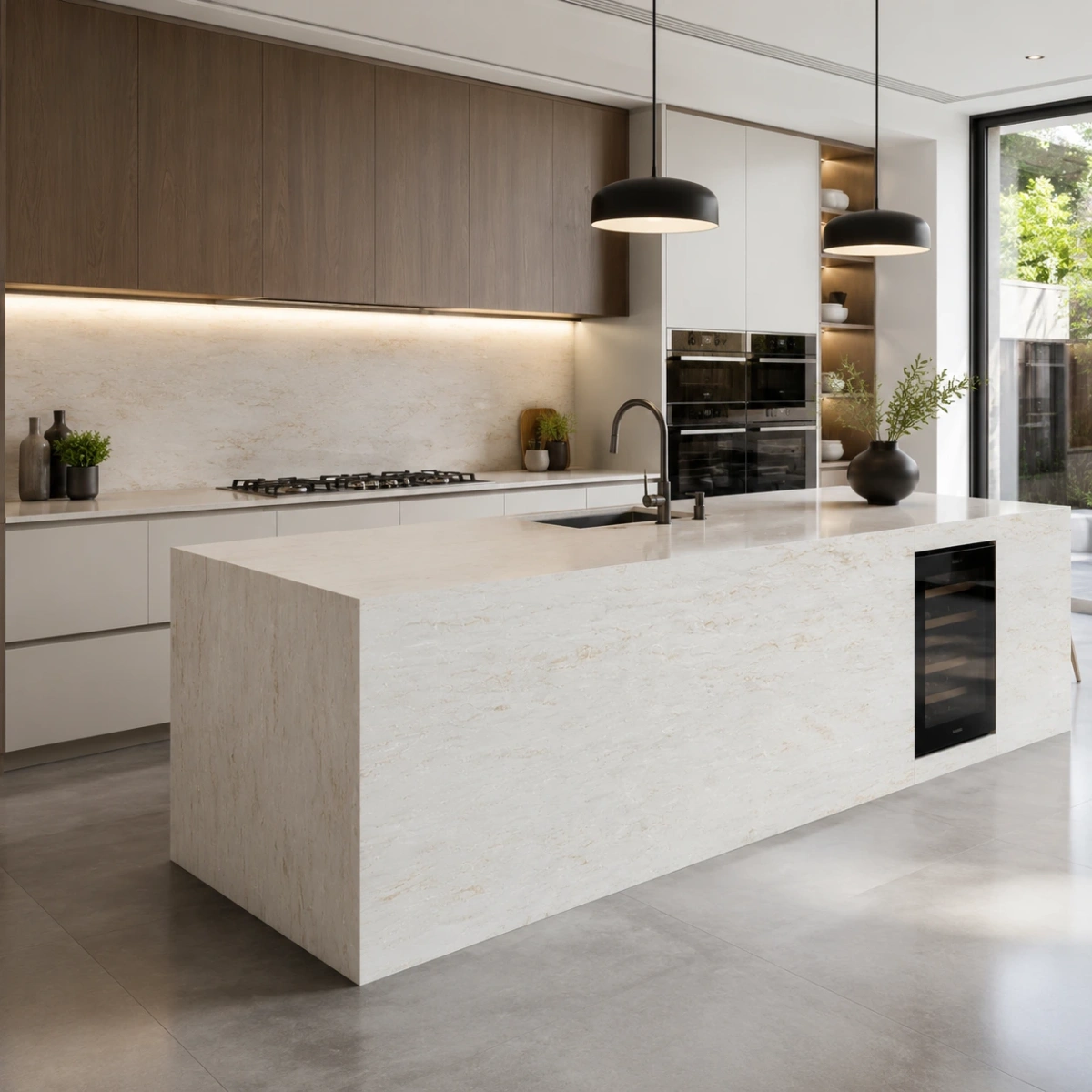
Modern kitchens often lean on flat fields, soft gray veining, or controlled marble-look movement. Quartz can deliver those looks with less slab-to-slab surprise than many natural stones.However, quartz countertops are afraid of direct sunlight exposure. According to our SGS test report, if quartz countertops are used in direct sunlight, their lifespan will only be 8 years. However, if used indoors, it can be safely used for over 20 years.
What make quartz look wrong in a modern kitchen?
Modern kitchens live on clean, uninterrupted planes, low visual noise, tight alignment. Quartz fails visually not because it scratches easily, but because small, predictable flaws break that quiet, intentional look. Below are the real, recurring “looks wrong” issues, grouped by the exact thing that jars the modern eye.
1. Vein & slab matching failures
Modern designs often run long counter runs, waterfall islands, full-height slab backsplash. Homeowners repeatedly report loving the sample in the showroom, then hating the finished install.
- White-on-White Mismatch: Cool white quartz can make warm-white cabinets look yellow. Compare the actual cabinet door and a large quartz sample before approving the color.
- Surface-only (printed) veining: The marble-look pattern is only printed on the top 1mm. Once you cut a standard eased edge, waterfall miter, the side is plain solid colour. The vein vanishes on the edge. It reads instantly as fake plastic stone, a very common cheap-quartz trap. This is catastrophic for waterfall islands, which are a staple modern feature.
- Bad seam placement & vein break: Fabricators put a seam dead centre in the prep zone, or directly across a bold vein. The pattern stops, jumps, and the seam becomes a visual scar. Modern kitchens have zero tolerance for this. Before the production of the sample, GQT will definitely negotiate the seam layout with the client, rather than allowing the workshop to make the decision on its own.
- Repetitive, tiled veining: Budget digital-print quartz repeats the exact vein cycle every 24–36 inches. Up close, it looks like wallpaper, not stone. Minimalist modern kitchens with large, empty slab surfaces make this repetition impossible to ignore.
2. Edge profile & overhang mistakes that break the clean modern line
Modern kitchens favour thin, quiet edges (eased, micro-bevel, 12mm thin slab). This is where factory shortcuts show up hard:
- Overhang sag / unsupported thin slab:If the flexural strength of a quartz slab is below 35 MPa, a 12 mm countertop with an overhang exceeding 10 inches and no hidden support brackets may gradually develop a subtle downward bow over weeks or months. The once-crisp horizontal line of the countertop becomes visibly uneven, making the entire island look like it is sagging. Many homeowners only notice the problem after installation, when repairs can be invasive.
- Over-polished, bulky edge profiles: A fat bullnose or ogee on a minimalist white quartz counter clashes hard. It looks traditional, not modern.
- Inconsistent edge radius: Some factories hand-grinds on-site, so one section has a 2mm ease, another 4mm. Under linear under-cabinet lighting, the shadow line is uneven. Tiny, but it makes the kitchen feel unrefined.
3. Sink cutout & backsplash integration fails (modern kitchen’s most high-visibility zone)
Modern kitchens lean heavily on undermount sinks, flush waterfall splash, no busy trim. This area is where bad install visually ruins everything:
- Undermount sink lip gap / uneven reveal: The quartz overhang above the sink rim varies 1–3mm side-to-side. From standing height, the sink line looks crooked.
- Caulk that is wrong colour, too thick, or bead messy: Modern design expects a micro-thin, colour-matched caulk line between quartz and cabinet / sink. Big white silicone blobs read messy and dated. White caulk also discolours and grows black mould along the sink edge within 6–18 months.
- No drain slope: Fabricator cuts the counter perfectly flat instead of 1/4” per foot slope toward the sink. Water pools, leaves mineral rings, and the homeowner is always wiping standing water. It looks perpetually neglected.
Cutout corners not CNC-rounded (sharp 90° inside corners). Sharp corners act as stress risers, allowing cracks to spread outward. This is a common issue that GQT’s remodeler clients warn about.
4. Lighting interaction (the most overlooked “it just looks wrong” factor)
Modern kitchens use cool LED under-cabinet lighting, linear ceiling strips, which expose quartz flaws that showroom warm lighting hides:
- Cool 4000K+ light amplifies yellow undertones in off-white quartz, making it look beige against crisp white cabinetry.
- Polished quartz creates glare hotspots under linear LEDs, turning the calm counter into a surface of distracting bright streaks.
- Vein contrast shifts drastically: subtle grey veins that looked soft in the showroom become harsh, busy, and overwhelming under cool kitchen LEDs.
How quartz compares with other surfaces in a modern kitchen
No material wins every kitchen. These are category tendencies. Installation quality still decides the job.
| Material | Design Consistency | Color Range | Fabrication Risks | Project Suitability | Key Procurement Check |
|---|---|---|---|---|---|
| Engineered Quartz Surface | Controlled colors and patterns; verify batch consistency and vein matching | Wide range of solid colors, speckled designs, and marble-inspired patterns | Heat damage, cutout cracking, and unsupported overhang deflection | Indoor kitchens, vanities, multifamily units, and repeat-build projects | Flexural strength, slab dimensions, thickness tolerance, lot consistency, and silica content |
| Granite | Natural variation between slabs; selection and layout planning matter | Natural colors and patterns; availability depends on the stone variety | Fissures, natural variation, and inconsistent material characteristics require inspection | Residential kitchens and projects seeking natural stone variation | Slab-by-slab inspection, fissures, absorption, and sealer requirements |
| Quartzite | Distinctive natural movement; slabs can vary significantly | Natural whites, grays, greens, and other colors, depending on the variety | Hardness, internal fractures, and material variability can affect cutting and polishing | Premium kitchens and projects requiring distinctive natural patterns | Slab inspection, fabrication trials, absorption, and sealing requirements |
| Marble | Natural veining varies; bookmatching and slab selection may be important | Classic whites and grays, along with beige, green, and other natural tones | Acid etching, scratching, and edge damage can increase maintenance and callback risks | Luxury kitchens and projects where natural patina is acceptable | Vein selection, surface condition, finish, and client maintenance expectations |
| Porcelain | Printed designs can be consistent; through-body appearance varies by product | Broad range of solid colors, stone-inspired patterns, and decorative designs | Thin edges and corners can chip; specialized handling and fabrication may be needed | Modern kitchens, wall cladding, and UV-exposed applications where the product is rated for use | Thickness, edge detail, fabrication compatibility, and application-specific ratings |
| Laminate | Decorative patterns are generally repeatable | Wide range of colors, wood looks, and stone-inspired patterns | Heat damage, surface scratches, and moisture intrusion at seams or edges | Budget-conscious residential and rental projects | Substrate quality, edge treatment, moisture protection, and installed cost |
“`
Planning a Quartz Project?
Explore slab options, colors, formats, and wholesale programs.
Choose color and finish only after the material decision holds
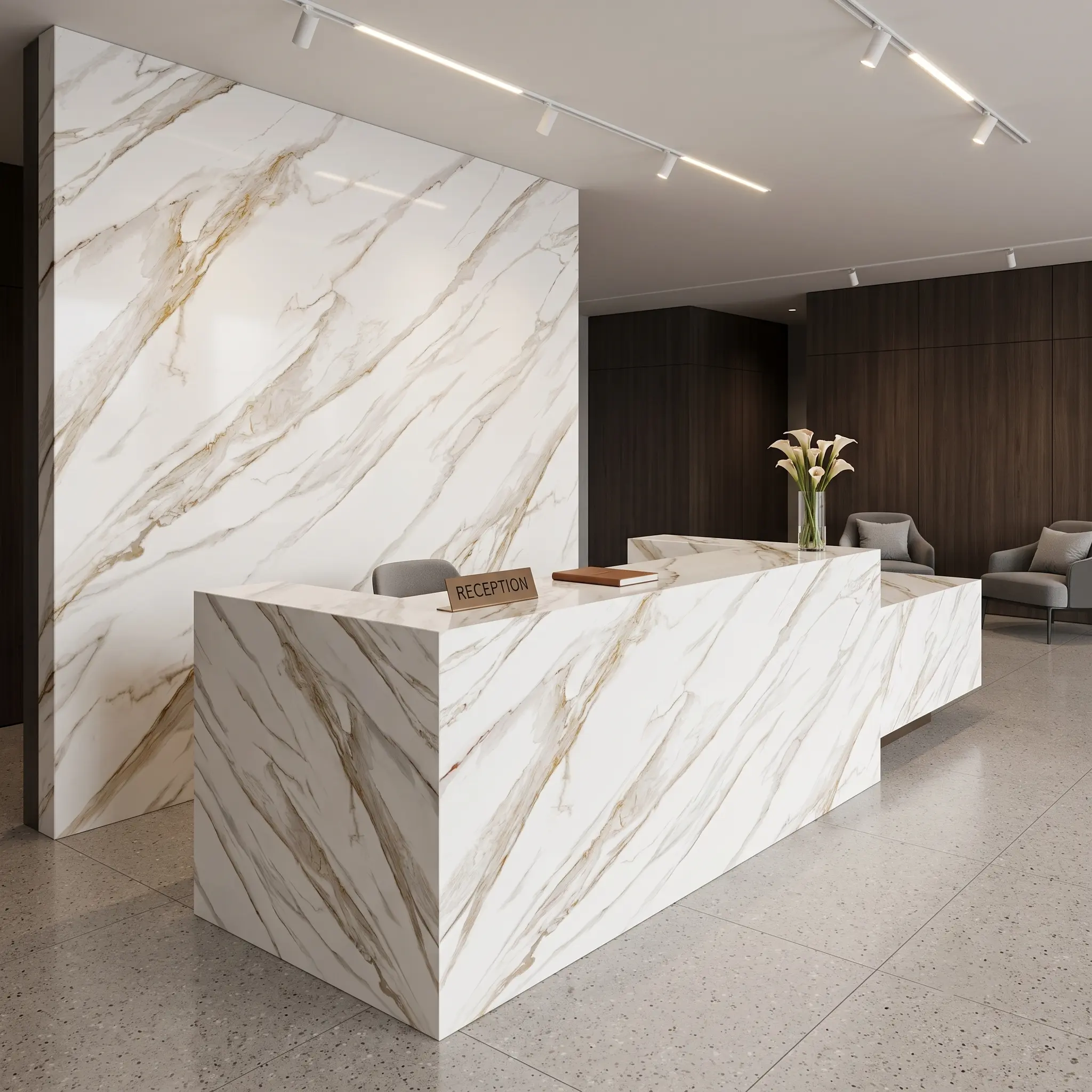

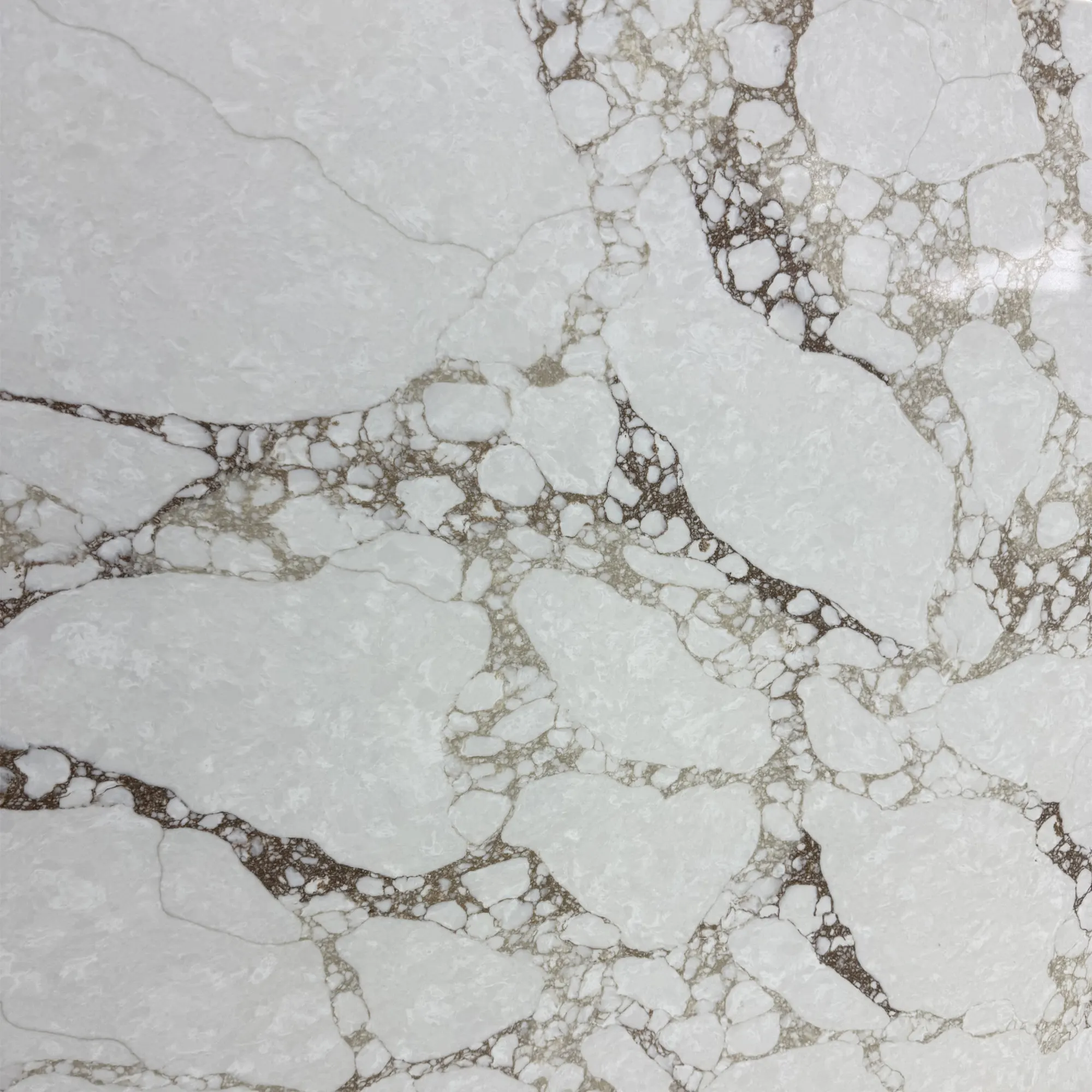
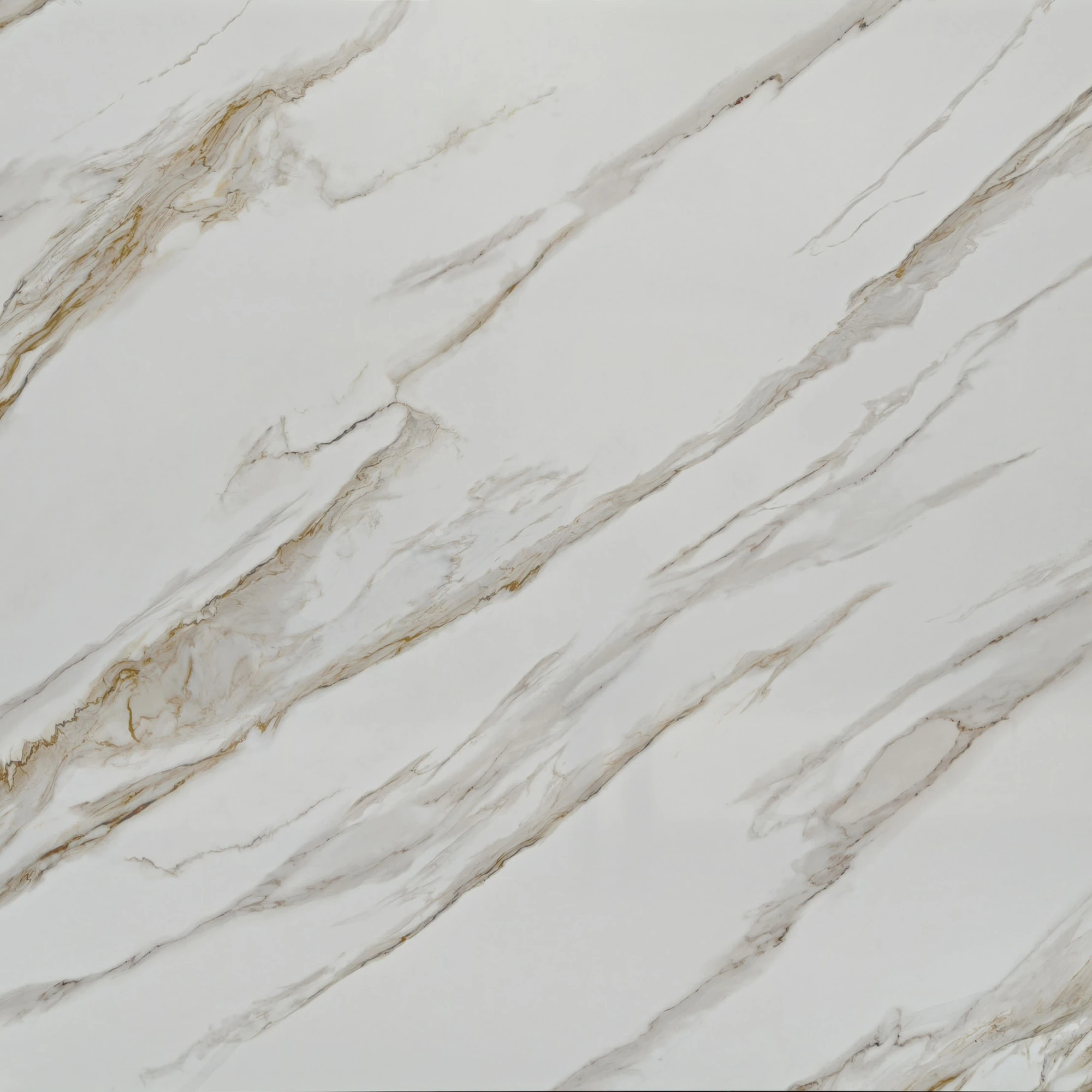
Color shopping before the fit check wastes time. Once quartz is the material, choose undertone next to cabinets, flooring, tile, and both daylight and evening light.
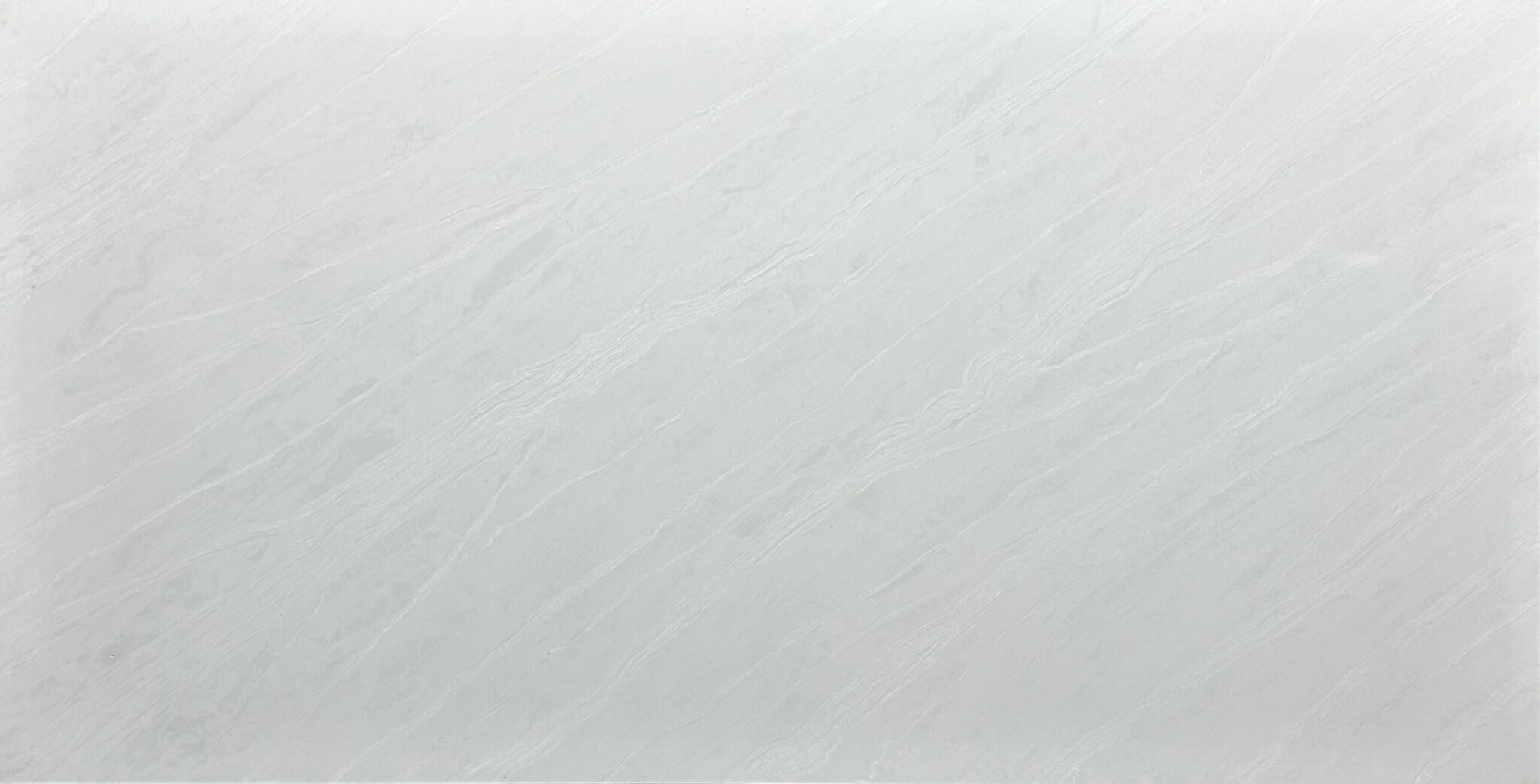
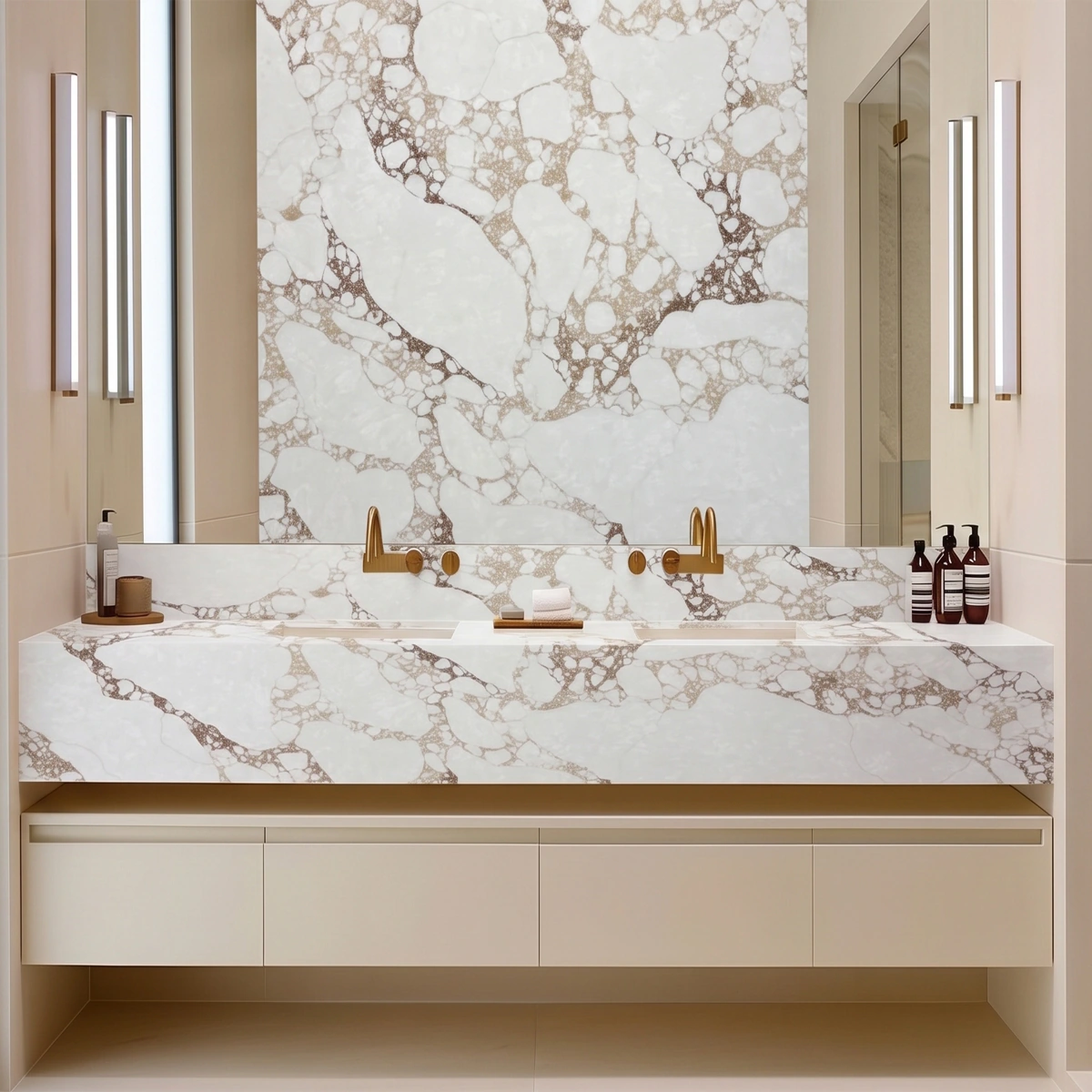
White and warm marble-look quartz sit with cream, light wood, and brass. Gray veining sits with white, charcoal, navy, and medium wood. Solid white shows crumbs faster than a softly patterned field. Dark colors can show dust and fingerprints. Concrete-look quartz can feel cool in low light, so check it beside the actual floor.
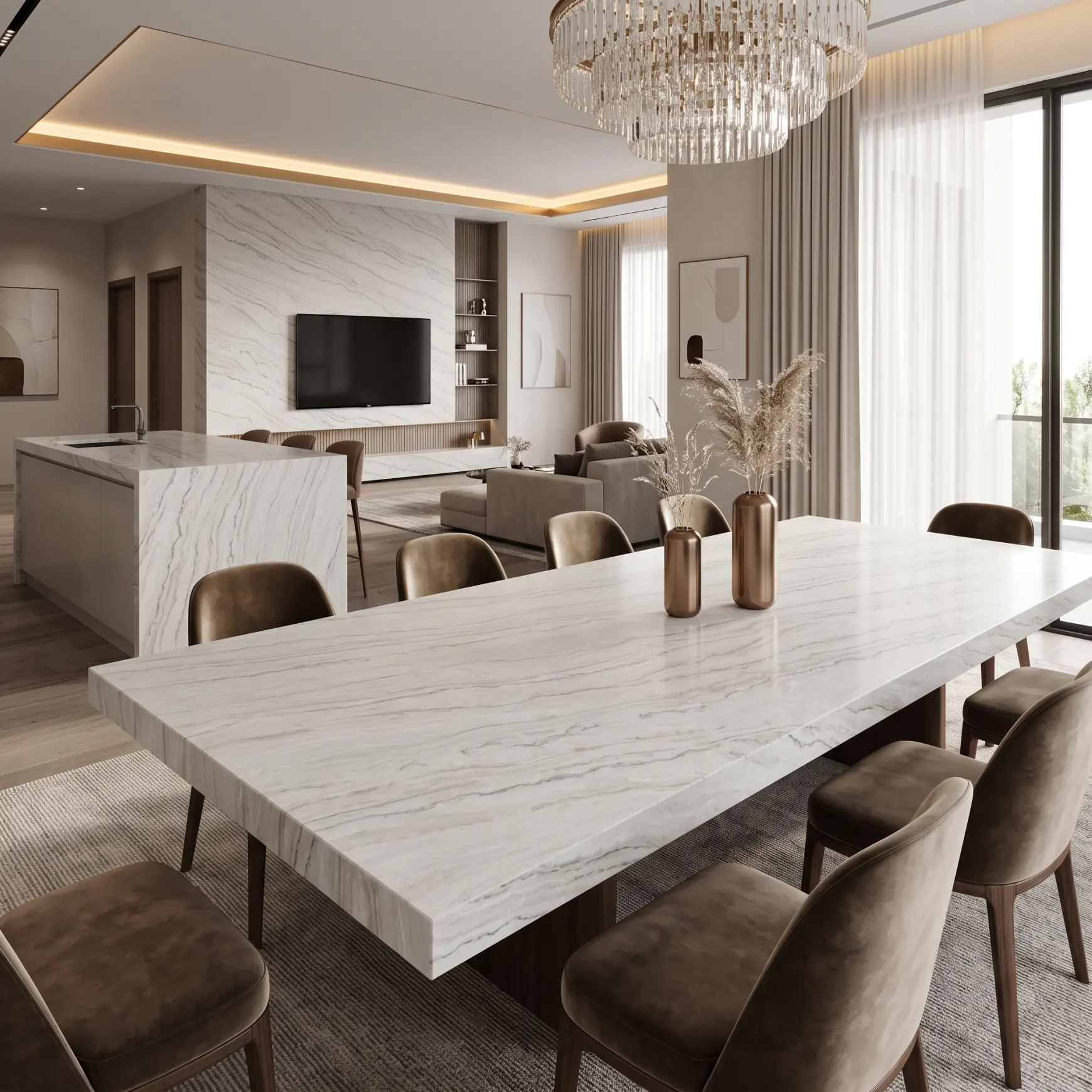
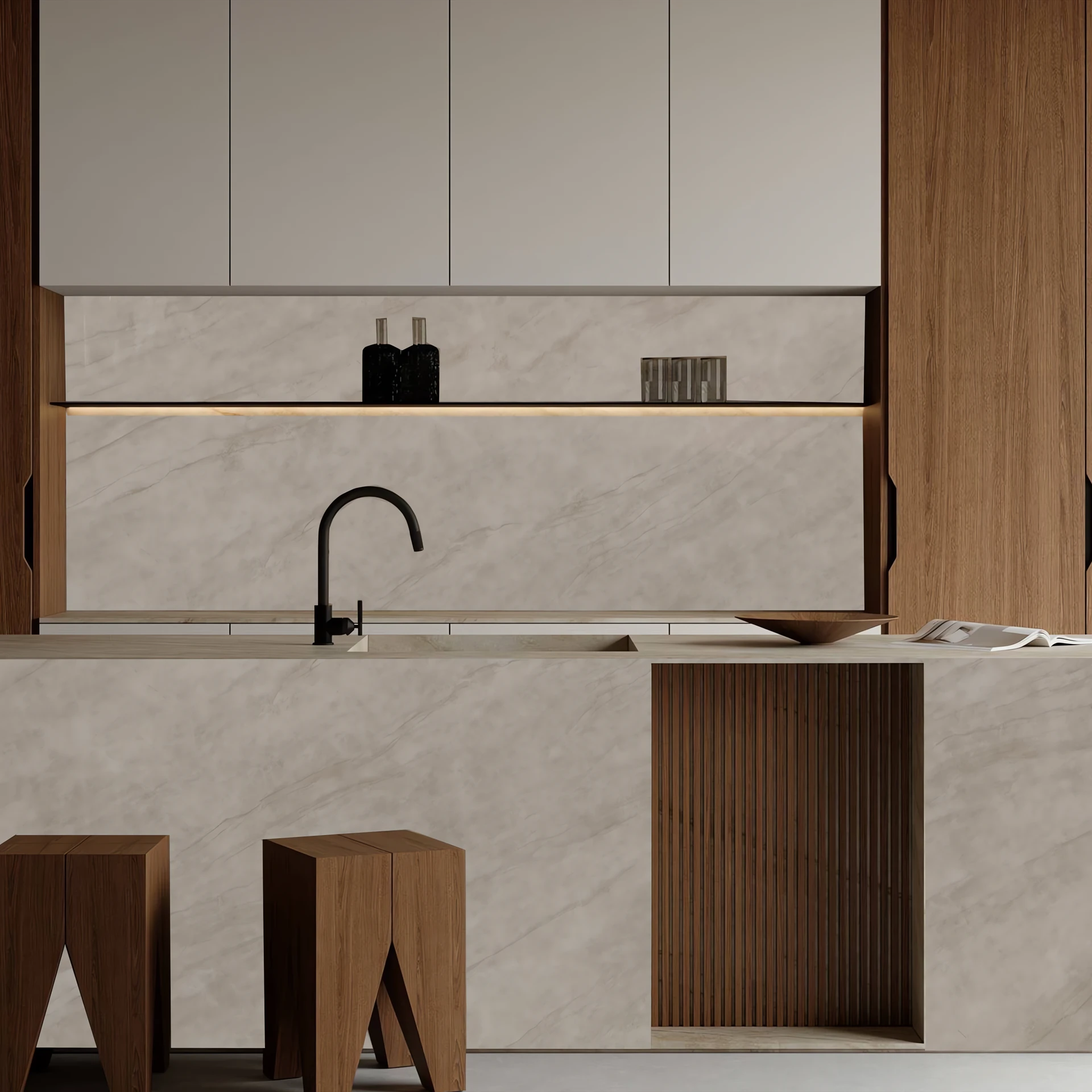
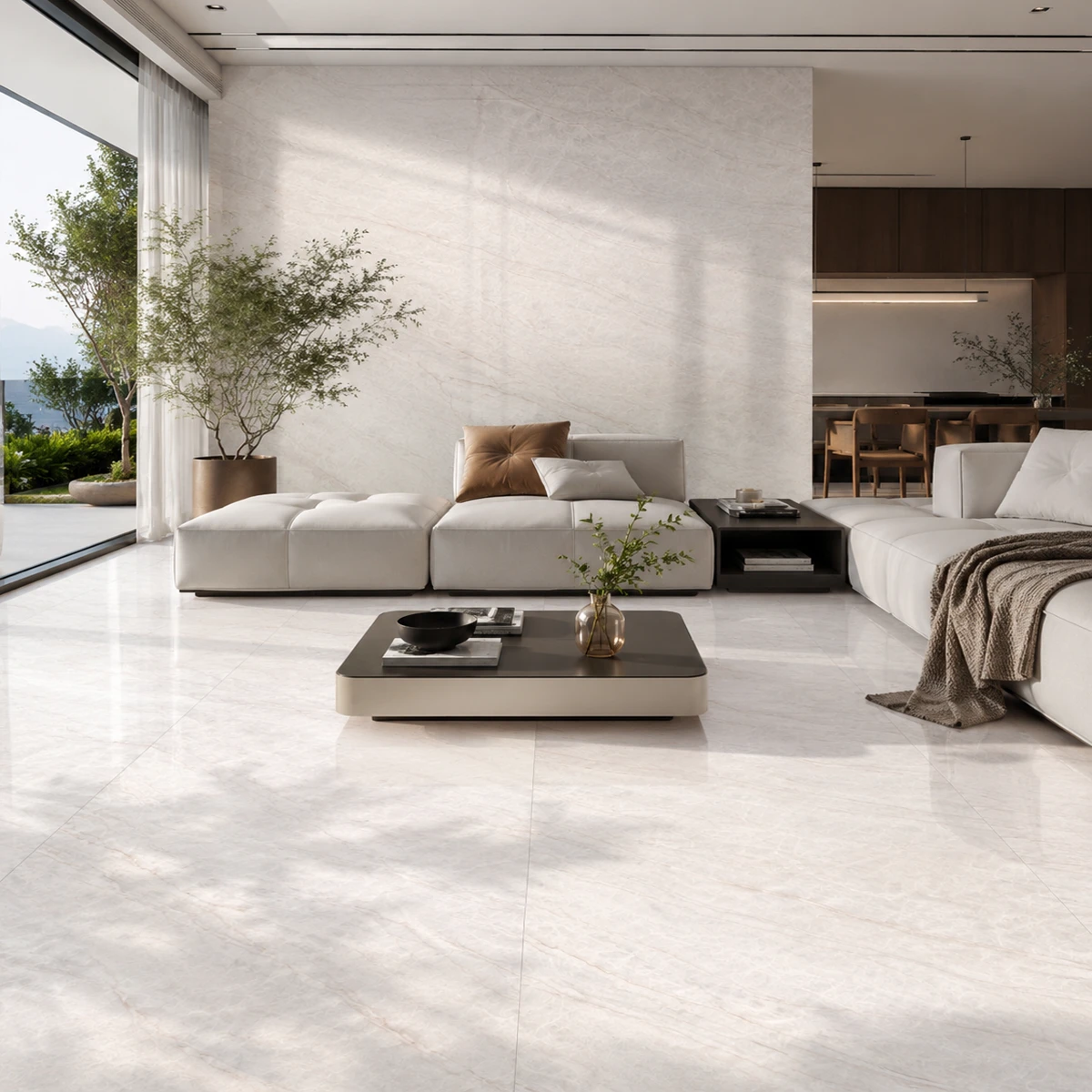
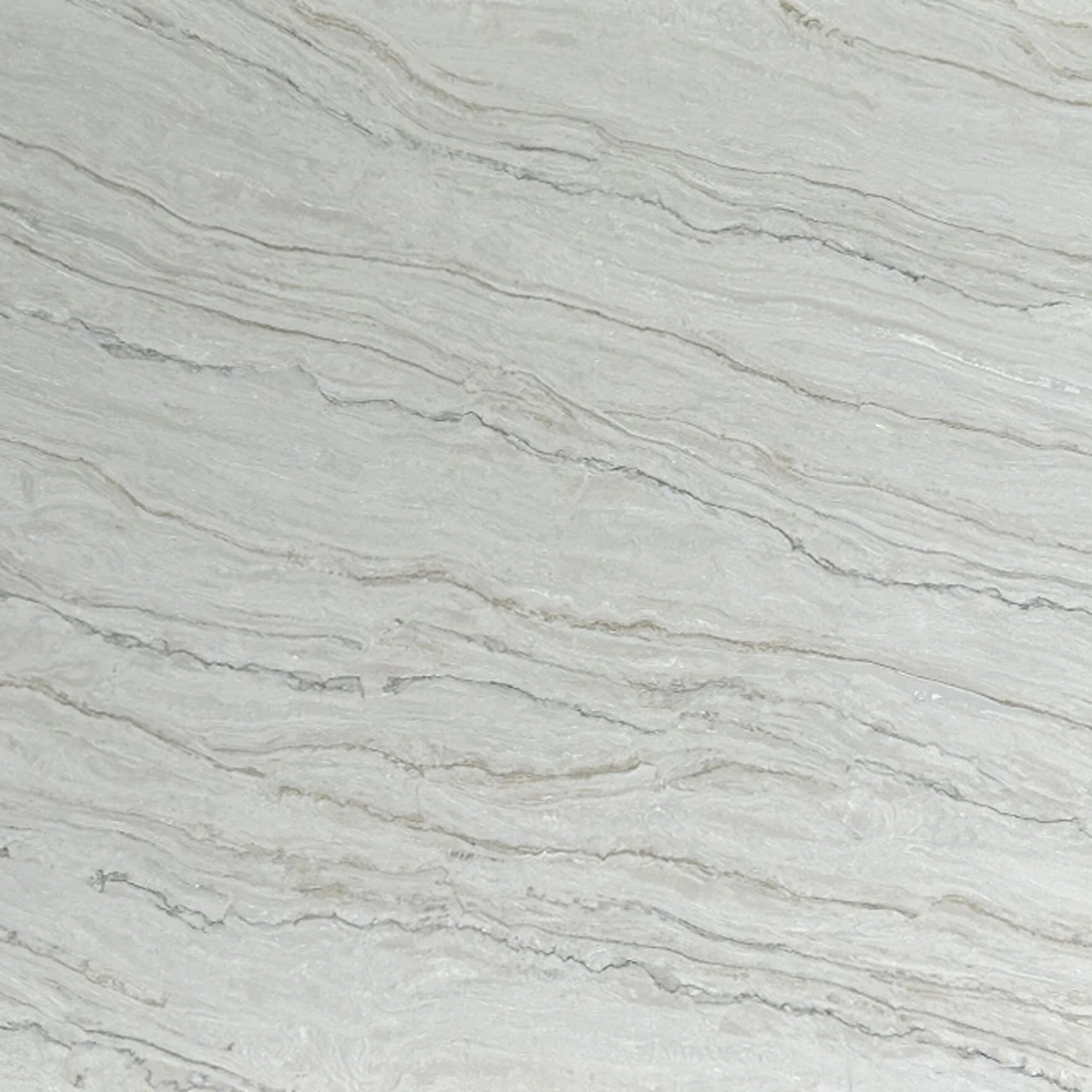
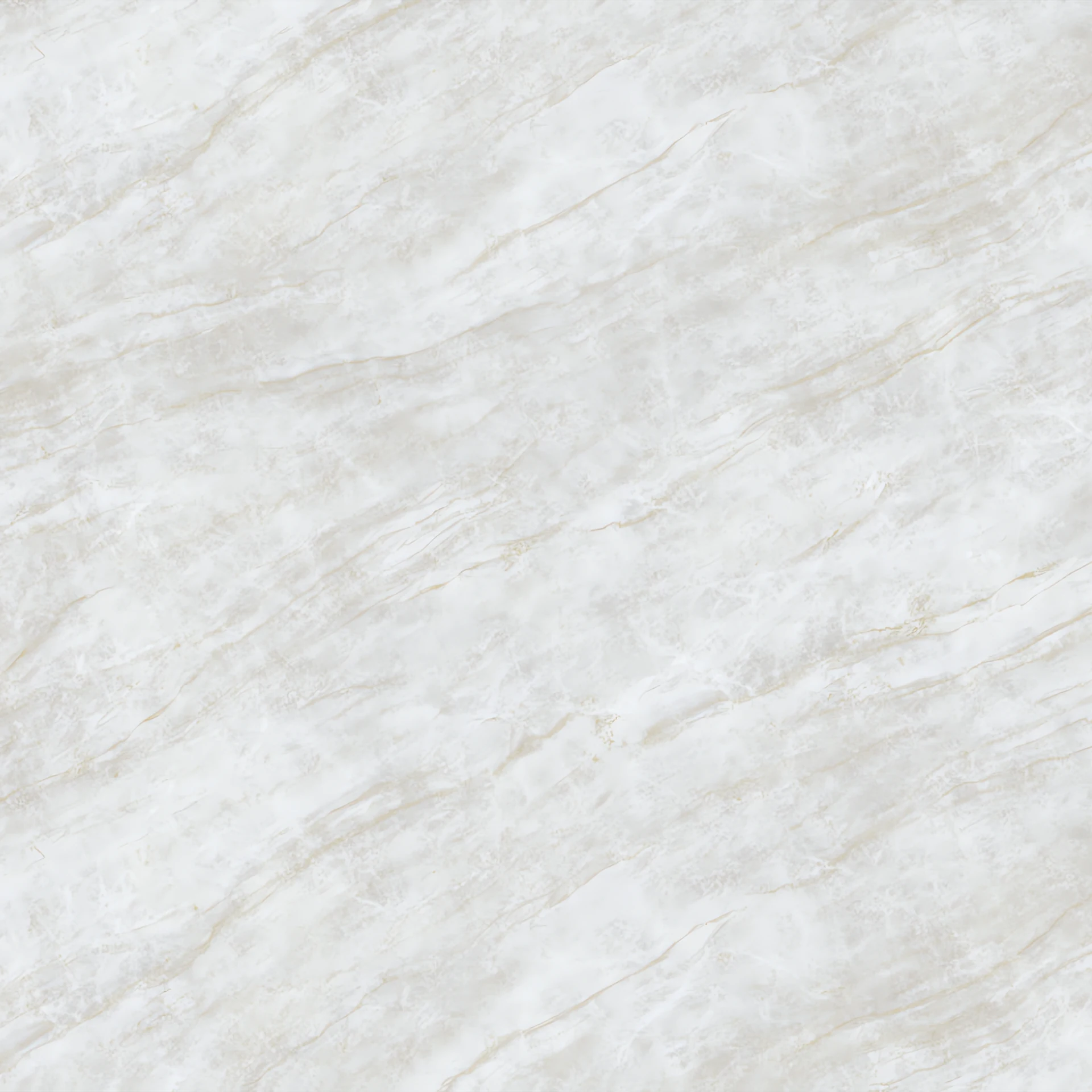
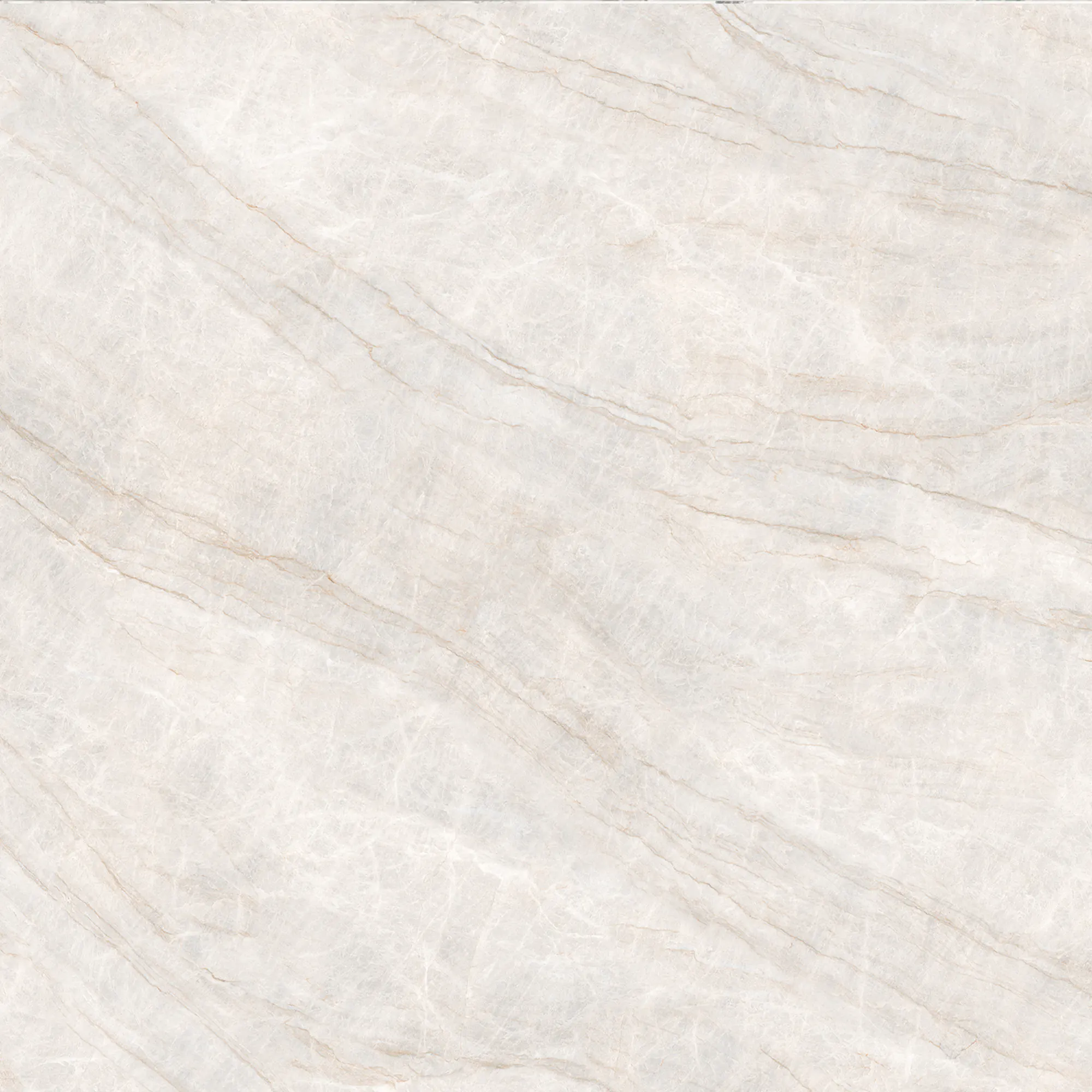
Finish changes residue visibility. Polished sharpens veining and can glare. Honed or matte softens shine and may show oils more, especially in dark colors. For veined quartz, view a large sample or full slab when the island or waterfall end is the focal point.
Confirm layout, seams, and the installed quote before anyone cuts
Approve the layout before fabrication. Watch for mismatched veins, awkward seams, gaps at walls, and waterfall panels that look disconnected from the deck.
The approval list should include full-slab image sign-off, vein direction, seam location, waterfall orientation, edge profile, sink reveal, cooktop opening, overhang support, backsplash height, and appliance clearances.
GQT’s real project quote:
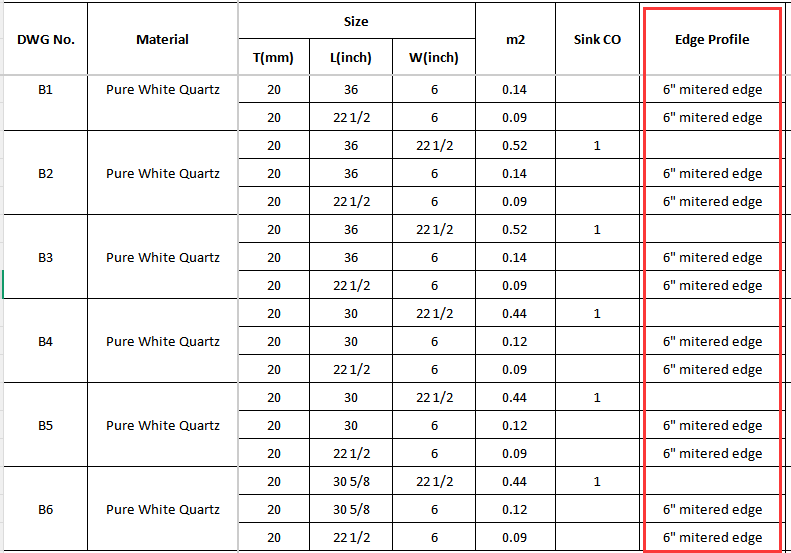
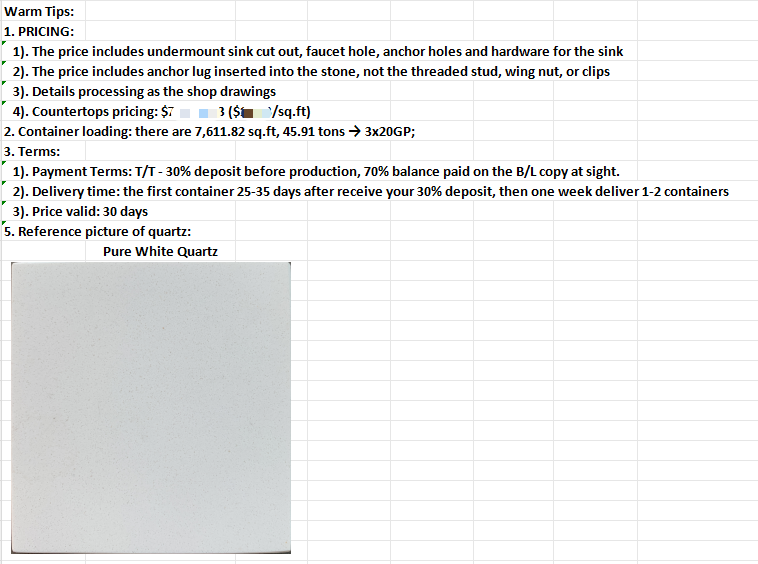
Read the quote as an installed scope: island and perimeter material, waterfall panels, backsplash, edges, cutouts, seam planning, delivery, installation, demolition, and access. Confirm who owns breakage or a cutout mismatch.
OSHA identifies respirable crystalline silica as a hazard during cutting or grinding, not in normal use of an installed countertop. Ask the contractor how dust is controlled on site.
Frequently Asked Questions
Compare samples, full-slab photos, specifications, lead time, and support.
Yes. Confirm pattern, vein direction, seams, finish, and edge details.
Yes. Samples help confirm color and undertone in the project lighting.
Confirm slab size, thickness, finish, quantity, and applicable test data.
Check labels, quantity, dimensions, color consistency, and visible damage.
Share the target design, dimensions, quantity, destination, and schedule.
Begin before final fabrication planning so samples and approvals fit the schedule.
Ready to Source Quartz Slabs?
Contact Grand Quartz Tech for samples, specifications, pricing, and lead times.