



Table of Content
- Build a shortlist from kitchen conditions, daily use, and visual priorities
- Compare shortlisted slabs in one table of performance, appearance, fabrication, and warranty
- Inspect the full slab for color, defects, lot consistency, and seam consequences
- Approve the fabrication drawing before paying for the slab
- Turn the quote into a complete installed-cost comparison
- Use the final scorecard to choose between two or three quote-ready options
The most important choice is not the quartz color. It is whether the exact slab, the cut plan and the installed quote all work together for the project. Shortlist products by kitchen conditions and visual goals, then confirm the manufacturer’s limits and warranty, inspect the full slab, approve seam and cutout placement, and compare the total installed scope. A simple weighted score can then break ties between options that already pass.
This guide is written for wholesalers, distributors and countertop contractors who help a client move from “we like this color” to a quote that will not change after cutting. Most of the pain we hear about comes from skipped steps, not from quartz itself.
Quartz is a strong indoor kitchen surface. It is nonporous, normally needs no sealing, and comes in a wide range of designs. It is also not heatproof, not approved for every sunny or outdoor location, but seam-free. Settle those limits first and the rest of the decision gets much easier.
Build a shortlist from kitchen conditions, daily use, and visual priorities
Start with the kitchen, then the slab. A pattern that works in a quiet showroom may be wrong for a rental, a baking-heavy household or a large island with a waterfall edge. Run this worksheet before you request samples or quotes:
- Cleaning products: Confirm the approved cleaner before you offer a honed or textured finish.
- Direct sunlight: Note sunny windows, patio doors and any outdoor use. UV and outdoor limits are product-specific.
- Island size: Large islands can force seams, multiple slabs or special handling.
- Finish, thickness, budget, lead time and maintenance expectations: Record each one now so it can be checked against real stock later.
Then match the scenario to the shortlist:
- Busy family kitchens: Choose a forgiving pattern, an easy-clean finish and a simple edge.
- Heavy bakers: Plan trivets and set that expectation in writing.
- Rentals and investment units: Prioritize repeatable color, simple edges, availability and clear care instructions.
- Large islands: Approve the slab layout early so vein direction and seam position are not last-minute compromises.
- Dark or low-light kitchens: Test warm and cool whites under the room’s actual lighting.
- Sunny kitchens: Check UV guidance and warranty wording for that exact product before ordering.
Terminology box. Buyers mix these terms up, so use them precisely:
- Engineered quartz: A manufactured slab made from quartz minerals, resin and pigments. Formulas vary by product.
- Natural quartzite: A natural stone, not engineered quartz. It has different sealing and care expectations.
- Natural quartz crystal: A mineral, not a countertop category on its own.
- Quartz coating: A coating system, not a solid engineered quartz slab.
Compare shortlisted slabs in one table of performance, appearance, fabrication, and warranty
Compare exact products, not broad claims. Two slabs can both be “white with veining” and still differ in finish, slab size, heat guidance, warranty terms, lead time and seam risk. The manufacturer’s data sheet, care guide and warranty for that color and finish control the project. General industry practice only fills the gaps.
Use the table below as a template. Fill one column per shortlisted product, and treat the right-hand column as your request list to the supplier.
| Decision factor | What changes between products | Get this in writing before quoting |
|---|---|---|
| Exact product | Color name, code, finish | Product code, finish and slab ID on the quote |
| Composition | Formula varies by manufacturer | Data sheet for that exact slab |
| Color and movement | Veining can run across or along the slab | Full-slab photo, not a sample chip |
| Heat guidance | Always use trivets; limits are product-specific | Current care guide |
| UV and outdoor use | Treat as indoor unless the document says otherwise | Warranty wording on sun and outdoor exposure |
| Thickness | Commonly 2 cm or 3 cm, subject to availability | Stock thickness and edge compatibility |
| Slab dimensions | Drive seam count and yield | Actual slab size and usable yield |
| Availability and price | Differs by color, finish and lot | Stock, lead time, lot match, material price |
The best option shifts with the priority. If the design is the selling point, appearance carries more weight. If the island is large, slab size and seam placement matter more. If the bid is tight, availability and installed scope decide it. Be careful with unsupported claims such as “antimicrobial”, “indestructible” or “best brand”. The research does not support a universal winner.
Inspect the full slab for color, defects, lot consistency, and seam consequences
A sample shows color direction. It cannot show every vein, movement change, finish variation or slab edge. Discussions on Houzz and contractor-oriented sources keep returning to veined-slab surprises and seam placement, which matches what shops see when a bold pattern lands on a long run.
At the slab yard, or from clear slab photos, check:

- Undertone beside cabinet, flooring and backsplash samples
- Finish consistency across the whole face
- Vein direction and movement scale
- Chips, cracks, pitting and scratches
- Thickness and slab dimensions
- Lot or batch consistency, and matching across slabs if more than one is needed
- Label, color name, finish and slab ID
Photograph the approved slab and file the product identification with the quote and the warranty. That small habit protects you when a replacement slab, an extra backsplash piece or a later service question comes up.
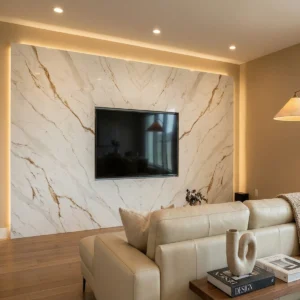
Full-slab review matters most for marble-look quartz, bold veining, bookmatching, waterfall edges and large islands. Those designs look excellent, but only when the slab, the cut plan and the seam positions are reviewed together.
Planning a Quartz Project?
Explore slab options, colors, formats, and wholesale programs.
Approve the fabrication drawing before paying for the slab

The drawing is the step that turns a good slab into a workable countertop. Ask for it before the slab is cut, and before any payment you could not recover after cutting. It should show:
- Slab layout and seam locations
- Vein direction
- Sink and cooktop cutouts, and faucet holes
- Edge profile and thickness
- Waterfall panels
- Overhang support
If any of these are missing, ask before anyone approves it.
Seam visibility depends on slab size, color and pattern, lighting, adhesive color, cabinet movement or uneven support, seam position near sinks and corners, and the skill of the crew cutting and installing. A good team can reduce seams but cannot make every one disappear. One contractor source says it plainly: “Seams are weak points, so work at minimizing them as much as possible.” That is planning advice, not a reason to avoid quartz.
The normal sequence is: cabinets level and ready, field template, layout approval, shop work, delivery, installation, seam curing and final inspection. Quartz is heavy and needs qualified transport, cutting, support and installation. It is not a casual DIY material.
Turn the quote into a complete installed-cost comparison
The slab price alone tells you little. A low number can grow quickly once removal, cutouts, edges, support, delivery, tax and change orders show up. Cost figures in public articles are often market-specific and unsupported, so build the comparison from scope, not from a national average.
Ask every quote to separate:

- Slab quantity, yield and waste assumptions
- Material price for the exact color and finish
- Template and shop work
- Thickness choice or laminated edge build-up
- Edge profile
- Sink, faucet, cooktop and outlet cutouts
- Seams and complex layout charges
- Backsplash pieces
- Removal and disposal
- Delivery, installation and support
- Tax, payment terms and change orders
Then compare timing: slab availability, lot consistency, template date, installation date, and what happens if a slab is damaged or becomes unavailable.
Keep the warranties separate and in writing. The manufacturer warranty covers the product under stated conditions. The contractor’s warranty covers workmanship and installation. Care exclusions such as heat, chemicals, outdoor exposure, misuse or unapproved cleaners are a third category. Be wary of unusually low quotes or white-label products with no clear warranty path.
If you quote a price example to a client, label the date, location, square footage, slab count, edge, cutouts, removal, backsplash and tax status. Without that, it is a guess.
Use the final scorecard to choose between two or three quote-ready options
Use the scorecard last. It works best after each option has a real slab, a drawing and a quote. First apply simple pass/fail gates: does the product’s own guidance fit the heat and sun conditions, is the slab available, and can the layout be built with acceptable seams? Anything that fails a gate is out. Score only what remains, so a pretty option with a bad seam plan never wins on color.
A balanced starting weight set:

- Performance: 25%
- Visual fit: 20%
- Fabrication and seam risk: 20%
- Installed cost: 20%
- Maintenance: 10%
- Warranty and documentation: 5%
Change the weights to suit the kitchen. A showpiece island may push visual fit up. A rental may push cost, availability and maintenance up. A sunny room may push warranty and UV guidance up.
Before sign-off, confirm:
- Exact product name, color, finish and slab ID
- Data sheet, care guide and warranty
- Full-slab inspection or documented slab photos
- Slab availability and matching lot, if needed
- Approved layout with cutouts, edge and support
- Complete installed quote with exclusions
- Lead time and installation date
- Installer references, insurance and safety practices
On safety, ask how cutting dust is controlled. A responsible shop follows applicable silica rules, uses proper dust control and protects its workers.
Where GrandQuartz Tech fits is narrow: once you have a shortlist and need a documented range to check against it. Each listing carries a full slab image, an application photo and an overview image, which gives you something concrete to review with a client before a quote is locked. For a veined example, see Calacatta Bianco Lasa Slabs GQ-T380 for Wholesale – Quartz Slab and Countertop Manufacturer. Slab availability, lot matching and lead time still need to be confirmed against your specific order.
The clear-headed choice is to pick the slab and the installation plan together. When appearance, performance, seams, cost and warranty line up, quartz becomes an easy surface to buy with confidence.
Frequently Asked Questions
Compare samples, full-slab photos, specifications, lead time, and support.
Yes. Confirm pattern, vein direction, seams, finish, and edge details.
Yes. Samples help confirm color and undertone in the project lighting.
Confirm slab size, thickness, finish, quantity, and applicable test data.
Check labels, quantity, dimensions, color consistency, and visible damage.
Share the target design, dimensions, quantity, destination, and schedule.
Begin before final fabrication planning so samples and approvals fit the schedule.
Ready to Source Quartz Slabs?
Contact Grand Quartz Tech for samples, specifications, pricing, and lead times.