

Table of Content
- Build the RFQ around project compatibility inputs
- Use material-alternative triggers before issuing a brand shortlist
- Set mandatory compliance and evidence gates
- Test the supplier response, not just the slab
- Four named candidates for the RFQ comparison set
- Compare RFQ responses in one decision table
- Apply a documented selection rule
- Use attributed field experience as a risk check
- Pre-purchase RFQ and submittal checklist
The best quartz supplier for a commercial project is the one that passes your documentation, warranty, supply, and installation tests, not the best-known name. Write an RFQ that names the exact product, current technical documents, commercial warranty terms, delivery capacity, qualified contractors, and installation controls. Then compare the suppliers that pass.
This order matters. A suitable color can still fail if the slab is unavailable, undocumented, unsafe to cut, hard to replace, or outside the warranty. This article gives the RFQ steps first and then four GrandQuartz Tech products you can include in a comparison. It does not rank outside brands. Add any other supplier you are considering to the same RFQ and hold it to the same evidence tests.
Build the RFQ around project compatibility inputs
Start with the project brief, not a color board. A hotel vanity program, a restaurant bar, a healthcare reception desk, a multifamily bathroom, and an office pantry have different exposure, schedule, and service needs. Turn those differences into measurable RFQ inputs before you ask for prices.

Include:
- Project type, location, schedule, quantity, phases, and repeat-order expectations
- Application inventory: counters, bars, vanities, reception desks, nurse stations, tables, backsplashes, and wall cladding
- Exposure profile: heat, UV, chemicals, impact, moisture, cleaning agents, and public traffic
- Slab size, thickness, finish, pattern direction, edge, seam, support, and installation tolerances
- Submittals, warranty language, certifications, sustainability documents, BIM or CAD files, samples, and mockups
- Roles for the owner, specifier, manufacturer, distributor, contractor, and installer
This prevents a common error. A team approves a color before confirming that the exact product can be documented, supplied, cut, installed, maintained, and warranted for the intended use.
Use material-alternative triggers before issuing a brand shortlist
Quartz can suit many commercial interiors when it is used within the manufacturer’s documented limits. It is not the right answer for every exposure. Review alternatives before you build a shortlist when the project includes:

- Outdoor counters, strong UV exposure, or exterior wall use
- Direct high heat, hot pans, heat lamps, or thermal-shock risk
- Chemical exposure beyond normal commercial cleaning
- Very thin or unusually large panels with few seams
- A priority on integrated seams, thermoforming, or easy field repair
- Lower-abuse areas with strict cost targets
Porcelain or sintered stone may deserve review for outdoor, UV-exposed, thin-panel, or high-heat conditions. Solid surface may fit better where integrated seams, repairability, or thermoforming matter most. Laminate may suit low-abuse, low-cost areas. Granite, quartzite, stainless steel, or another specialty surface may suit unusual heat or chemical exposure.
Separate material limits from collection limits. Quartz as a category may be wrong for an exposure. A specific collection may also carry its own limits on thickness, finish, heat, or warranty. If quartz stays on the list after alternatives are reviewed, record why.
Set mandatory compliance and evidence gates
Use pass/fail gates before you compare prices. A low quote should not advance if the product lacks traceability, current documents, or commercial coverage.

Request current, product-specific evidence for:
- Technical data sheets, test methods, performance limits, and care instructions
- Commercial warranty terms: duration, exclusions, installation conditions, covered parties, transferability, and claims process
- Any NSF, GREENGUARD Gold, EPD, HPD, ISO, ASTM, or ANSI records the project requires
- Local rules that affect engineered-stone selection, cutting, or site modification
- Manufacturing, distribution, lead-time, capacity, lot-control, and replacement statements
- Contractor procedures for wet cutting, dust control, cleanup, respiratory protection, and site modification
Keep two kinds of documents separate. Finished-product documents describe the slab. Worker-safety documents describe how it is cut and installed. A product certificate does not replace the contractor’s safety plan or the employer’s legal duties. In the United States, OSHA’s respirable crystalline silica page is the place to start for those duties. Local rules may add requirements, so confirm them for the project site.
Put generic, white-label, outdated, or untraceable material on hold. Release it only when the supplier names the manufacturer, collection, lot, warranty, and support path.
Test the supplier response, not just the slab
A good-looking slab can still create schedule and claims risk if the supplier cannot respond during construction. Test the response before award.

Confirm the exact manufacturer, collection, color, finish, thickness, and current lot. Inspect a full slab where possible instead of relying on a hand sample. Check color, pattern, thickness, finish, defects, and batch consistency under the project’s lighting.
Then test the working process:
- Shop drawings, templates, seams, sink and appliance cutouts, edges, overhangs, and support
- Lead time, slab reservation, phased delivery, freight, damage replacement, and change-order response
- Contractor qualifications, wet-cutting and dust-control procedures, installer training, and punch-list support
- Mockup size, lighting, acceptance criteria, approval authority, and sign-off records
A manufacturer cannot fix poor templates, weak support, unsafe cutting, or unapproved substitutions after the fact. Commercial suitability depends on the product, the local supply chain, the contractor, and the installation system together.
Four named candidates for the RFQ comparison set
These are RFQ candidates, not ranked winners. They are GrandQuartz Tech inventory products that cover four different visual directions. The descriptions come from the product titles. They say nothing about suitability for a given sector or exposure.


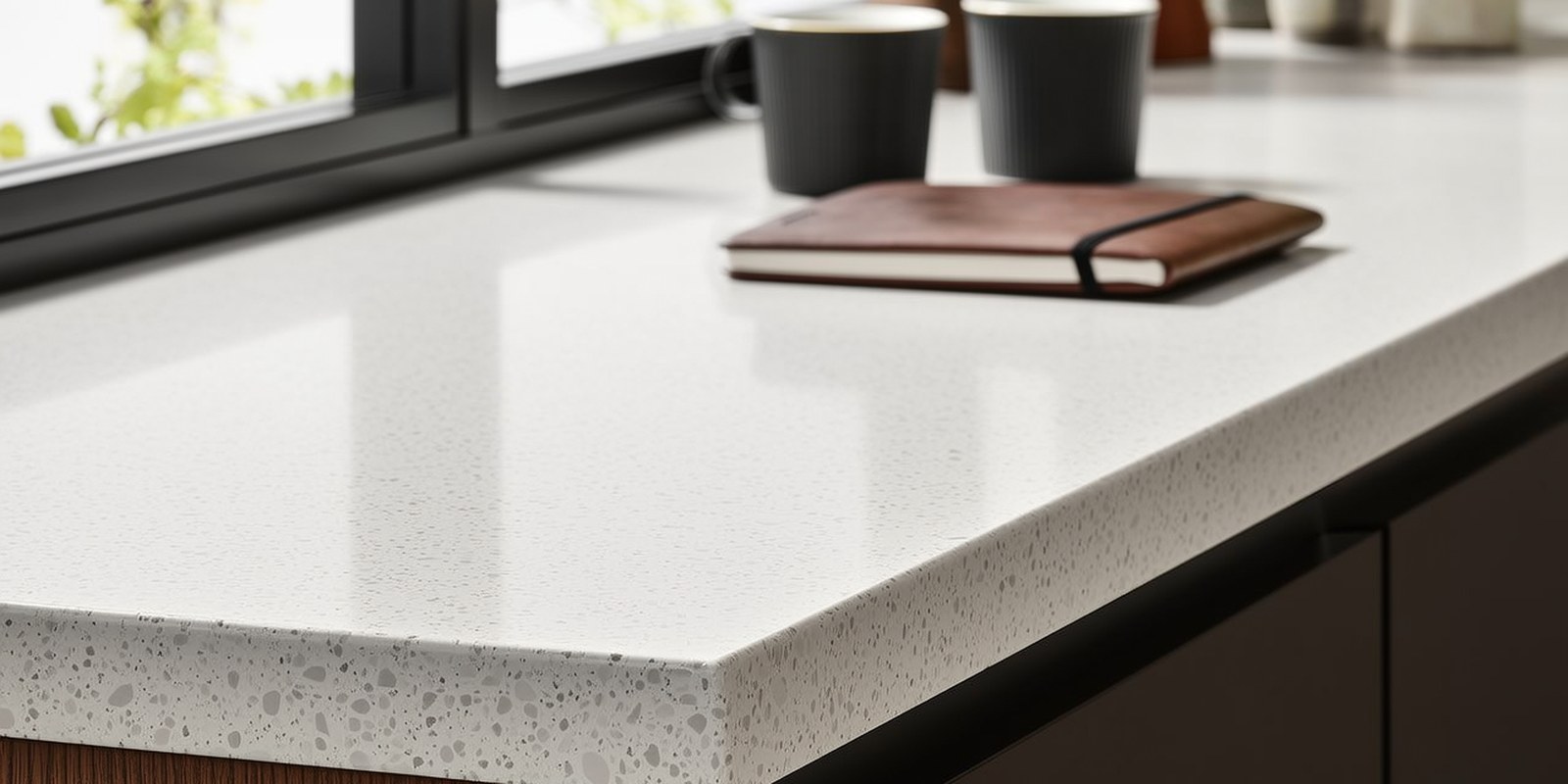
Premium Solid Pure White Quartz Stone Slabs for Wholesale - Quartz Slab and Countertop Manufacturer

Warm Beige Limestone Look Quartz Slabs GQ-FG316 for wholesale - Quartz Slab and Countertop Manufacturer

Dark Concrete Gray Quartz Surface GQ-T120 for Wholesale - Quartz Slab and Countertop Manufacturer

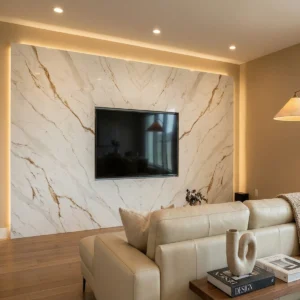
Calacatta Gray Quartz Countertops GQ-T260 for Wholesale - Quartz Slab and Countertop Manufacturer
- Premium Solid Pure White Quartz Stone Slabs for Wholesale – Quartz Slab and Countertop Manufacturer: a solid white direction. Ask for full-slab visuals and lot-consistency information for large runs.
- Warm Beige Limestone Look Quartz Slabs GQ-FG316 for wholesale – Quartz Slab and Countertop Manufacturer: a warm, limestone-look option. Check it against the project’s lighting and neighboring finishes.
- Dark Concrete Gray Quartz Surface GQ-T120 for Wholesale – Quartz Slab and Countertop Manufacturer: a dark gray, concrete-look direction. Ask how the surface shows wear and cleaning marks in the chosen finish.
- Calacatta Gray Quartz Countertops GQ-T260 for Wholesale – Quartz Slab and Countertop Manufacturer: a gray, veined direction. Veined patterns need a pattern-continuity and seam-placement review.
For each candidate, ask GrandQuartz Tech to confirm in writing:
- Available slab sizes, thicknesses, and finishes
- Technical data sheet and test methods
- Commercial warranty terms, exclusions, and claims process
- Current availability, lead time, and replacement terms
- Which party is responsible as manufacturer, distributor, contractor, and installer
The same list applies to any other supplier in the RFQ. A residential warranty is not proof of commercial coverage.
Planning a Quartz Project?
Explore slab options, colors, formats, and wholesale programs.
Compare RFQ responses in one decision table
Use one table to expose differences and unknowns. Treat missing evidence as an adverse unknown, not a pass.

| RFQ category | What to compare | Decision use |
|---|---|---|
| Exact product | Manufacturer, collection, color, finish, thickness, slab size, and lot | Fail if the material is generic or untraceable |
| Sector and application fit | Healthcare, hospitality, food service, multifamily, public use, exposure, cleaning, and heat | Fail if documented limits conflict with the application |
| Technical evidence | Data sheet, test methods, care instructions, limitations, issuer, and document date | Hold if current documents are unavailable |
| Warranty | Commercial coverage, exclusions, installation conditions, claim process, and covered parties | Fail if commercial use is excluded or unclear |
| Supply and replacement | Lead time, capacity, reservation, phased delivery, lot control, freight, and replacement policy | Score schedule reliability and recovery options |
| Certifications and sustainability | Health, environmental, and quality documents the project requires | Mark pass, fail, or needs verification |
| Contractor support | Shop drawings, mockups, seams, support, training, dust control, and punch-list service | Fail if the installation plan is weak |
| Lifecycle value | Price, waste, freight, maintenance, damage exposure, and replacement risk | Compare total project cost, not slab price alone |
End with one outcome per candidate: passes the mandatory gates, needs more evidence, or unsuitable for the stated application.
Apply a documented selection rule
Use two stages. Stage one is pass/fail. Stage two is weighted scoring, and only candidates that pass every mandatory gate enter it.

Stage-one gates cover material suitability, traceability, required compliance documents, commercial warranty, supply capacity, and contractor readiness. A low price must not override a failed gate.
A sample stage-two model:
- Technical and sector fit: 25%
- Commercial service and documentation: 20%
- Logistics and replacement support: 20%
- Lifecycle cost: 15%
- Design fit and lot consistency: 10%
- Sustainability documentation: 5%
- Installation support: 5%
Adjust the weights by project. A fast multifamily rollout may weight logistics more heavily. Healthcare may weight cleaning compatibility and documentation. Luxury hospitality may weight mockup approval, pattern continuity, and replacement support.
Score missing evidence as an adverse unknown, not a neutral result. Set a minimum acceptable score before bids arrive. Define how approved equals and alternates are handled, and who approves them. A price premium can be justified when it buys documented schedule protection, stronger replacement support, or lower lifecycle risk. Record that justification.
Use attributed field experience as a risk check
Field experience tells you what to ask. It does not replace current technical, regulatory, or warranty documents.
StoneUpdate’s account of a large commercial countertop program points to color consistency, electronic drawings, fast turnaround, and distributed crews as practical needs (StoneUpdate, commercial countertops). Use those points to test a supplier’s drawing, production, and delivery capacity. Do not read the article as a performance certification for any product.
The Natural Stone Institute offers a tool for finding accredited stone companies. It can help you check contractor experience before award. Confirm what a given accreditation covers.
Homeowner and trade forum threads often raise the same practical questions: full-slab inspection, seams, templates, overhang support, cutouts, and dust control. These are anecdotes. Use them as a checklist of things to verify, not as evidence of product performance.
Pre-purchase RFQ and submittal checklist
Before purchase, assemble a final package that records the decision and assigns responsibility:
- Project sector, exposure profile, material decision, alternatives reviewed, and local-rule notes
- Exact manufacturer, collection, color, finish, thickness, slab size, lot, and approved sample
- Current technical, warranty, certification, sustainability, maintenance, and safety documents
- Quote with lead time, capacity, reservation terms, freight, phased delivery, replacement terms, and price validity
- Contractor and installer qualifications, shop drawings, mockups, seam and support plans, tolerances, and silica controls
- Warranty registration, inspection, punch-list, damage reporting, and claims responsibilities
- Pass/fail results, weighted score, unresolved risks, approved alternates, and sign-off
The best commercial quartz supplier is the one that clears these gates with the fewest unresolved risks. If you are considering GrandQuartz Tech, request samples, full-slab visuals, technical documents, and a written commercial quote for the products above before final specification.
Frequently Asked Questions
Compare muestras, fotos de la losa completa, especificaciones, plazo y soporte.
Sí. Confirme el patrón, la dirección de la veta, las uniones, el acabado y el canto.
Sí. Las muestras ayudan a confirmar el color y el tono con la iluminación del proyecto.
Confirme el tamaño de la losa, el espesor, el acabado, la cantidad y los datos de ensayo aplicables.
Revise etiquetas, cantidad, dimensiones, consistencia de color y daño visible.
Comparta el diseño objetivo, las dimensiones, la cantidad, el destino y el calendario.
Begin before final fabrication planning so samples and approvals fit the schedule.
Ready to Source Quartz Slabs?
Contact Grand Quartz Tech for samples, specifications, pricing, and lead times.