


- Home
- Productos
- Losas de cuarzo
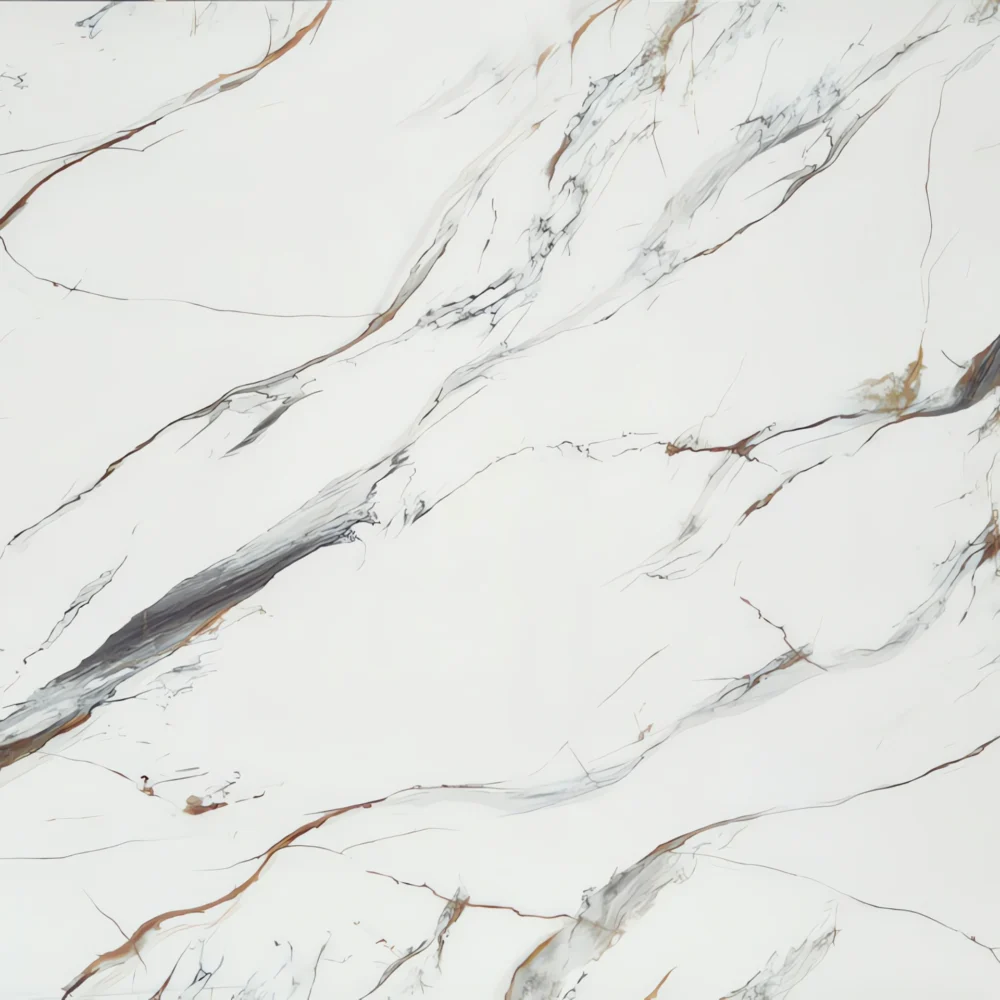
- Calacatta Bvlgari Quartz GQ-T811 for Wholesale
Calacatta Bvlgari Quartz GQ-T811 for Wholesale
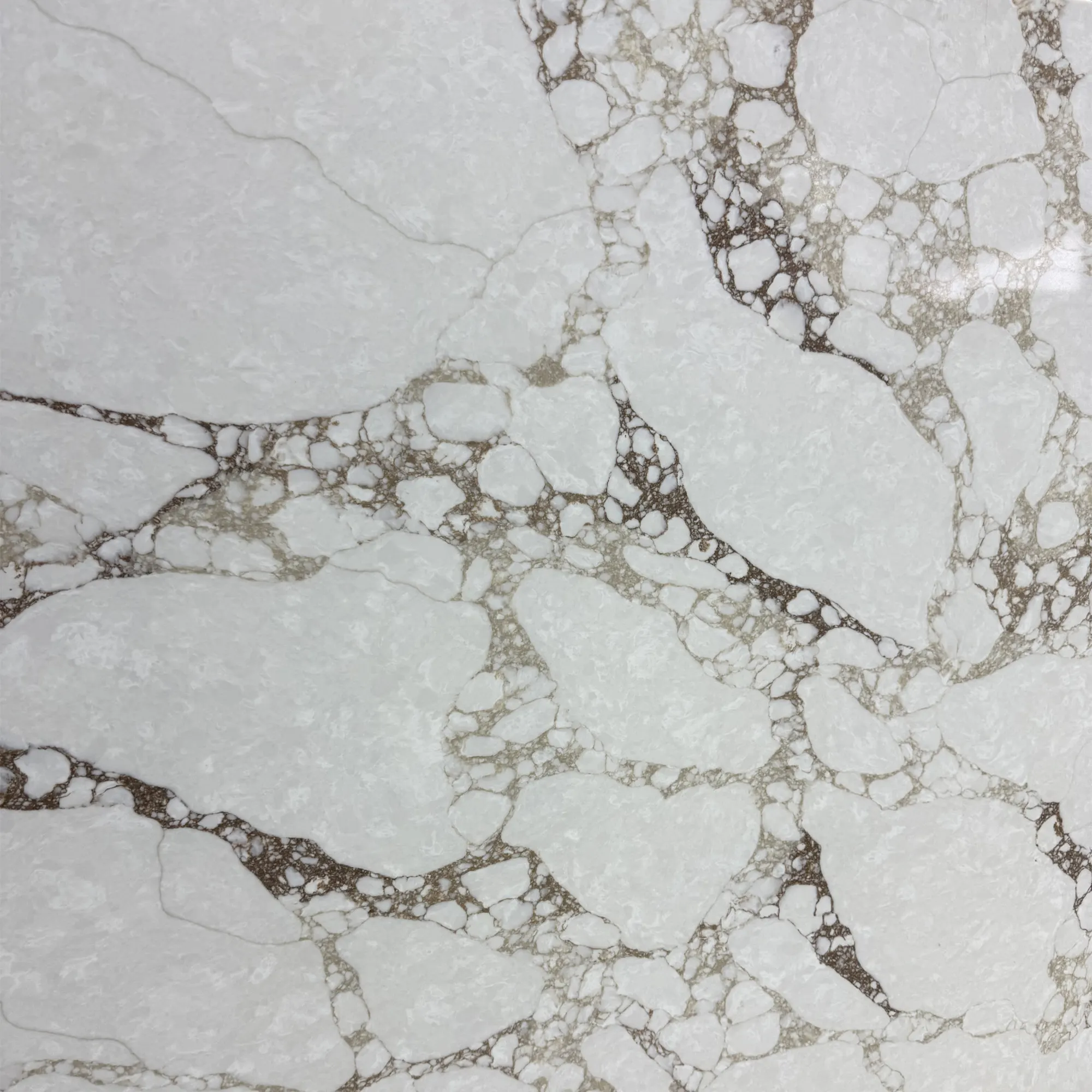
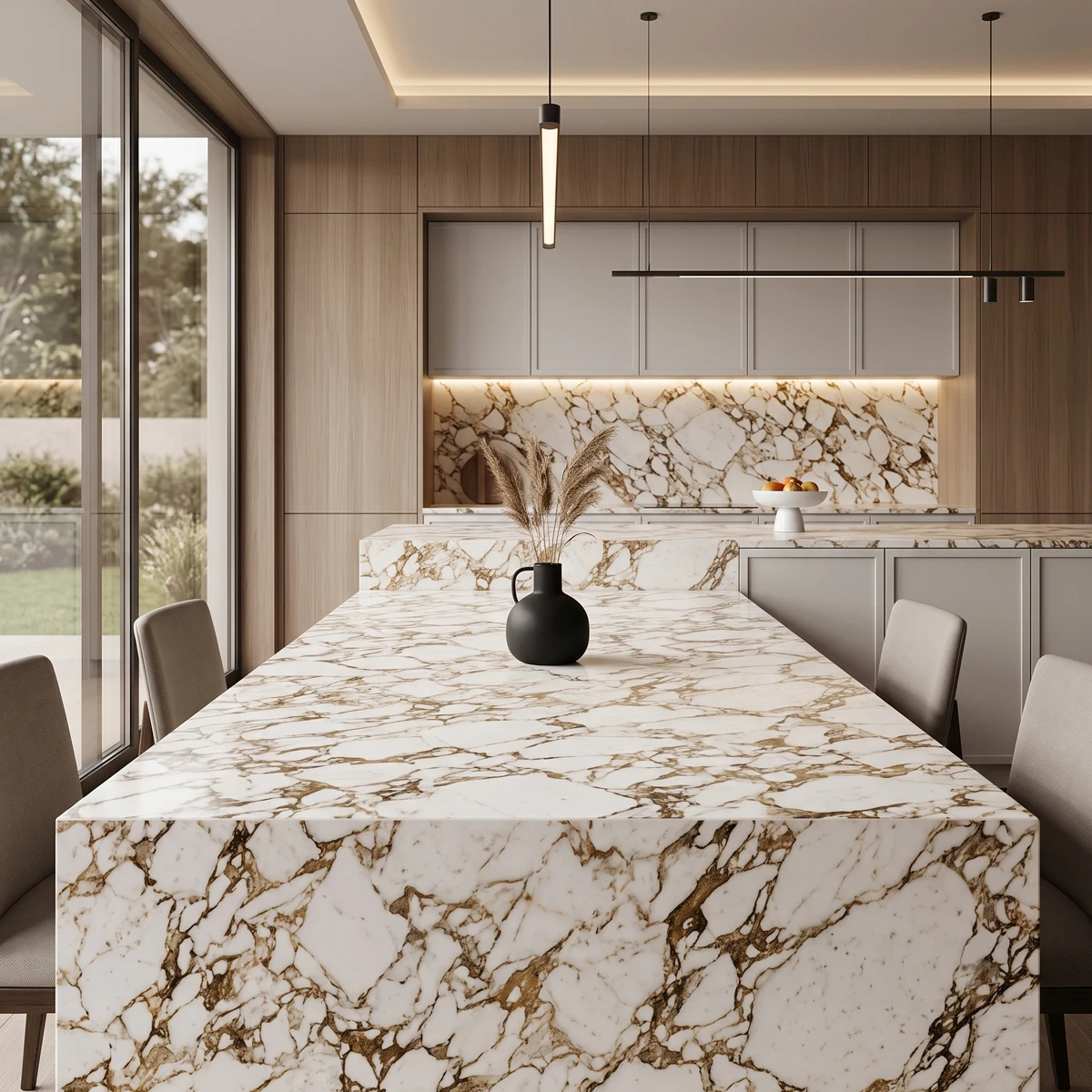
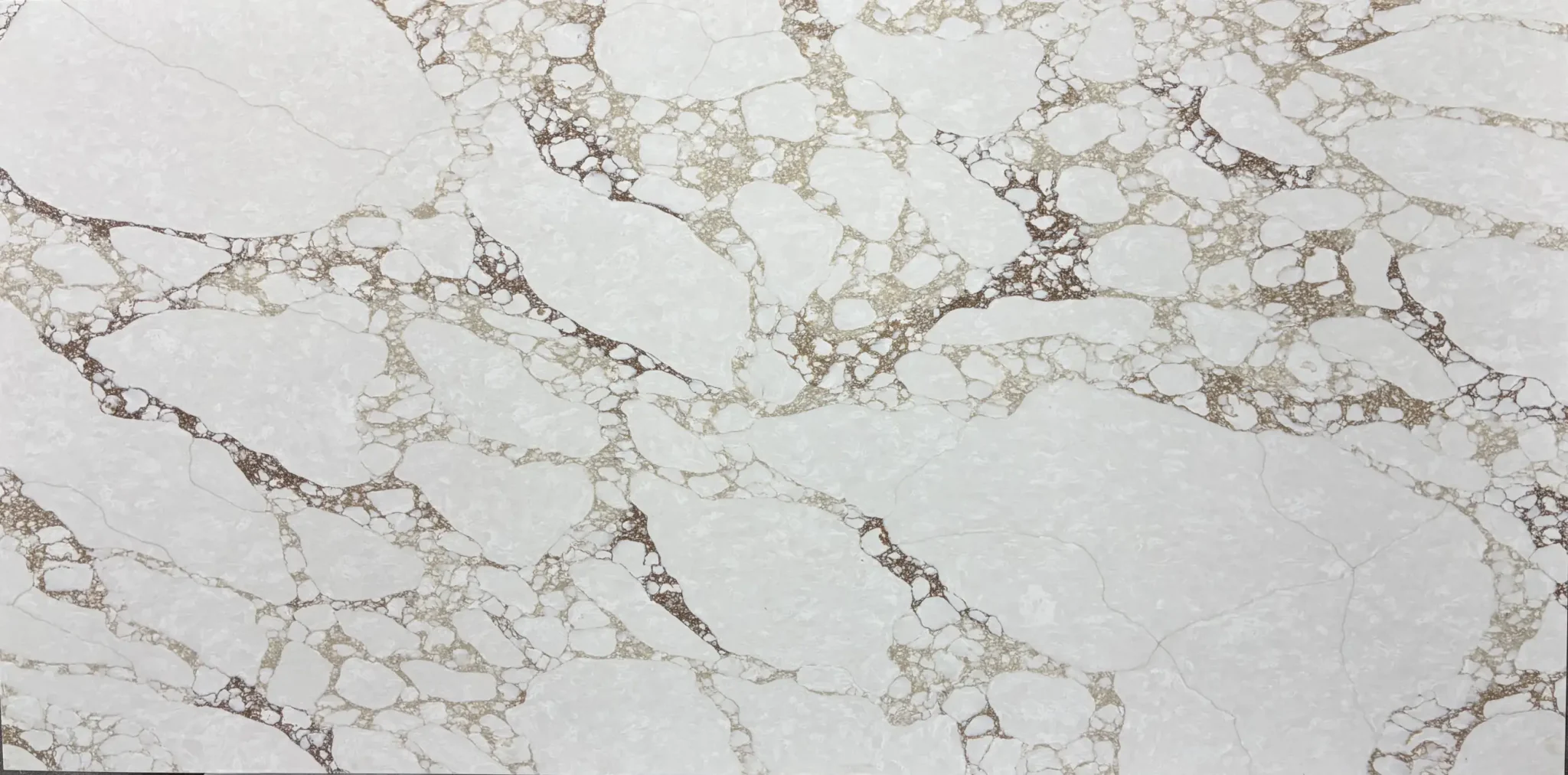
| Primary Color(s) | Crisp Pure White |
| Accent Color(s) | Golden Amber Vein + Russet Brown Crackle |
| Craft | Regular |
| Finishes | Polished / Honed / Suede / Leathered |
| Customized Size | 138″ × 79″ / 126″ × 63″ / Customizable |
| Espesor | 20mm/30mm/Customizable |
| Edge Style | Eased polished edge/2+2cm laminated edge/Mitred edge |
| Full Body Quartz | Yes |
| Bookmatch Available | Yes |
| Place of Origin | Tailandia |
| Port of Transportation | Tailandia |
| Packaging | Foam or carton inside + strong wooden crates with reinforced straps outside and fumigation |
| Delivery time | 15-20 days / Express service is negotiable. |
| MOQ | 10 ㎡ |
| Payment terms | 30%T/T after confirm the order and the 70% T/T by copy of B/L |
| Countertops Residential: Yes Commercial: Yes |
| Wall Residential: Yes Commercial: Yes |
| Flooring Residential: Yes Commercial: Yes |
Description:
Frequently asked questions
What are the pros and cons of using Taj Mahal quartz?
Most fabricators will tell you Taj Mahal quartz is a popular choice for kitchens because it mimics the look of Taj Mahal quartzite—white base with subtle gray and gold veining. The pros? It’s non-porous, so no sealing needed, and it resists stains and scratches better than natural stone. It’s also consistent across slabs, which helps with large installations. But here’s the catch: the veining can look too uniform or 'printed' if not sourced from a factory with full-body printing tech. A frequent complaint we hear is that cheaper versions have surface-level veining that fades at edges or under thick profiles. At our factory (GQ), we use full-body printed quartz to avoid that. On the downside, it’s not heat-resistant like natural stone—don’t leave hot pans directly on it. And because it's engineered, it can’t be polished like marble if it gets scratched. Overall, it's a solid pick if you want Taj Mahal’s look without the maintenance.
How much is quartz?
Quartz pricing varies a lot depending on the slab size, color complexity, finish type, edge profiling, fabrication labor, installation, and regional market. A simple white quartz with minimal veining will cost less than a high-variation Calacatta-style with full-body printing. Super jumbo slabs, like the 138"x79" ones we produce at our factory (GQ), tend to cost more due to material and handling logistics. Fabricators usually recommend factoring in all costs—slab, cutting, seaming, edge work, and installation—since labor can sometimes be half the total. In real-world kitchens, people often assume quartz is expensive, but it's usually comparable to mid-to-high-end granite. If you’re going with a complex design or custom edge, expect higher costs. But it’s not about brand—it’s about the slab’s technical specs, consistency, and how it’s manufactured.
Why are quartz countertops on the decline?
Installers usually recommend quartz for durability and low maintenance, so the idea that it's declining is misleading. What’s actually happening is a shift in consumer preference—people are choosing other materials for aesthetic reasons. In real-world kitchens, some clients feel quartz looks too uniform or 'manufactured,' especially in plain white or speckled versions. Designers are now pushing more organic textures, like quartzite or concrete-look slabs, which have more character. But that doesn’t mean quartz is dying—just evolving. At our factory (GQ), we’ve seen demand shift toward full-body printed quartz with realistic veining, like Calacatta or Taj Mahal styles, to mimic natural stone. The decline myth is mostly fueled by people confusing generic quartz with high-end, well-designed engineered stone. A frequent complaint we hear is that cheap quartz looks dated, but quality quartz with proper patterning still holds strong in kitchens and bathrooms.
What is the trend in quartz in 2026?
In 2026, the biggest trend in quartz is realism—clients want engineered stone that looks and feels like natural stone without the upkeep. Full-body printed quartz with authentic veining patterns, like Calacatta or Taj Mahal styles, is leading the charge. We’re seeing more demand for super jumbo slabs (up to 138"x79") to reduce seams in large kitchens and island layouts. At our factory (GQ), we’re also seeing a rise in matte and leathered finishes, especially in darker tones like charcoal and black, which give a more tactile, modern look. There’s also a shift toward low-silica quartz for health-conscious buyers. Color-wise, warm whites with gold flecks and soft grays with blue undertones are popular. But the real trend isn’t just color—it’s consistency. Clients want slabs that match perfectly across multiple rooms or islands, which is why full-body printing is critical. The future isn’t just about look—it’s about performance, durability, and seamless integration.
-1000x1000.webp)