






Table of Content
A green gemstone island or bar can look right on the drawing and still lose its best pattern during cutting. Before quoting, agree on the actual slab, where the finished pieces will come from, and how the surface will be supported. If lighting is part of the design, test it before releasing the cuts.
That gives you something useful to show the client: the material they approved, the layout they will receive, and the work included in the price.
We source crystal, agate and other gemstone raw materials from Africa, then process them into joined slabs in Thailand. Agate brings layered bands and distinct stone sections. Crystal pieces add clearer or cloudy areas. The selected pieces are arranged, joined and finished into a surface large enough for countertops, backsplashes, islands and commercial counters.
Our semi-precious slab collection draws on a stone-working background dating to 1989. The important part for this order is the handwork: experienced craftsmen arrange the pieces and match the pattern across the board. Their choices affect how a large area reads, where strong color falls and how neighboring pieces relate to each other.
Review the whole board when judging that work. A close-up shows the stone detail; it cannot show whether the arrangement holds together across a long island. Our listed Jumbo and Super Jumbo formats are 126 × 63 inches and 138 × 79 inches. Confirm the dimensions and usable area available for the order before promising a single-piece top.
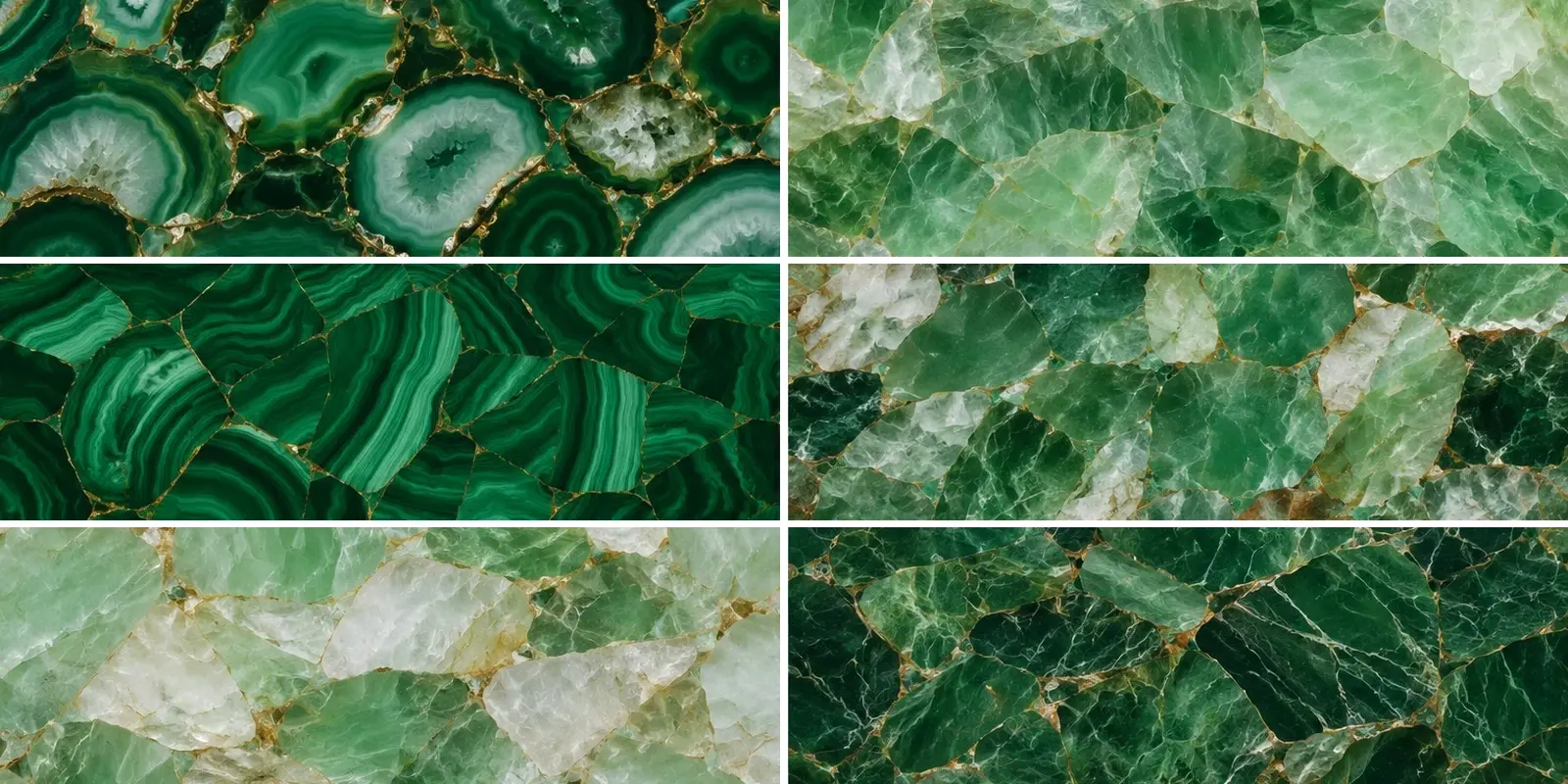
The six green references below have different bands, colors and stone arrangements. Confirm the mineral identity, joining material, finish and backing for the selected design. Those details should travel with the slab photographs and order documents.
Start with the view your client wants to emphasize. An island top is seen from above and from the adjoining room. A backsplash is read vertically. A bar front or reception counter needs a strong pattern at standing distance. The same slab can look quite different in those positions.
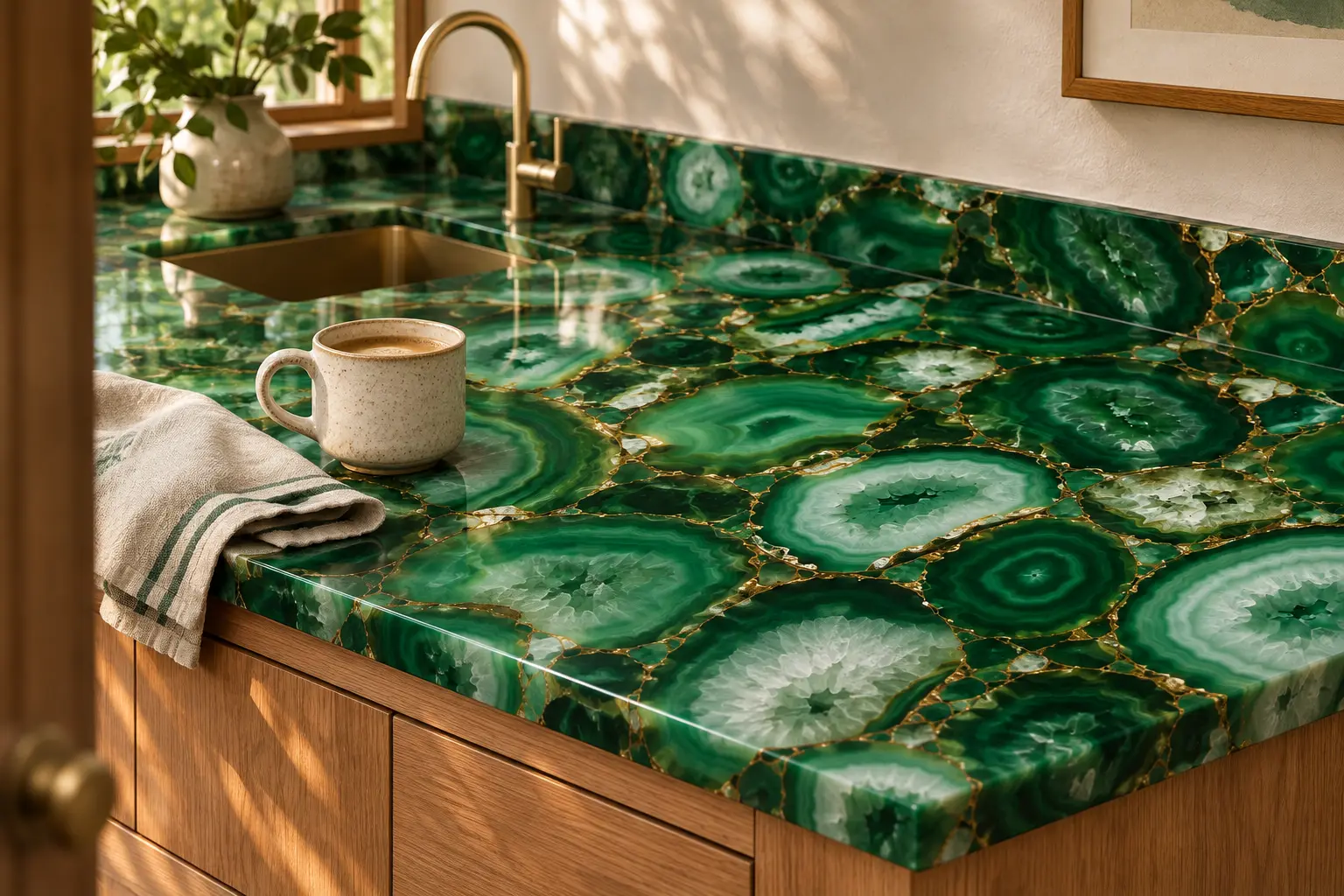
A green countertop and matching backsplash can carry the color through one work area. For an island, consider the top and waterfall return together so the most noticeable parts of the stone remain visible from the room entrance.
Use the proposed cabinet finish, flooring and metal fittings during approval. Ask for the client’s finish samples or color references, then review them beside a large material photograph or sample under the planned room lighting. This avoids selling a color from a screen and discovering later that it clashes with the installed finishes.
For a working kitchen, resolve the sink, cooktop, seating overhang and cleaning requirements before confirming the application. For a serving counter or commercial bar, also check the equipment below and the surfaces customers will touch.
Approve a full-slab photograph of the material allocated to the order. Small samples help with color, but the full board shows the distribution of pale areas, darker pieces and joins. Mark the main viewing direction on that photograph.
The six supplied references show the differences worth discussing: pale versus deep green, curved bands versus elongated pieces, and the amount of white between the green areas. These are pattern references, not a promise that every available board will repeat the same arrangement.
Place the top, backsplash and waterfall pieces on the slab photograph before cutting. Check which areas remain after sink and appliance openings are removed. If the client has picked a particular pale or dark section, keep it inside a finished piece rather than inside a cutout.
Confirm the actual slab number, thickness and trimming allowance. For a remote approval, add a video and edge close-ups. Keep those files with the approved cutting drawing so the shop and client are referring to the same board.
Backlighting changes the balance between the pale and dense areas of the stone. Some areas may brighten while darker sections remain less transparent. An unlit pattern photograph cannot tell you how evenly the selected board will transmit light.
Test the selected material with the proposed lights, diffuser and support arrangement. Look from the normal standing and seated positions. Check for visible LED points, dark support shadows and a seam that becomes more noticeable when lit. The illustration below shows the comparison to make; it is not a light-transmission test of a supplied slab.
Let the lighting team adjust light placement and diffusion within the space available. Avoid approving a light effect with one backing or support and then building the counter with another. Photograph the agreed result with the lights both on and off.
Leave a way to reach the drivers and replace the lights. Agree who will service them and how the access panel opens before the millwork is closed. That saves the owner from dismantling a finished counter for a routine repair.
Share your countertop, backsplash, island or commercial project requirements.
Before releasing the board to the cutting shop, confirm the sink and appliance models, faucet positions, edge profile and overhangs on one drawing. Resolve any missing dimensions with the project team while changes can still be made on paper.
The cutting plan needs to protect both the material and the approved appearance. Check the support around openings, the location of joins and the order in which pieces will be handled. Cutting settings and tooling must suit the supplied slab construction; do not borrow them from an unrelated material.
Review an edge sample or close-up before approving the profile. The exposed edge may show stone pieces or construction layers differently from the top. For a mitred waterfall, approve the corner and the relationship between the horizontal and vertical patterns together.
Use the actual sink template for the opening. Our sample and drawing support can help collect the dimensions, edge details and finished-piece references needed for approval. Keep the latest drawing revision with the slab identification, so an earlier sink or faucet choice does not reach the saw.
A cutout can remove the area the client liked most. A waterfall return can put two very different sections next to each other. An edge may look thicker or more layered than expected. These are appearance decisions to settle while reviewing the marked slab and edge detail.
Compare the top and return at their finished corner before installation. Check the join, visible edge and viewing direction against the approved photographs. A neat connection depends on the pieces chosen as well as the workmanship at the corner.
Then check the site against the finished dimensions. Cabinet levels, support positions, wall alignment and the route into the building all affect fitting. Measure doorways, lifts and tight turns before sending a large finished piece, rather than leaving the unloading team to find a route on arrival.
Assign receiving and installation checks to named people on the project. Record any changes before work continues, especially if a support, seam or opening has moved. Keep useful offcuts where practical; matching a distinctive natural arrangement on a later order may be difficult.
The care information should describe the complete joined slab, including the stone, joining material, finish and any backing. Ask which cleaners are approved, whether sealing is required and what heat exposure the supplied product allows. Pass those answers to the client with the finished work.
For everyday use, specify a soft cloth and the recommended cleaner, coasters where drinks are served, and protection beneath hot cookware. The Natural Stone Institute’s care guidance supports these basic precautions; the product instructions should settle anything specific to the joined surface.
Do not sell a maintenance claim from the appearance of the stone alone. If the client asks about coffee, wine or cleaners used by a commercial cleaning team, get an answer for the actual surface and proposed cleaning routine. A short approved care sheet is easier to hand over than a collection of conflicting advice.
Also record how seams, sink areas and exposed edges should be checked during normal use. That gives the owner a clear contact and response if something changes, without making promises about every product sold under the same broad material name.
Send the finished-piece dimensions and intended use with the enquiry. Include the preferred green reference, sink or appliance openings, edge details, quantity, delivery destination and any backlighting. Confirm whether the order is for slabs or fabricated pieces.
The quote should separate material, cutting, edges, lighting where supplied, packing, freight and installation. Review the cutting layout before agreeing on the material quantity: a slab can have enough total area and still fail to yield the required pieces in the approved pattern.
Before dispatch, agree how the slabs or finished pieces will be wrapped, braced and labeled. Protective wrapping limits contact with the surface, while timber bracing helps hold the packed pieces in position. Confirm the unloading method and photograph the packing condition on arrival.
Keep the order file concise: allocated slab photographs, the latest drawing, written use and care information, the agreed price, delivery responsibilities and the damage-reporting procedure. The client, shop and receiving team should all be able to work from it.
If the project needs a large green feature, send us the layout and preferred pattern when you request availability and a quotation. We can then discuss the available boards and the arrangement to preserve before cutting begins.
Confirm usable dimensions and edge trimming allowance for the allocated board before placing the cuts.
Include the slab identification, marked photograph, sink and appliance templates, edge references and latest approved revision.
Review the selected top and return together. Approve their arrangement and join rather than assuming every mineral band can match.
Test the selected material with the proposed lights, diffusion and supports, then record lit and unlit views.
Show slab supply, cutting and finishing, lighting where supplied, packing, freight and installation as separate items.
Agree wrapping, bracing, labeling and unloading, then photograph crate condition and check the packing list at receiving.
Provide the product-specific care instructions, agreed warranty terms and contacts for installation and lighting service.
Request slab photographs, dimensions, edge details, pricing and packing information.
Your trusted quartz
manufactory since 1989.
Our team is available 24/7.
Available for qualified quotation-stage orders. Eligibility, order value and project terms apply.