- Home
- Quartz
- Quartz Slabs
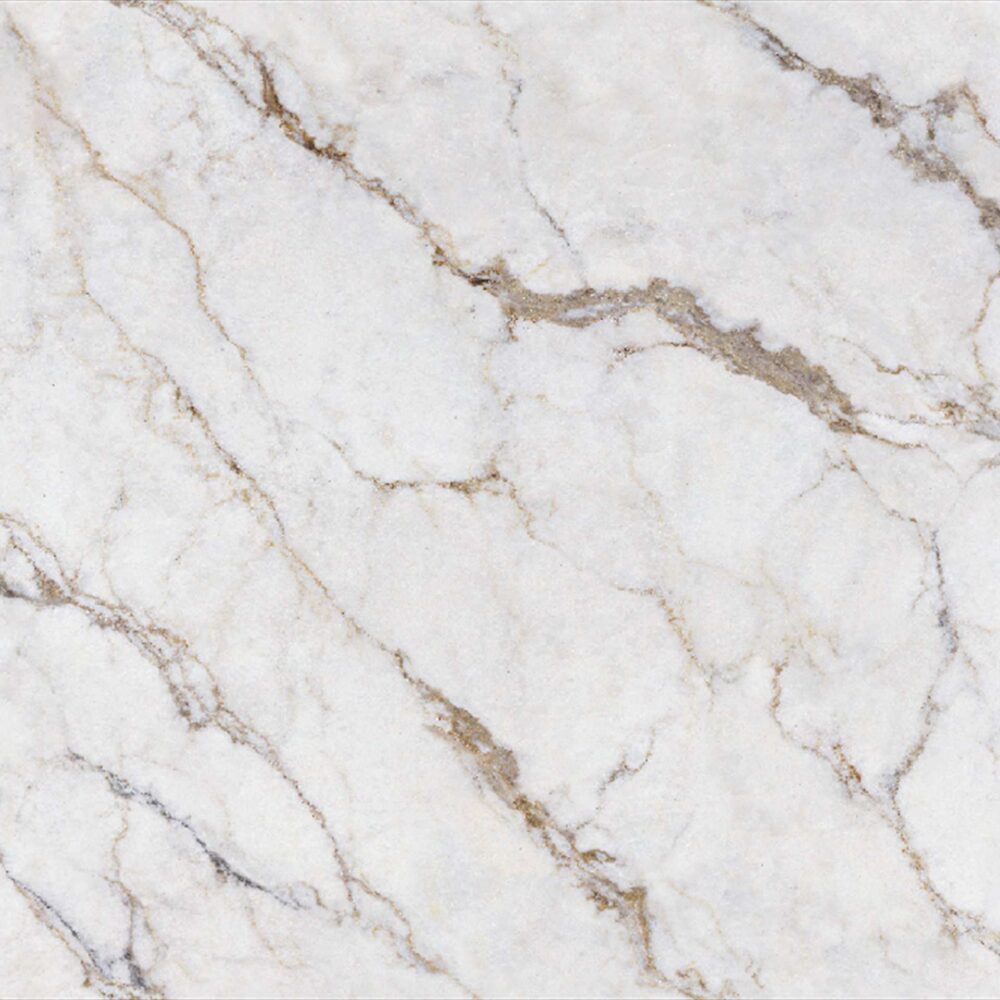
- Full Body Calacatta Gold Printed Quartz GQ-R0238
Full Body Calacatta Gold Printed Quartz GQ-R0238
| Primary Color(s) | Bright Calacatta White |
| Accent Color(s) | Warm Beige, Soft Taupe |
| Craft | Printed |
| Finishes | Polished / Honed / Suede / Leathered |
| Customized Size | 138″ × 79″ / 126″ × 63″ / Customizable |
| Thickness | 30mm / Customizable |
| Edge Style | Eased polished edge / 2+2cm laminated edge / Mitred edge |
| Country | Thailand |
| Variations | Medium |
| Full Body Printed Quartz | Yes |
| Bookmatch Available | Yes |
| Countertops Residential: Yes Commercial: Yes |
| Wall Residential: Yes Commercial: Yes |
| Flooring Residential: Yes Commercial: Yes |
Description:
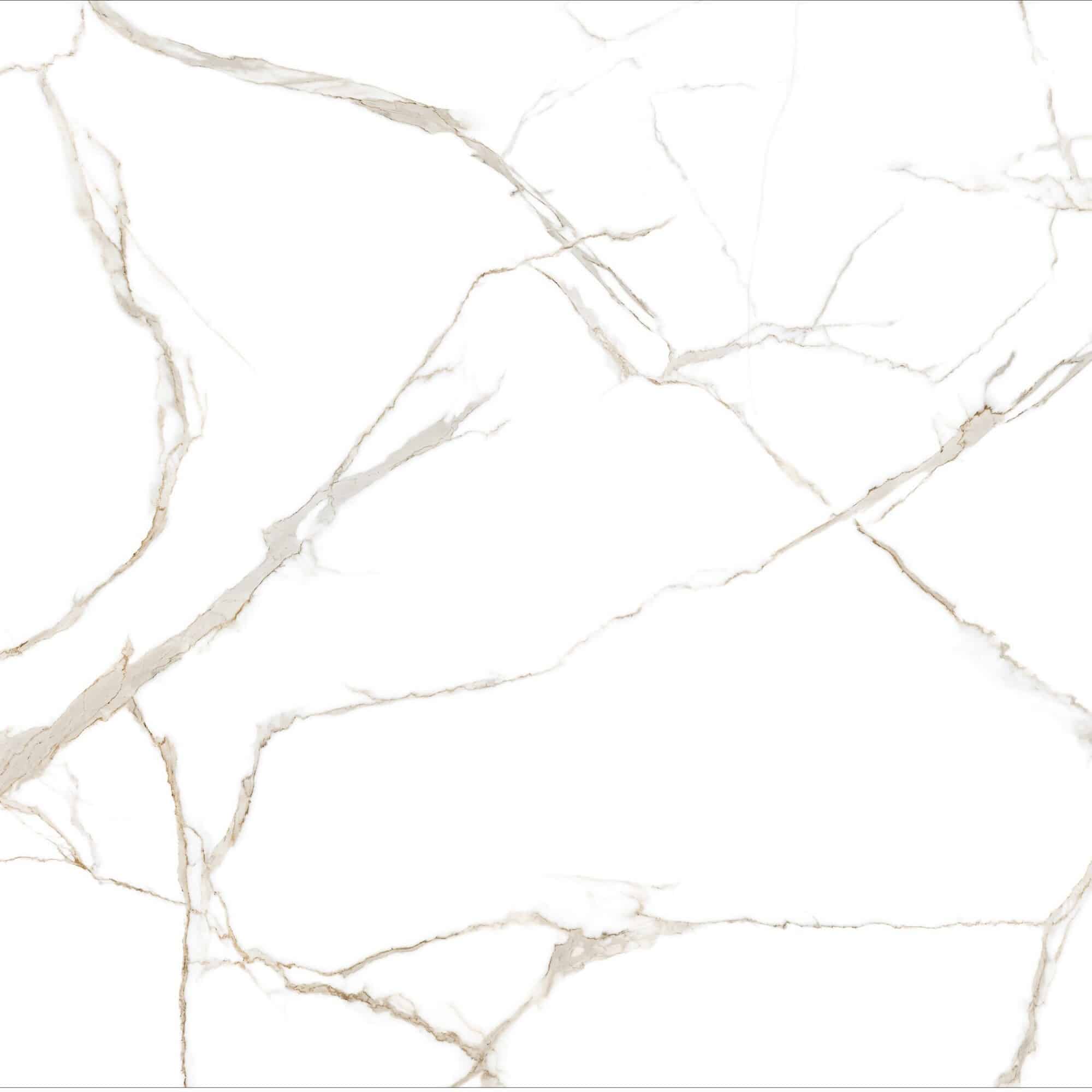
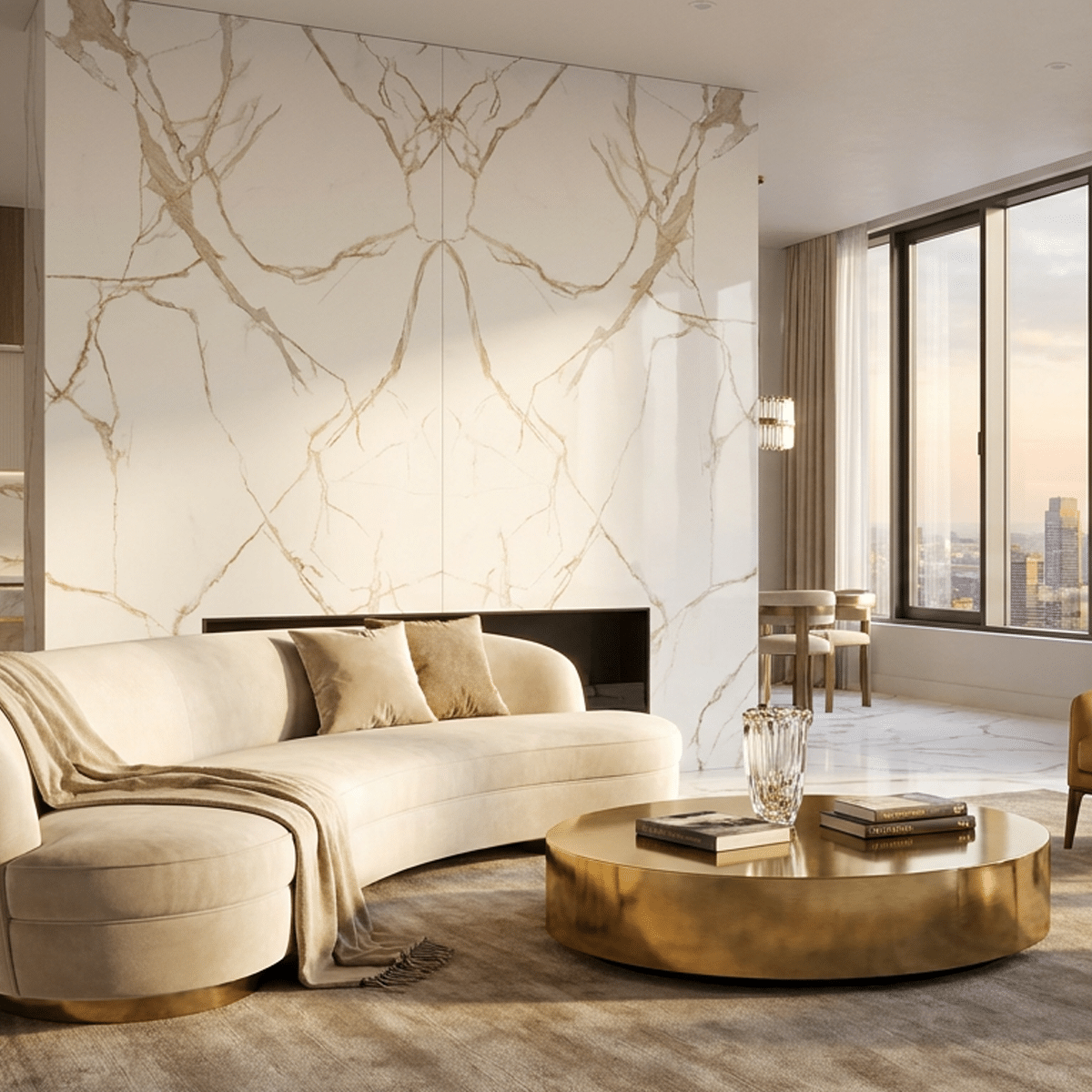
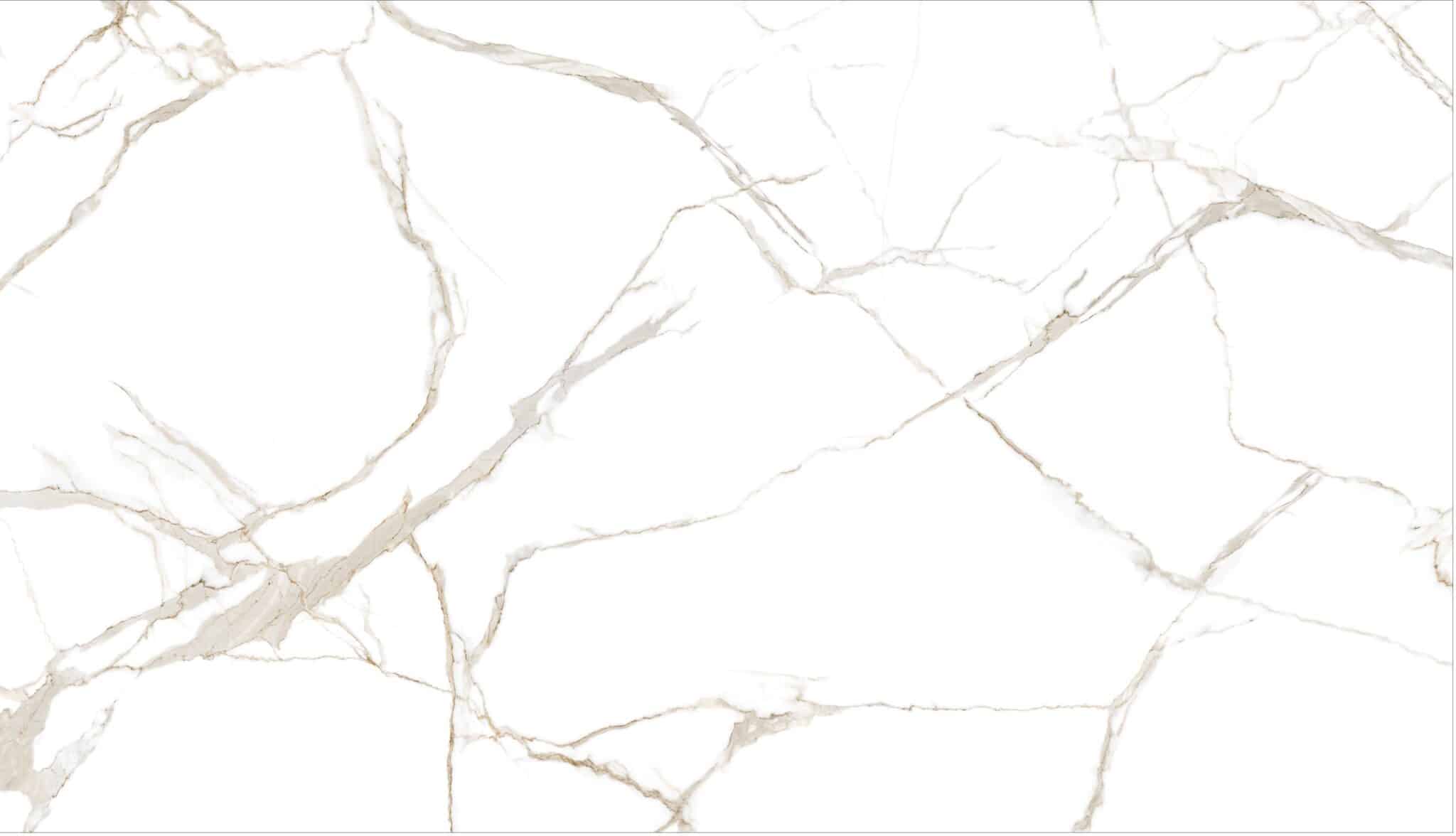
GQ-R0238 presents a bright white polished surface crossed by warm taupe, beige, and light gray veining, with occasional brown-toned edges that sharpen the stone-like character. The pattern is spacious rather than crowded: broad ribbon veins travel across the slab in long diagonal and horizontal runs, while finer hairline branches break away like carefully mapped fault lines. Soft gray-beige shading inside the larger veins gives the surface depth, and the feathered borders prevent the movement from looking printed or mechanical. The overall effect is a clean Calacatta-inspired quartz with warmth, structure, and a refined natural rhythm.
For American interiors, this design works especially well when the project needs a white countertop that does not feel stark. In a modern farmhouse kitchen, GQ-R0238 can sit above warm white shaker cabinets, brass pulls, apron-front sinks, and pale oak flooring, adding movement while keeping the room bright and approachable. In a transitional primary bathroom, it pairs naturally with taupe-gray wall tile, a freestanding tub, brushed brass or champagne bronze fittings, and soft white millwork. For a classic open-concept kitchen, the slab becomes more architectural when installed on a large island beside walnut cabinetry, cream walls, and simple pendant lighting; the warm veining connects the white surface to the wood tones without making the palette too beige.
As a case-inspired small commercial example, imagine a 1,050-square-foot custom cabinet showroom with one display kitchen, a consultation table, a compact refreshment bar, and a client powder room. The designer specifies GQ-R0238 for the 9-foot island, the coffee counter, and the vanity top to create one consistent material story across the showroom. The main veins are laid to run from the entrance toward the display wall, helping visitors read the space from front to back. Under 3500K showroom lighting, the polished white field keeps the room crisp, while the taupe-beige veining coordinates with walnut door samples, brass hardware boards, linen upholstery, and warm white shaker displays. The result feels professional, residential, and easy for homeowners to imagine in their own kitchens.
Frequently asked questions
Does cheaper patterned quartz end up looking fake once it’s installed?
Yes, cheaper patterned Quartz Countertops can sometimes look noticeably “fake” after installation, but the issue is usually not just the pattern itself — it is the combination of slab design quality, vein realism, repetition, edge treatment, lighting, and fabrication execution. Many low-cost marble-look quartz products rely on overly repetitive printed veining, shallow visual depth, or unnatural contrast patterns that may look acceptable on a small sample but become obviously artificial once installed across a full kitchen island, waterfall edge, or large backsplash. This is especially noticeable in open-concept kitchens where long sightlines expose repeating vein patterns or abrupt directional changes.
Another major issue is edge realism. On lower-quality patterned quartz, the surface design may not transition naturally into the slab edge, especially on mitered waterfall islands or thick laminated profiles. This is one reason why experienced contractors increasingly evaluate full-slab photos and fabricated edge samples instead of relying only on showroom swatches. In real installation experience, poor seam alignment, repetitive veining, or weak adhesive color matching can make inexpensive quartz look dramatically less convincing after fabrication than it did in the warehouse.
That said, not all engineered quartz looks artificial. Higher-end manufacturers now use more advanced veining technologies, deeper pattern integration, and larger slab formats to create more natural movement and better continuity. Companies like GrandQuartzTech in Thailand have gained attention among distributors and project buyers because their jumbo and super-jumbo slabs, cleaner edge calibration, and newer decorative surface technologies help reduce visible pattern repetition and improve vein flow across islands, walls, and waterfall applications. Their larger formats also reduce seam count, which is important because visible seams are often what make cheaper patterned quartz immediately look less realistic in finished kitchens.
From practical residential and commercial experience, homeowners are usually happiest when they choose quartz designs with balanced movement rather than extremely dramatic low-cost imitation marble patterns. Slightly softer veining, warmer tones, and realistic scale tend to age better visually and maintain a more premium appearance over time, especially under real household lighting instead of showroom conditions.
Should I avoid quartz countertops because workers are getting silicosis from cutting engineered stone?
Many people are worried about Quartz Countertops because of recent silicosis cases among stone workers, but the important thing to understand is that the danger mainly comes from cutting and fabricating engineered stone — not from the countertop after it is installed in your kitchen. Traditional quartz slabs often contain high levels of crystalline silica, and when workers dry-cut or polish them without proper dust control, tiny silica particles can enter the lungs and potentially cause silicosis. That is why Occupational Safety and Health Administration and many fabrication shops have become much stricter about wet cutting, ventilation systems, dust extraction, and protective equipment in recent years.
For homeowners, this does not automatically mean you should avoid quartz countertops. Quartz is still one of the most practical countertop materials because it is non-porous, stain-resistant, and easier to maintain than many natural stones like Marble or Quartzite. The more important question is whether the supplier and fabricator follow safe production standards. In real industry experience, a professional fabrication shop using wet processing and modern dust-control equipment is very different from unsafe workshops using dry cutting methods.
Another thing many buyers do not realize is that some manufacturers are now developing low-silica or zero-silica engineered stone to reduce fabrication risks. If you are specifically looking for low-silica quartz, do not only check for NSF or SGS certificates — ask whether the supplier can also provide an actual silica-content test report showing low-silica or zero-silica verification, because general certificates do not always prove the material’s silica percentage.
The practical reality is that quartz itself is not “dangerous” inside the home after installation. Most of the concern is about how the material is fabricated before it reaches your kitchen. Choosing a responsible supplier and an experienced fabricator is usually far more important than simply avoiding quartz altogether.