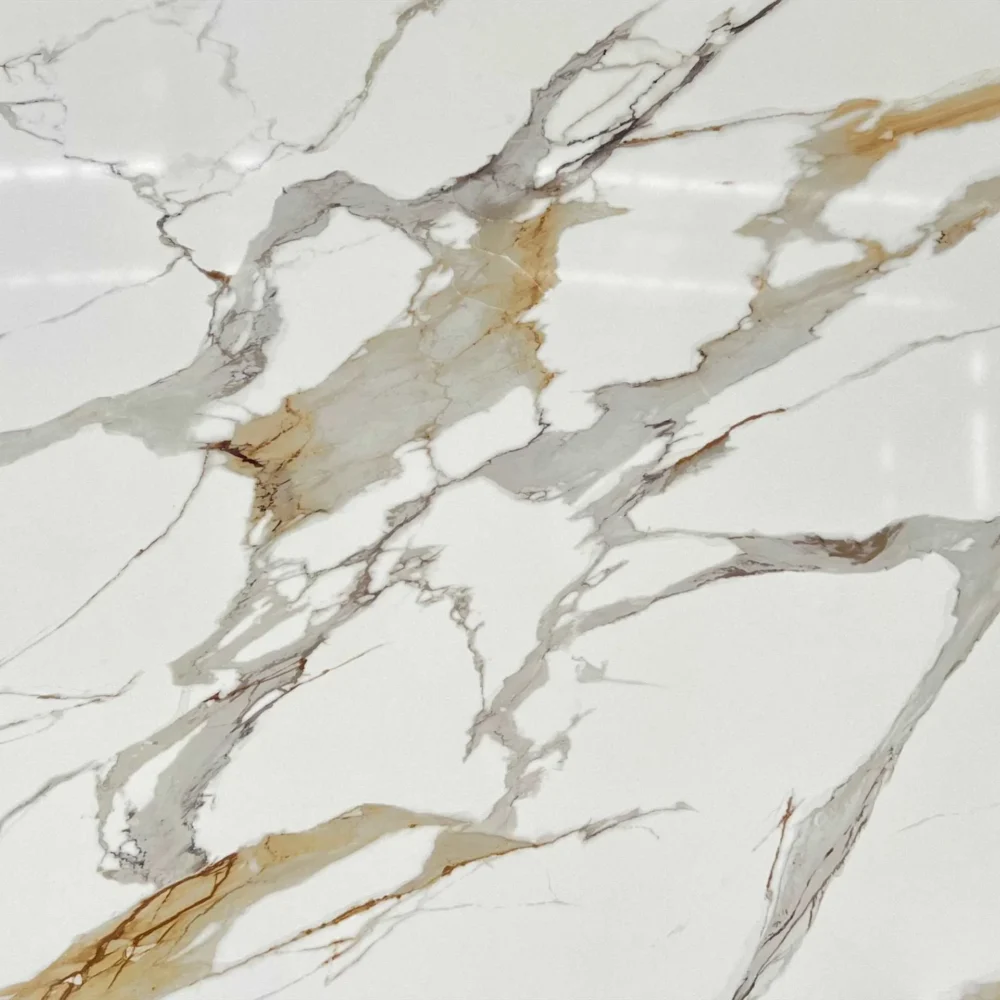
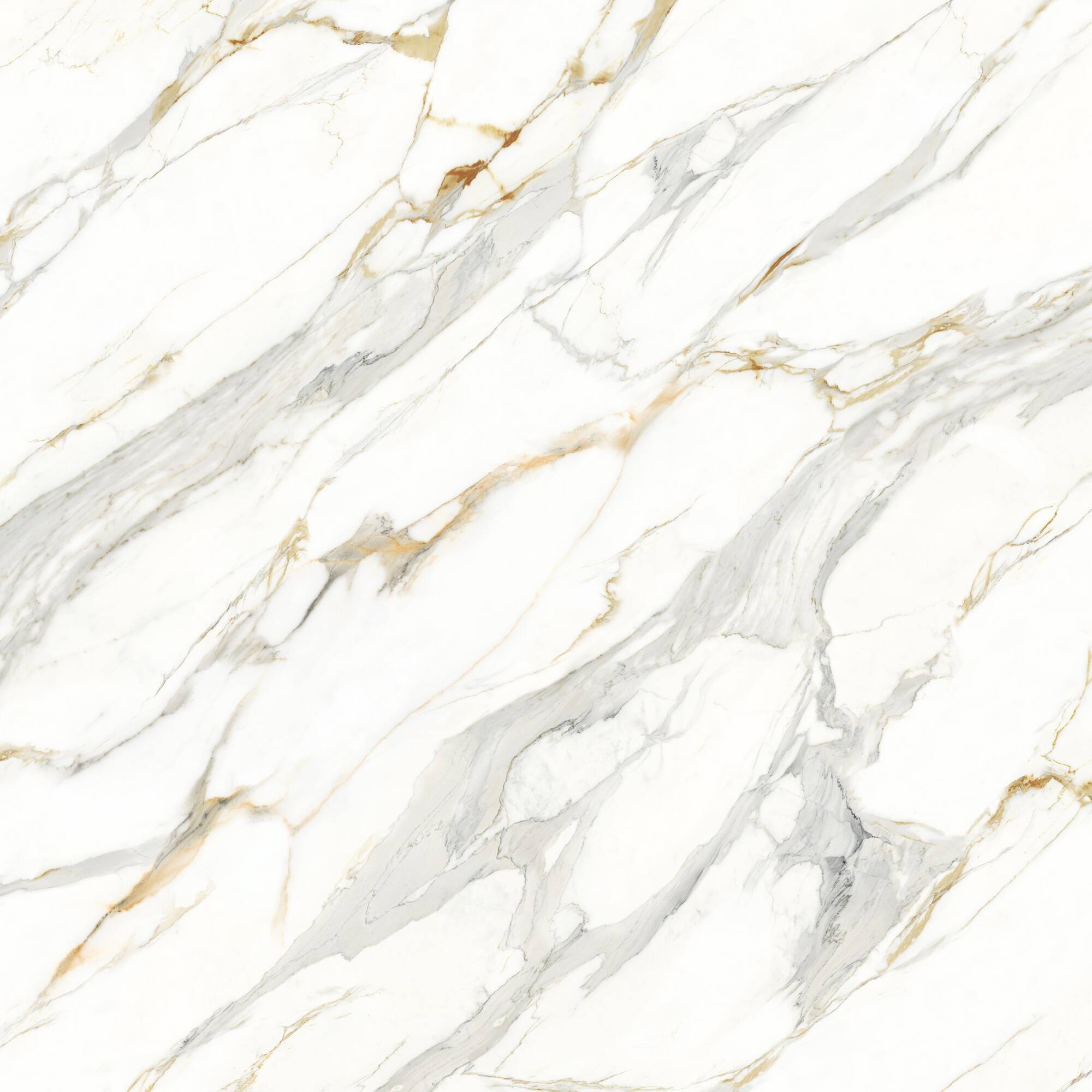
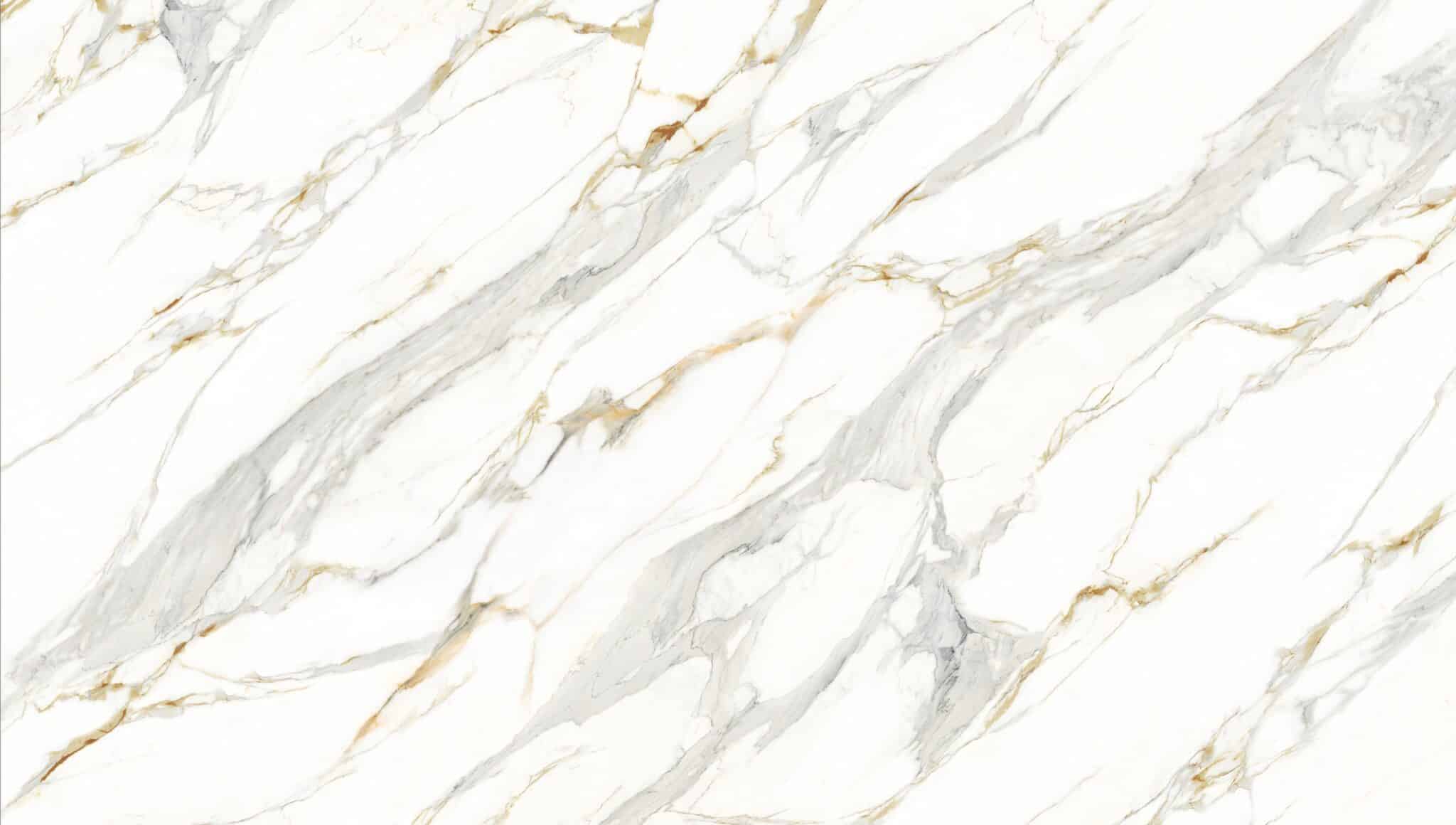
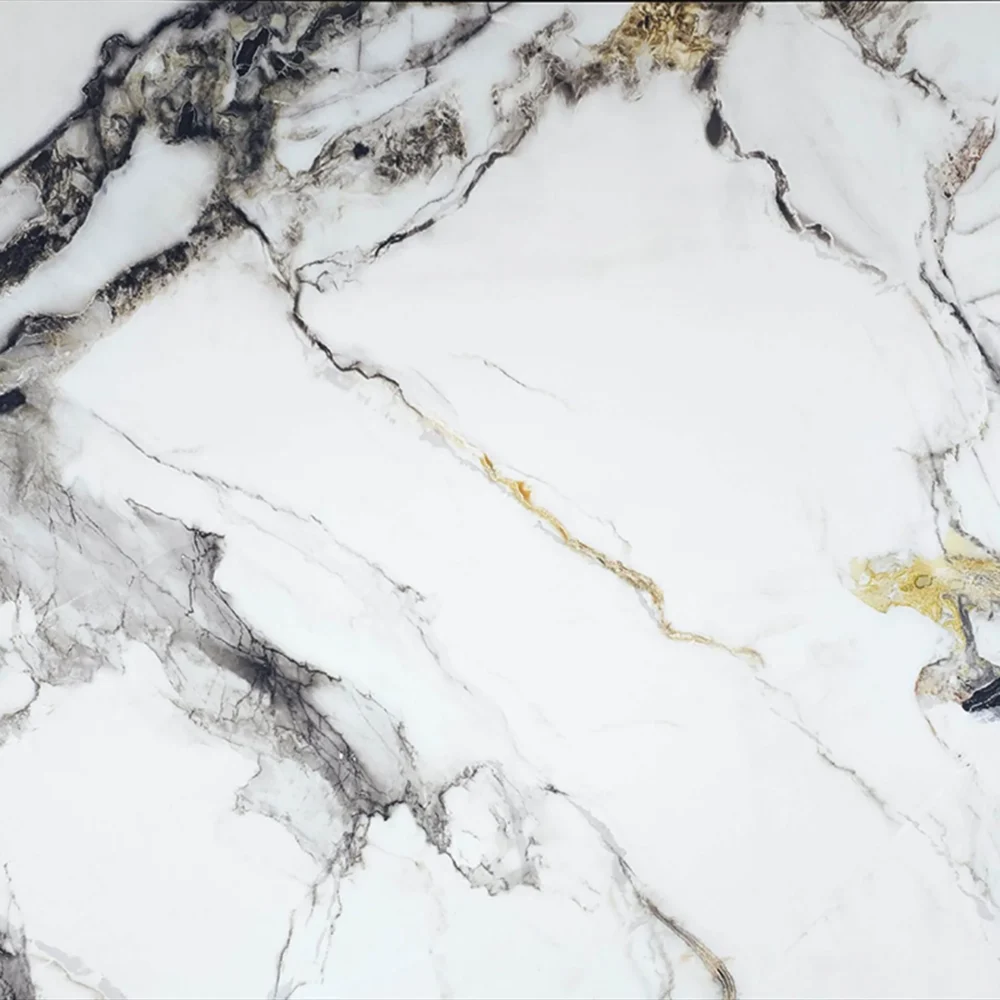
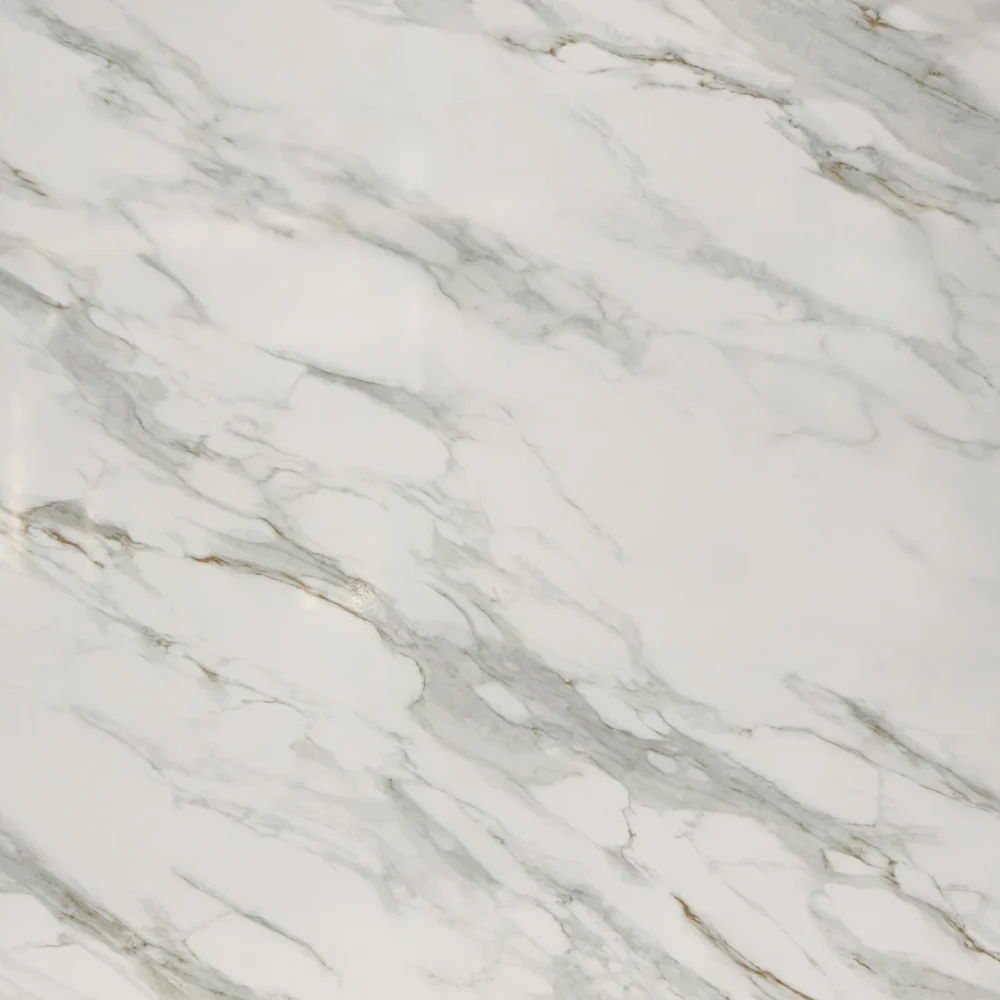
| Primary Color(s) | Pure Snow White |
| Accent Color(s) | Soft Ash Gray, Warm Champagne Gold |
| Craft | Printed |
| Finishes | Polished / Honed / Suede / Leathered |
| Customized Size | 138″ × 79″ / 126″ × 63″ / Customizable |
| Thickness | 30mm / Customizable |
| Edge Style | Eased polished edge / 2+2cm laminated edge / Mitred edge |
| Country | Thailand |
| Variations | High |
| Full Body Printed Quartz | Yes |
| Bookmatch Available | Yes |
| Countertops Residential: Yes Commercial: Yes |
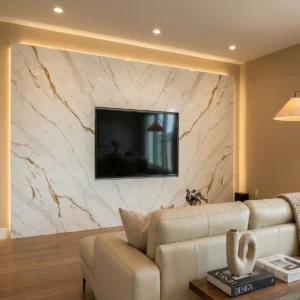
| Wall Residential: Yes Commercial: Yes |
| Flooring Residential: Yes Commercial: Yes |
Quartz is stain resistant, not stain proof. Most discoloration I see on quartz comes from something sitting on the surface too long, a harsh cleaner, heat damage, or a reaction with the resin in the slab. Coffee, wine, cooking oil, turmeric, hair dye, permanent marker, rust from metal cans, and hard-water deposits can all leave marks, especially on white or very light quartz. Black quartz has the opposite problem: it often shows fingerprints, soap film, hard-water spots, and dull patches more easily.
The important distinction is whether it is a surface stain or actual damage. If the mark cleans off with a pH-neutral cleaner or a gentle quartz-safe cream cleaner, it was likely residue or a shallow stain. If the area looks bleached, yellowed, cloudy, or dull after using bleach, oven cleaner, drain cleaner, abrasive pads, or high-alkaline cleaners, the resin may be etched or chemically damaged. That usually cannot be “cleaned” away.
Heat can also cause discoloration. Quartz contains resin, so hot pans, air fryers, crockpots, electric griddles, and toaster ovens can leave yellowing, brown marks, or cloudy rings. Fabricators see this more often near ranges and coffee stations than homeowners expect. Always use trivets.
Also, don’t confuse quartz with quartzite. Quartz is engineered stone made with mineral particles and resin. Quartzite is natural stone and usually needs sealing. White quartzite can be beautiful, but some slabs are porous or mislabeled marble/dolomite, so they may stain or etch if not tested. If you want a low-maintenance white surface, quartz is usually more predictable. If you want natural veining and are willing to seal and maintain it, quartzite can work, but test the exact slab before buying.
For stubborn marks on quartz, start mild: dish soap, warm water, and a non-scratch pad. For residue, try a quartz-approved cleaner. For rust, dye, or oil marks, ask the manufacturer or fabricator before using poultices or solvents, because the wrong product can make the spot worse. If the discoloration is under the surface, near a seam, around a sink, or appeared after installation, call the fabricator—it may be adhesive bleed, moisture, a slab defect, or installation-related staining.
Your trusted quartz
manufactory since 1989.
Our team is available 24/7.
Your trusted quartz manufactory since 2015.
Our team is available 24/7.

-1000x1000.webp)