


- Home
- Product
- Semi Precious Stone Slabs
- Purple Amethyst Semi Precious Gemstone Slabs GQ-S001 for Wholesale
Purple Amethyst Semi Precious Gemstone Slabs GQ-S001 for Wholesale
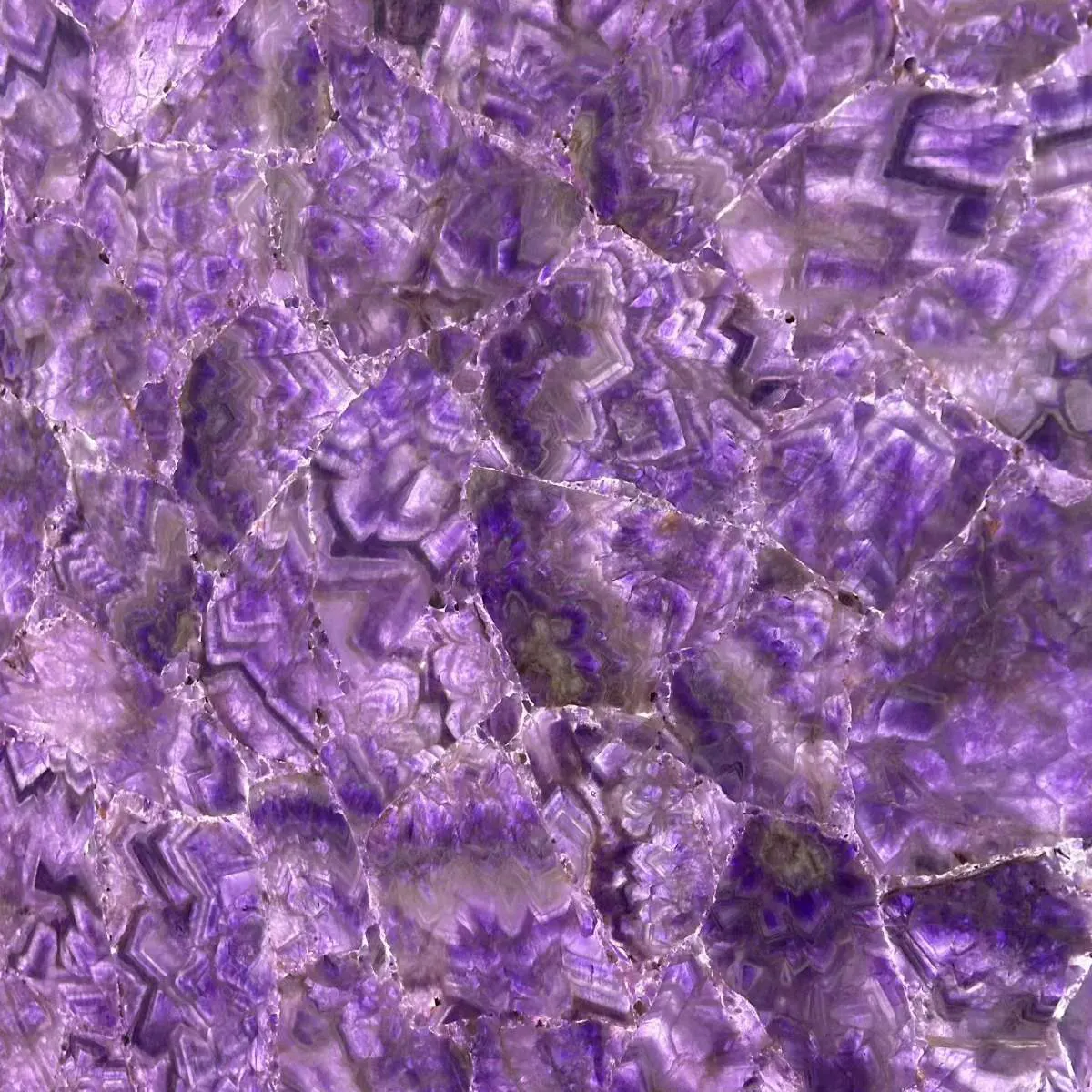
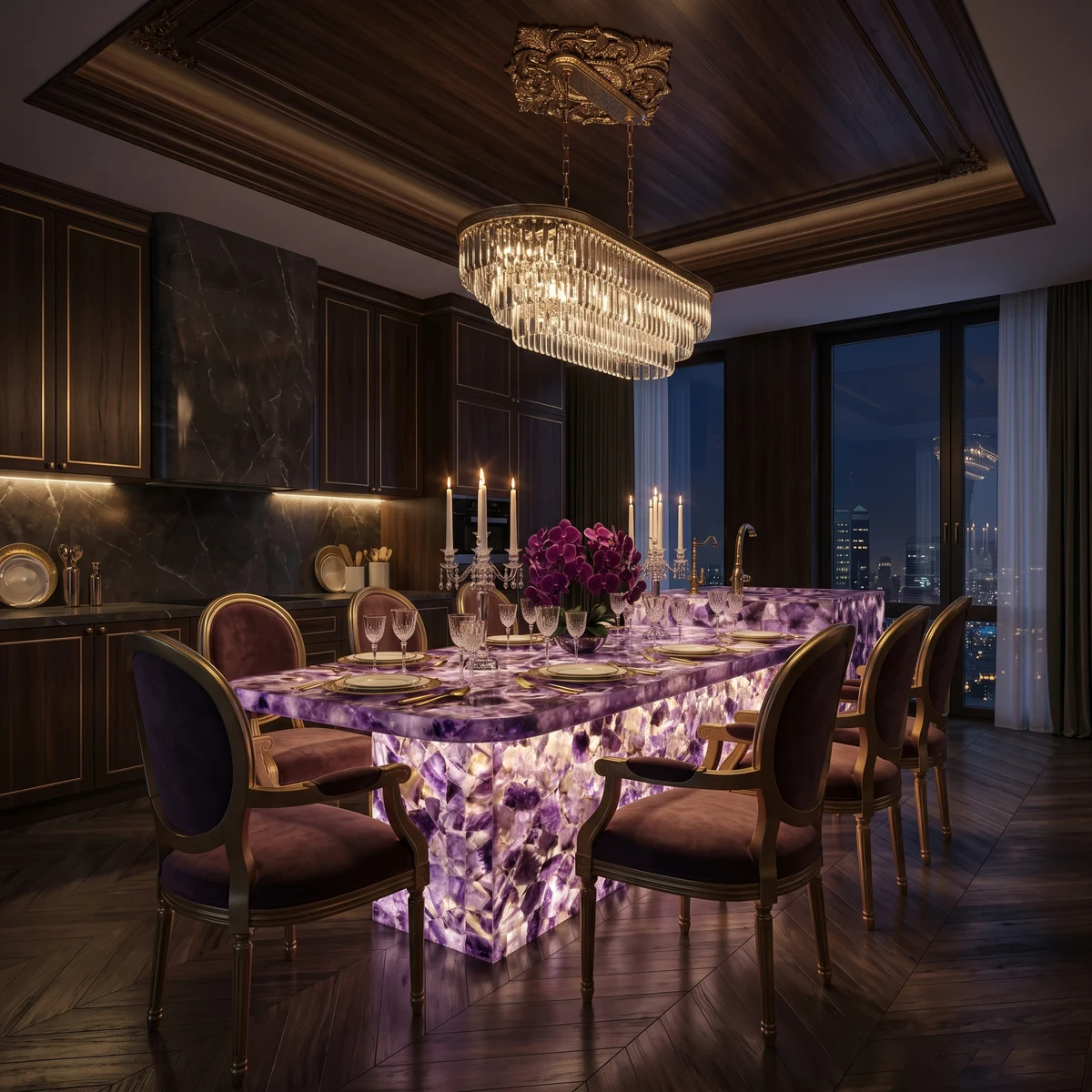
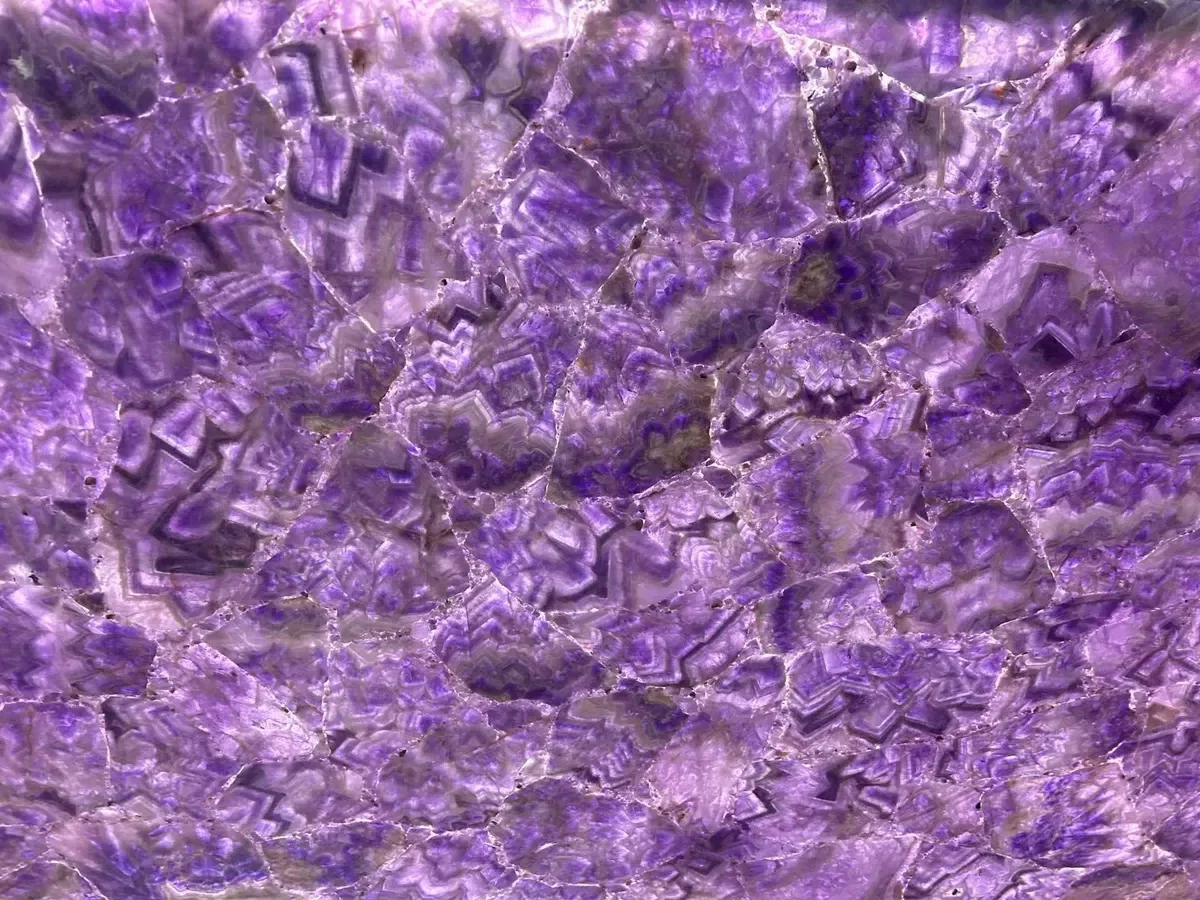
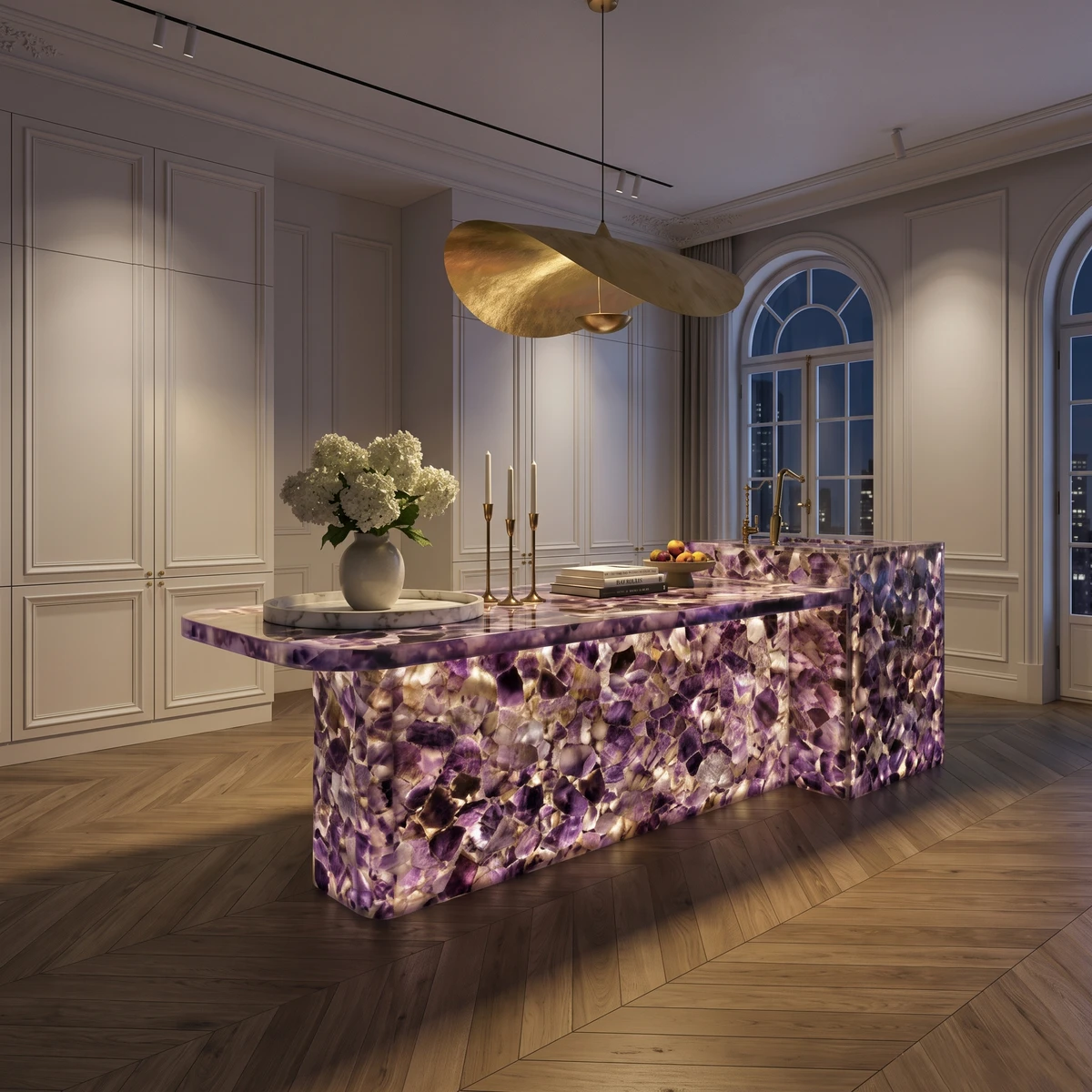
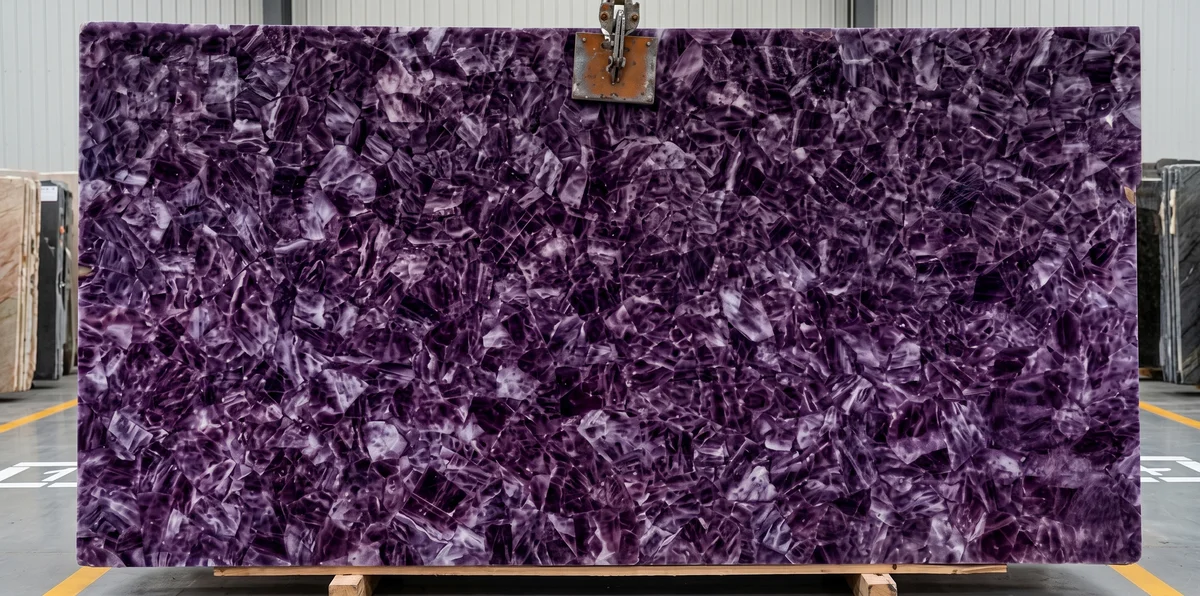
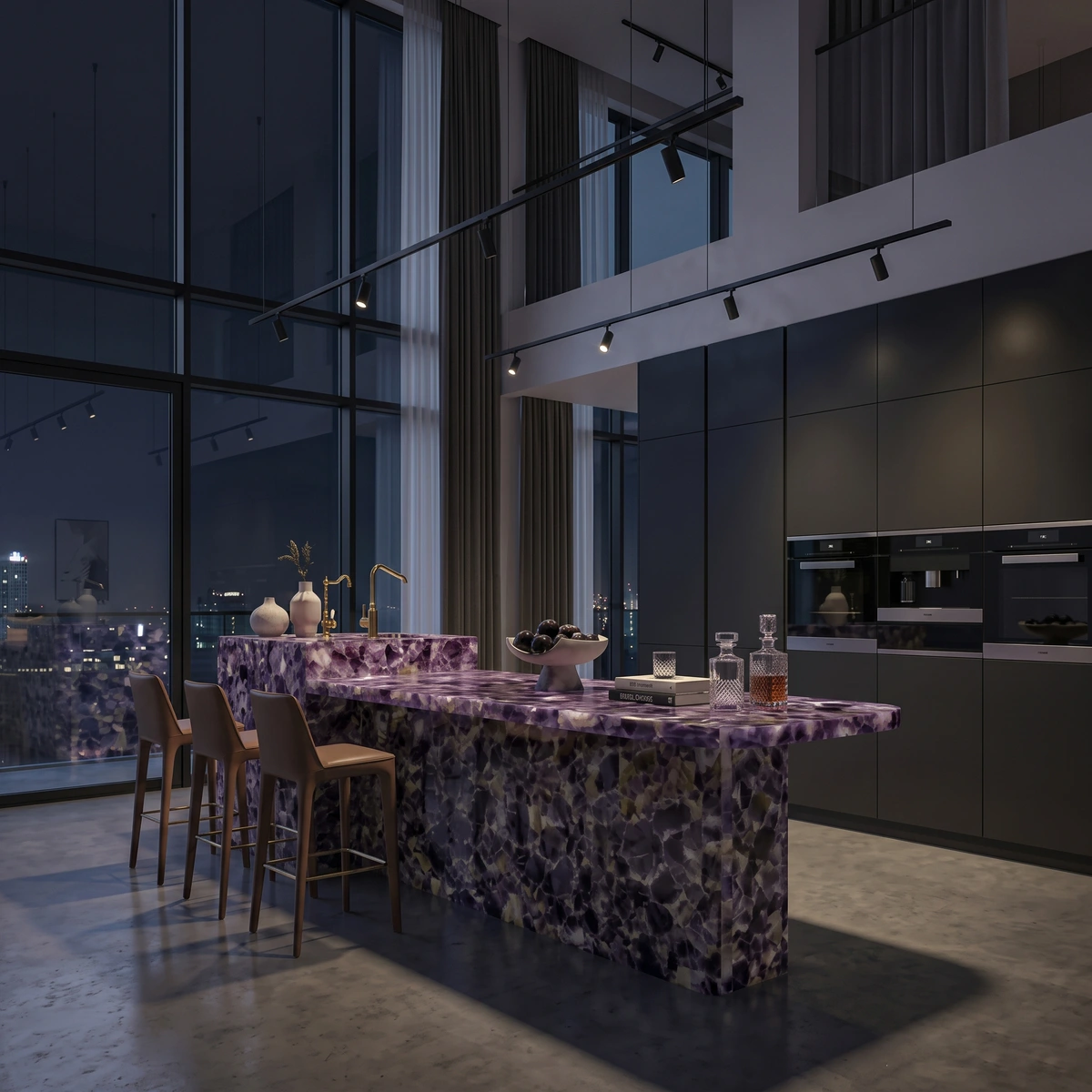
| Color | Violet |
| Material | gemstone |
| Finishes | Polished / Honed / Suede / Leathered |
| Customized Size | 138″ × 79″ / 126″ × 63″ / Customizable |
| Thickness | 20mm/30mm/Customizable |
| Edge Style | Eased polished edge/2+2cm laminated edge/Mitred edge |
| Port of Transportation | Thailand |
| Place of Origin | Africa |
| Packaging | Foam or carton inside + strong wooden crates with reinforced straps outside and fumigation |
| Delivery Time | 15-20 days / Express service is negotiable. |
| MOQ | 10 ㎡ |
| Payment Terms | 30%T/T after confirm the order and the 70% T/T by copy of B/L |
| Countertops Outdoor: Yes Indoor: Yes |
| Vanity tops Outdoor: Yes Indoor: Yes |
| Wall Outdoor: Yes Indoor: Yes |
| Flooring Outdoor: Yes Indoor: Yes |
Description:
Frequently asked questions
What are the cheapest semi-precious stones?
Most fabricators will tell you that the cost of semi-precious stone slabs depends less on the mineral itself and more on how it’s processed, backed, and finished. For example, slabs with simpler veining or lighter coloration—like certain white or pale lavender amethyst-infused stones—tend to be more affordable than those with intense color depth or complex gemstone inlays. That said, even within the same material family, pricing can vary based on slab size, thickness, and whether it’s backed with resin or natural stone. In our factory (GQ), we see consistent pricing for standard-sized slabs, but premium finishes like high-gloss polish or book-matched pairs increase the cost. If you're sourcing wholesale, focus on uniformity and low variation—these usually come at a lower price point. Also, keep in mind that while some stones may look cheap at first glance, poor polishing or uneven backing can lead to warping or cracking over time, which ends up costing more in repairs. So, value isn’t just about upfront price—it's about long-term performance.
Are semi-precious stones worth anything?
Installers usually recommend looking beyond market value when evaluating semi-precious stone slabs. These materials aren't typically bought for resale like gemstones—instead, their worth comes from durability, aesthetic appeal, and how well they hold up in real-world kitchens or bathrooms. A slab of purple amethyst gemstone might not fetch a high price at a pawn shop, but as a countertop material, it offers something rare: translucency, natural veining, and visual depth that engineered options often can't replicate. That said, value is subjective. A homeowner might pay more for a visually striking slab because it adds character to a space. From a fabricator’s standpoint, the real worth lies in consistency—slabs that are well-backed, uniformly polished, and free from internal fractures tend to perform better over time. At our factory (GQ), we focus on producing slabs with minimal resin content and full-body gemstone integration to ensure longevity. So yes, they have value—but not in the traditional sense. Their worth is in function, beauty, and how they elevate a project’s overall feel.
How to Sell PRECIOUS STONES Found in Nature?
A frequent complaint we hear from hobbyists is that they find stones in nature and assume they’re valuable—but then get frustrated when no one buys them. The truth is, raw stones from nature, even if they look like amethyst or quartz, rarely hold significant monetary value unless they're large, clear, and unblemished. Most semi-precious stones found outdoors are too small, cloudy, or fractured to be marketable as gemstones. If you're thinking of selling, the best approach is to have them professionally appraised by a gemologist. But for most people, the real value isn’t in resale—it’s in preservation. If you’ve found a beautiful piece of amethyst or other gemstone material, consider having it professionally cut into a slab or polished for display. At our factory (GQ), we process raw materials into finished slabs, so we know that even minor imperfections can affect usability. If you want to sell, look for buyers who specialize in raw minerals or artisan crafts, not jewelry retailers. And remember: the more processed and refined the stone, the more value it gains—not just because of rarity, but because of craftsmanship.
How much do stone slabs cost?
In real-world kitchens, the cost of semi-precious stone slabs varies widely based on several factors—slab size, color complexity, finish type, edge profiling, and whether it's a super jumbo or standard slab. For instance, a standard-sized slab with minimal veining or lighter coloration will generally cost less than a super jumbo slab with deep purple amethyst inlay or intricate translucency patterns. Fabrication labor and installation also play a big role—especially for larger slabs or custom edge profiles. At our factory (GQ), we produce slabs up to 138"x79", and while we don’t list exact prices, we can say that consistency and quality control reduce long-term costs. Slabs with higher resin content or poor backing tend to warp or crack over time, leading to replacement expenses. Also, regional demand and shipping logistics affect pricing. Wholesale buyers benefit from bulk orders and long-term relationships, which can lower per-unit costs. Ultimately, you’re paying not just for the stone, but for the craftsmanship, durability, and aesthetic outcome. So while it’s hard to give a single number, the real cost is in the total project value—not just the slab itself.