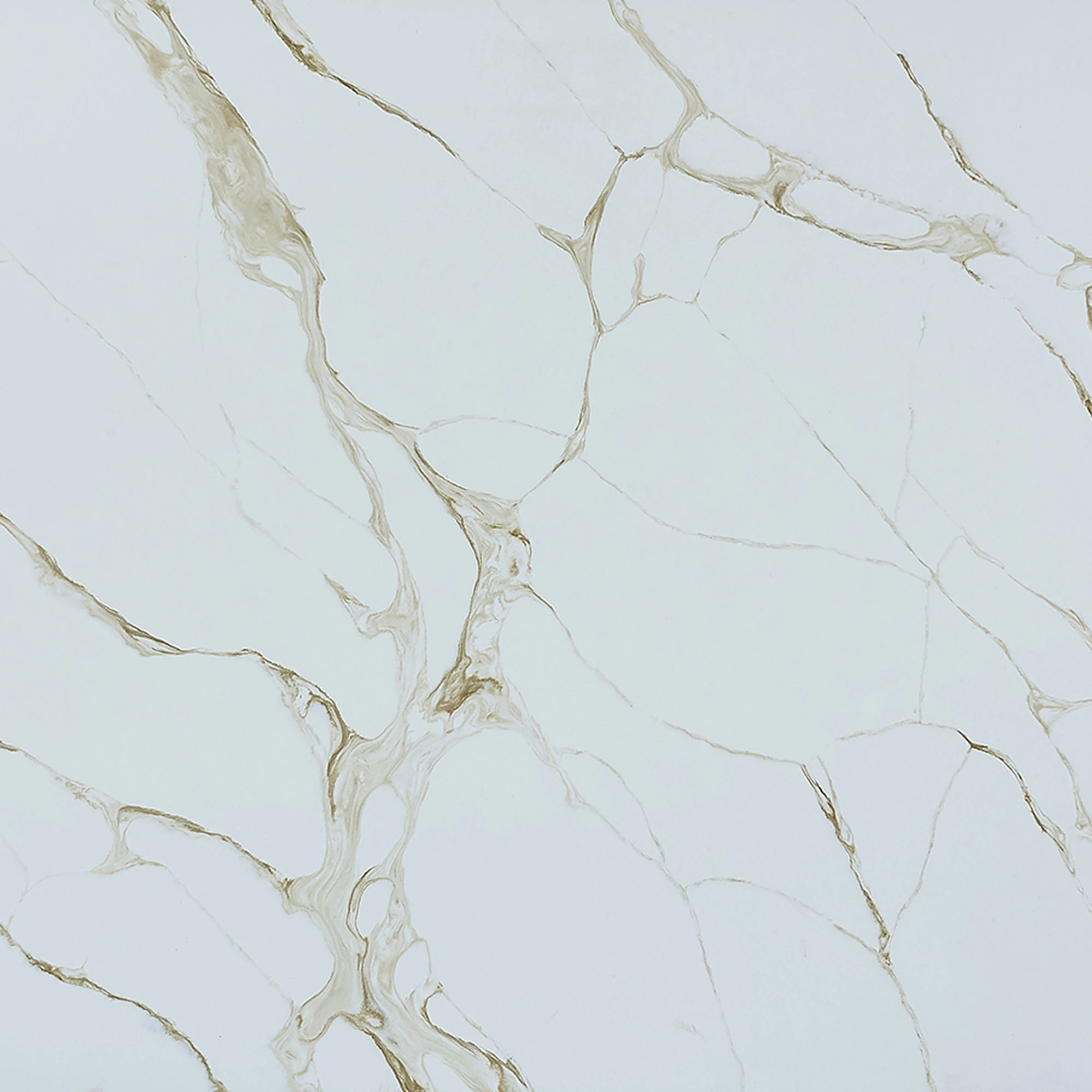
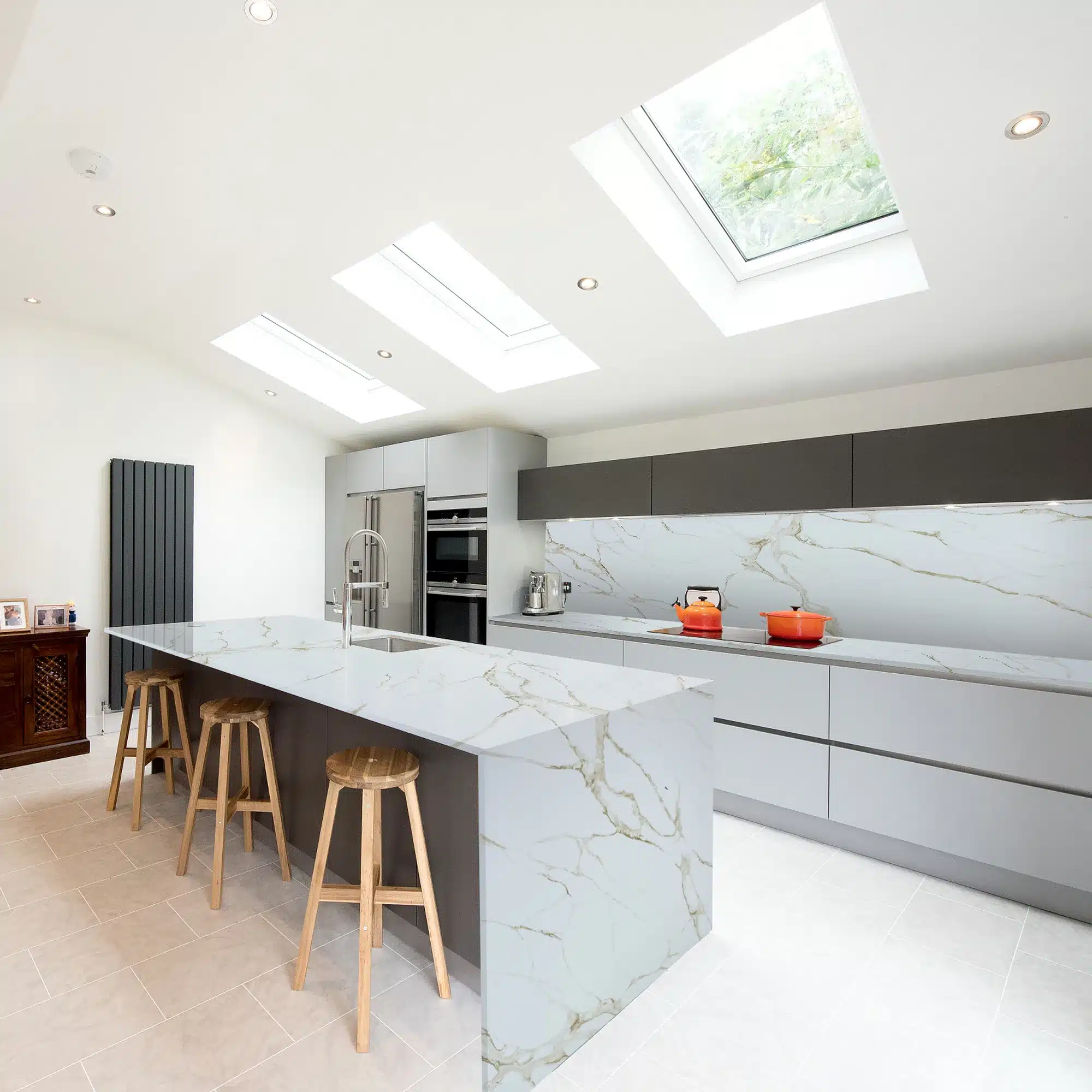
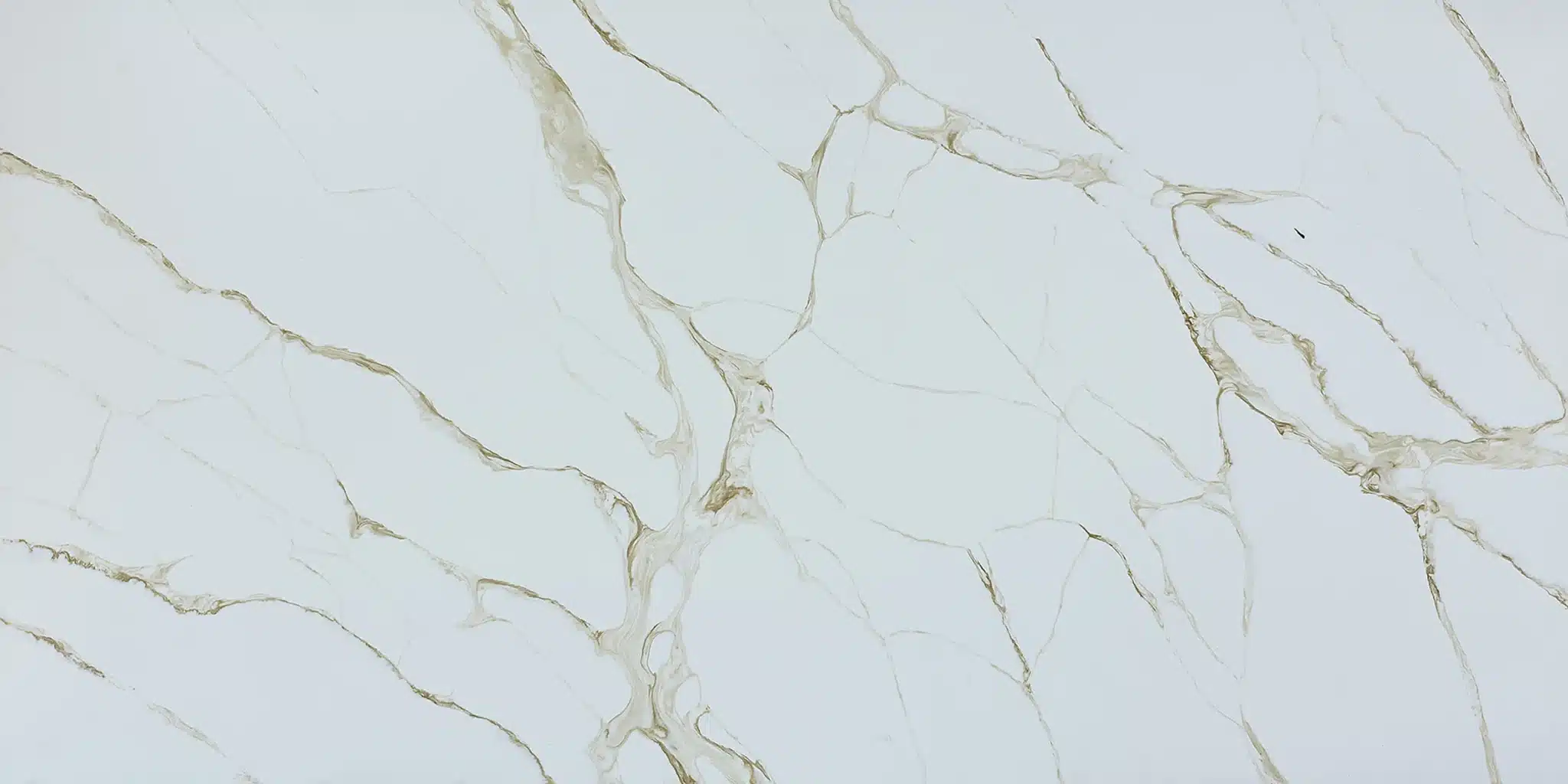
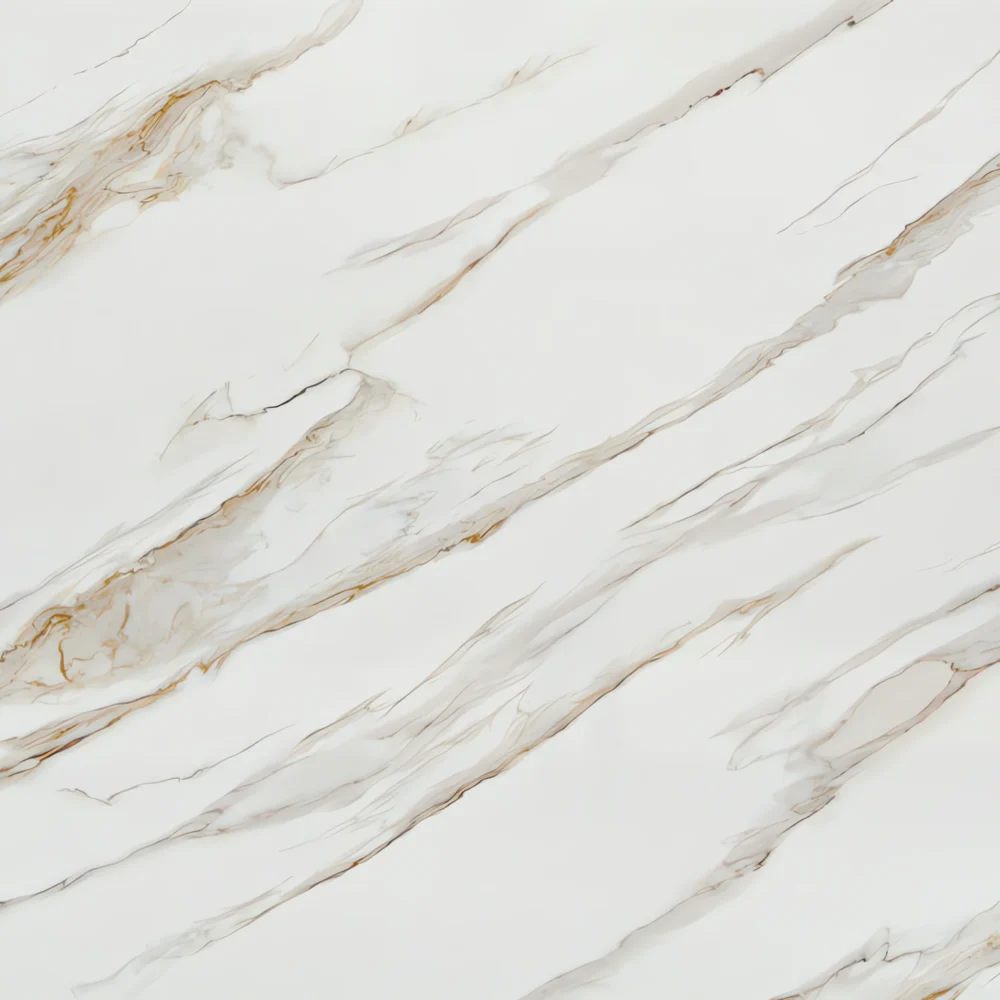
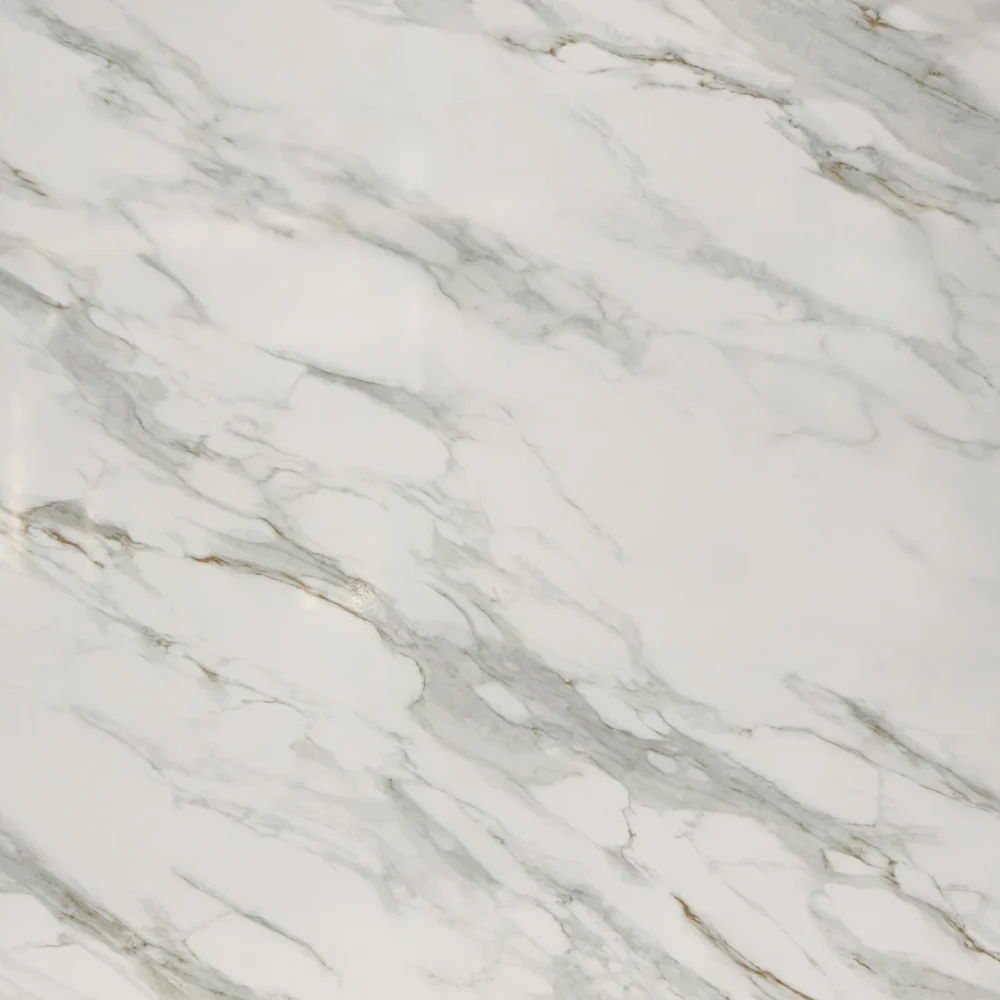
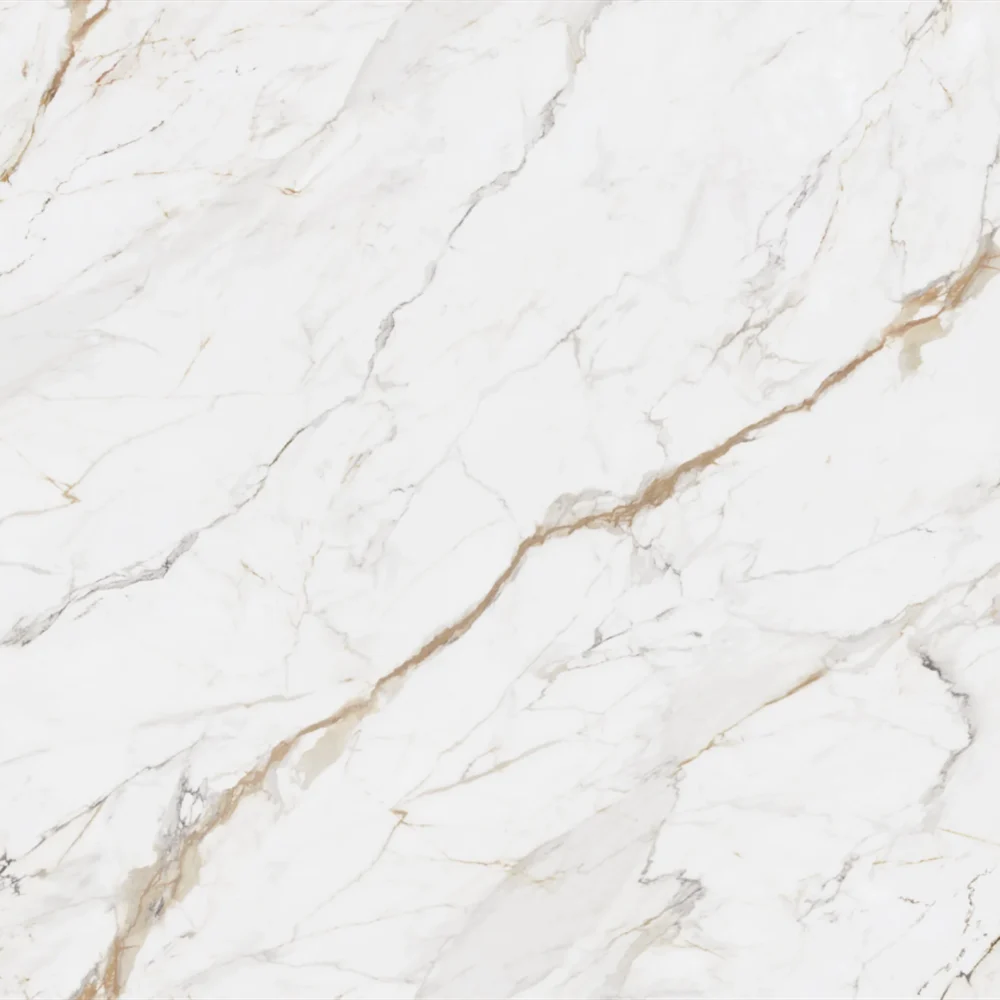
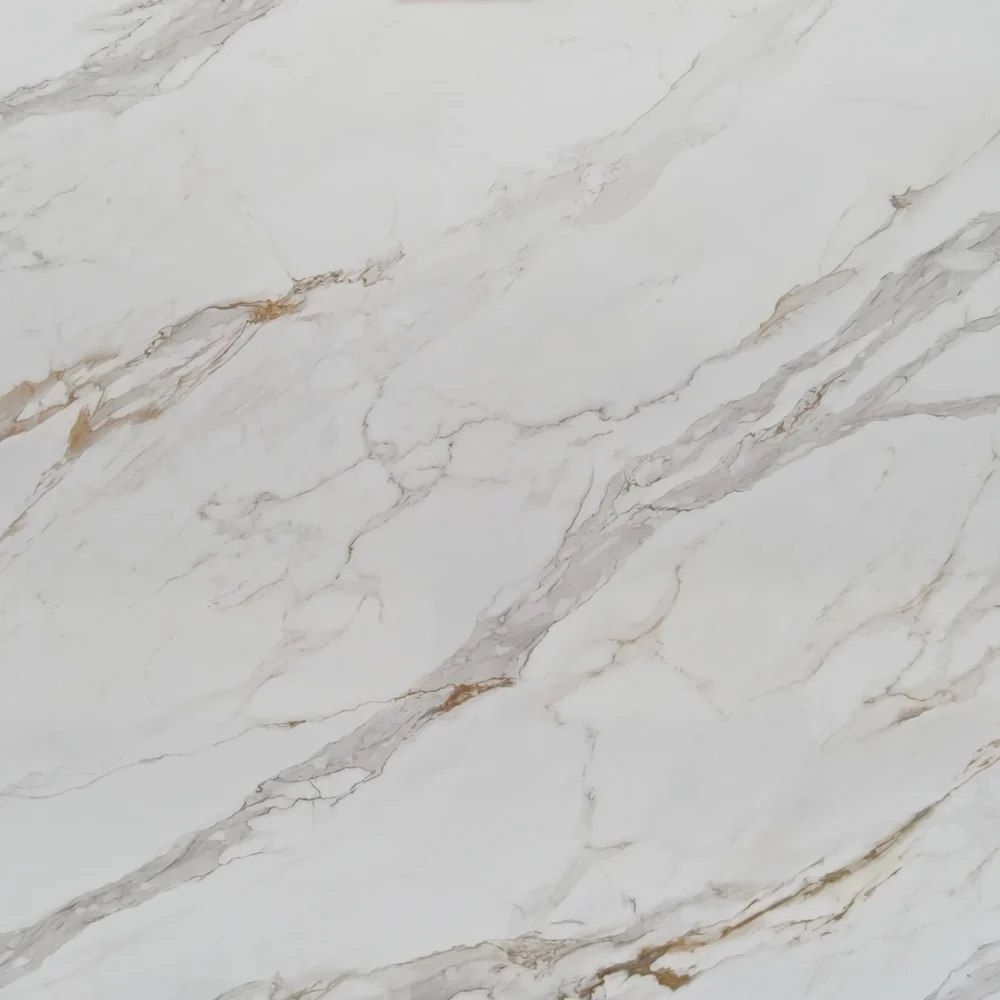
| Primärfarb(en) | Bright Cool White |
| Akzentfarbe(n) | Warm Champagne Gold Vein |
| Handwerk | Regelmäßig |
| Fertigstellungen | Poliert / Geschliffen / Wildleder / Leder |
| Maßgeschneiderte Größe | 138″ × 79″ / 126″ × 63″ / Anpassbar |
| Dicke | 20mm/30mm/Customizable |
| Randstil | Abgeschrägte polierte Kante/2+2cm lamellierte Kante/Gehrungskante |
| Land | Thailand |
| Full Body Quartz | Ja |
| Buchungsübereinstimmung verfügbar | Ja |
| Arbeitsplatten Wohngebiet: Ja Gewerblich: Ja |
| Mauer Wohngebiet: Ja Gewerblich: Ja |
| Bodenbelag Wohngebiet: Ja Gewerblich: Ja |
Yes, when people say ‘quartz’ in the context of countertops, they’re almost always referring to engineered quartz—also called engineered stone. It’s a man-made material made from 90–95% ground natural quartz crystals mixed with resin binders and pigments, then compressed under heat and pressure. So while natural quartz exists in geology, the ‘quartz’ you see in kitchens and bathrooms is engineered. The term ‘engineered stone’ is technically broader and can include other materials like engineered marble, but in practice, it’s used interchangeably with quartz countertops. Just know that it’s not mined like granite or marble—it’s manufactured. This gives it consistency, non-porosity, and durability, but also means it’s not entirely natural.
Quartz is generally better for bathroom vanity tops—especially for most homeowners. Quartzite is a natural stone that’s durable and beautiful, but it’s porous and requires regular sealing to prevent stains, water spots, and etching from acidic products. In a bathroom, where moisture and humidity are constant, this maintenance becomes a hassle. Quartz, on the other hand, is non-porous, doesn’t need sealing, and resists stains, scratches, and bacteria. It’s also more consistent in color and pattern, and less likely to chip or crack during installation. That said, quartzite has a more organic, luxurious look with natural veining and texture that some love. But if you want low maintenance and longevity, quartz wins. For a bathroom, practicality usually trumps aesthetics—unless you’re okay with ongoing care and the risk of etching or staining.
Ihr vertrauenswürdiger Quarz
Manufaktur seit 1989.
Unser Team ist rund um die Uhr verfügbar.