



- Start
- Quarz
- Quarzplatten
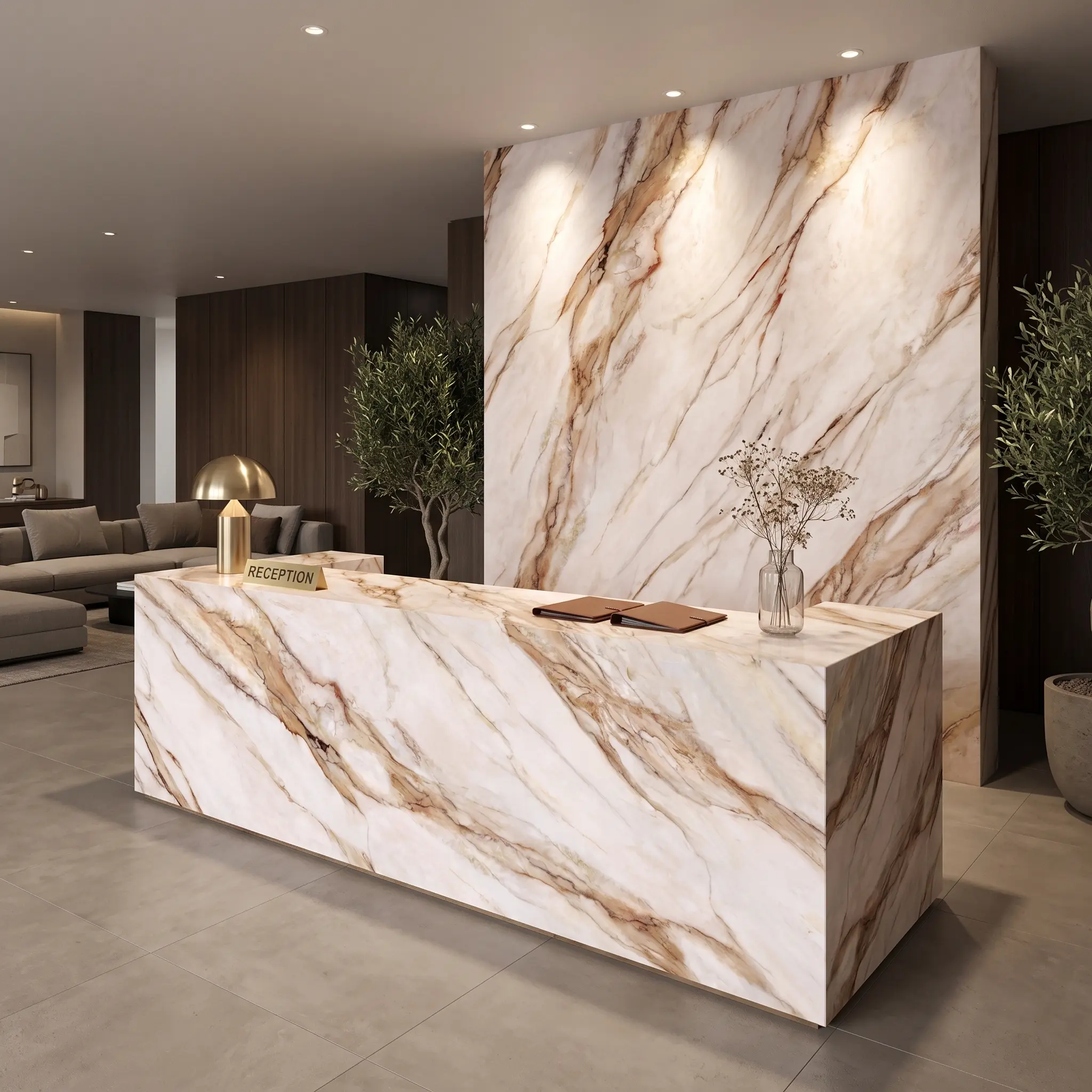
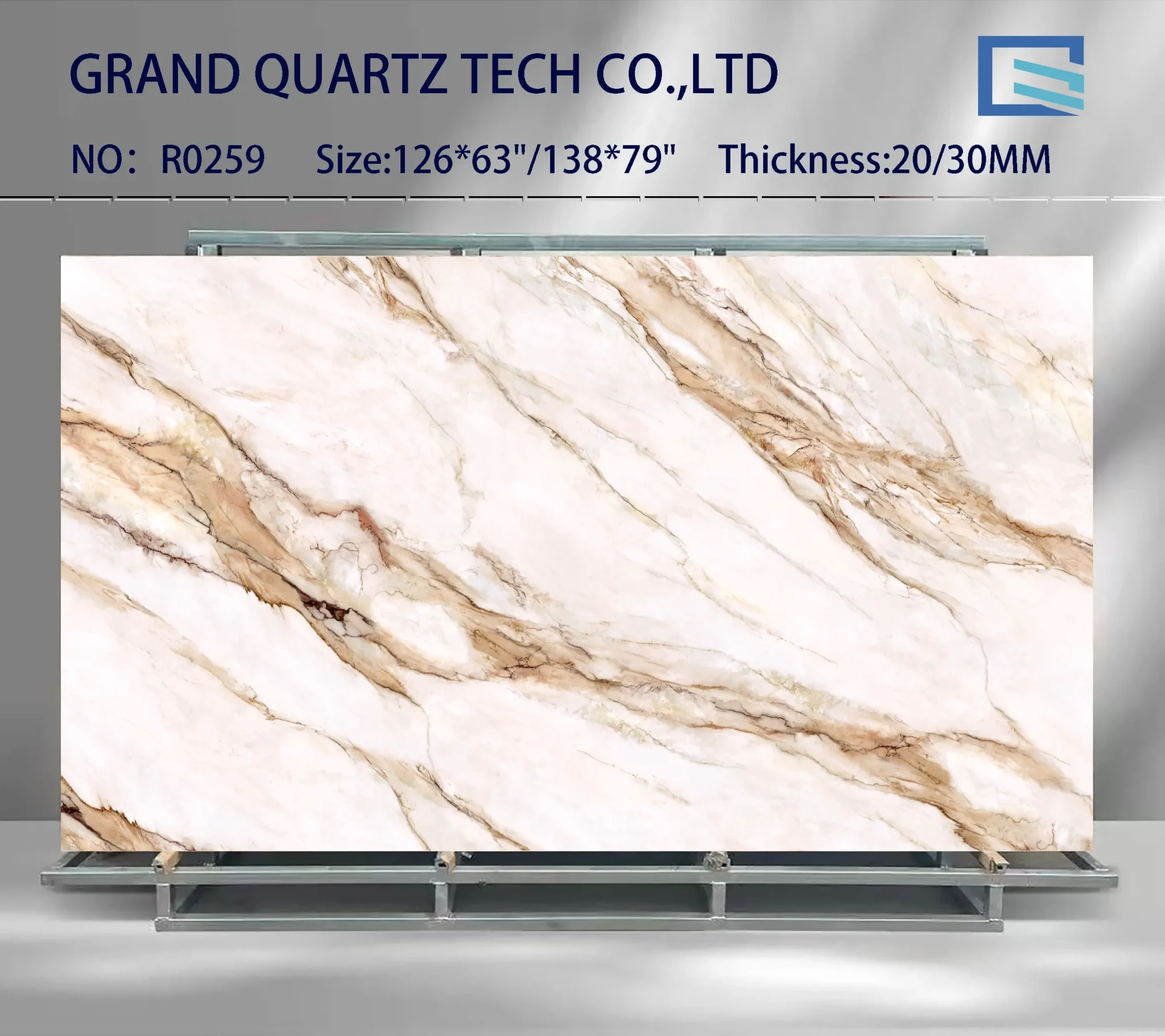
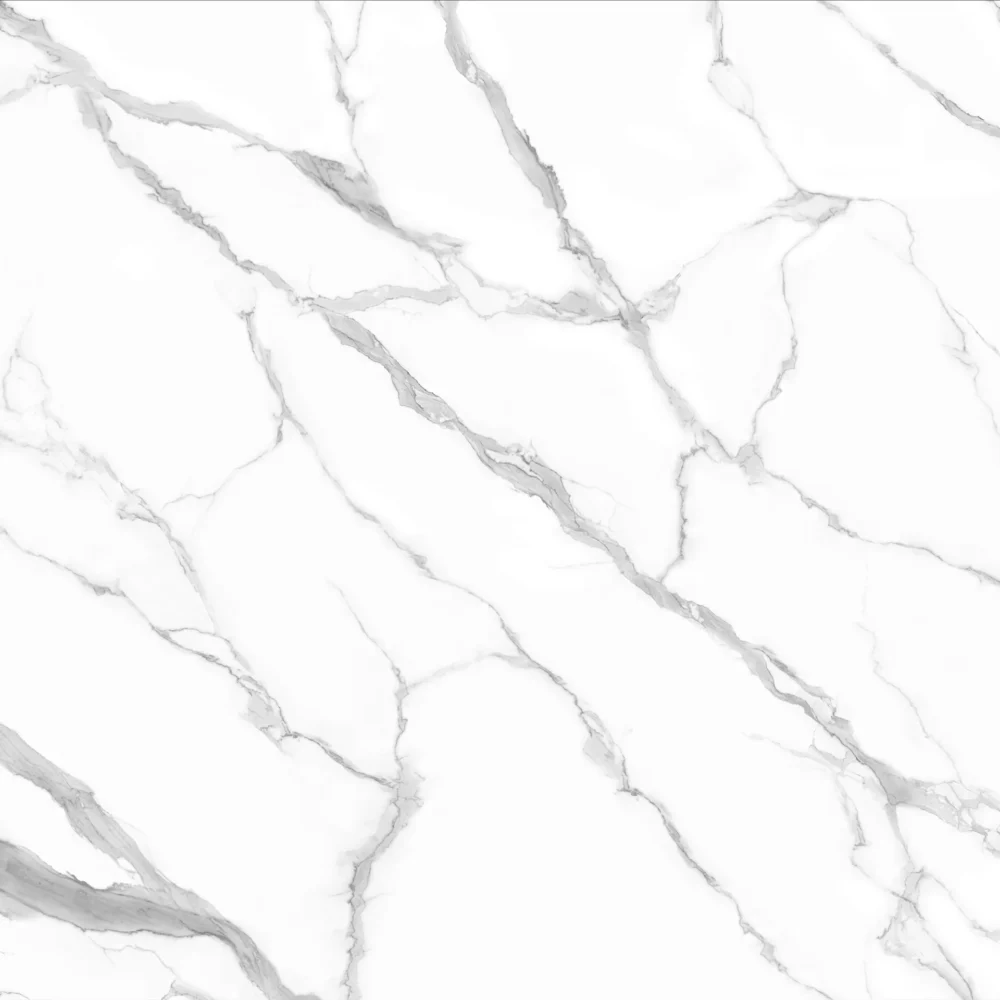
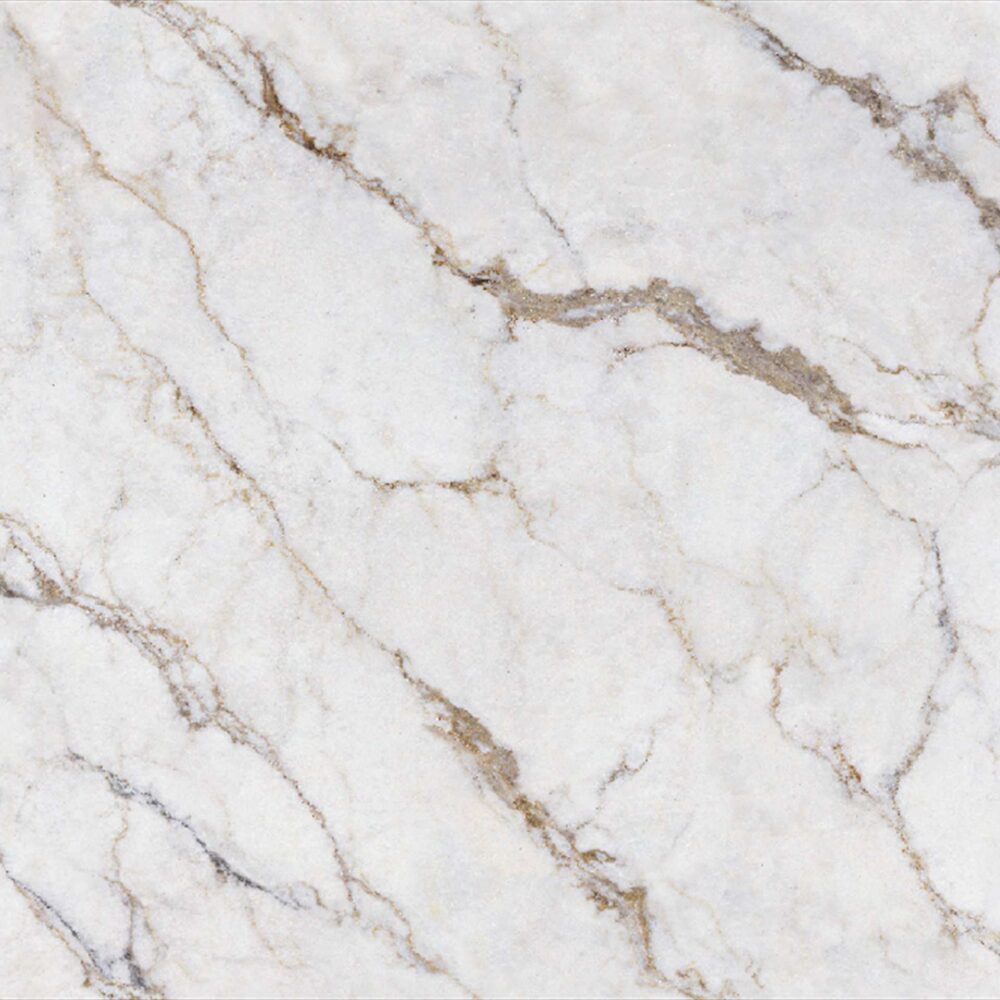
- Calacatta Macchia Vecchia Quartz Slab GQ-R0259 for wholesale
Calacatta Macchia Vecchia Quartz Slab GQ-R0259 for wholesale
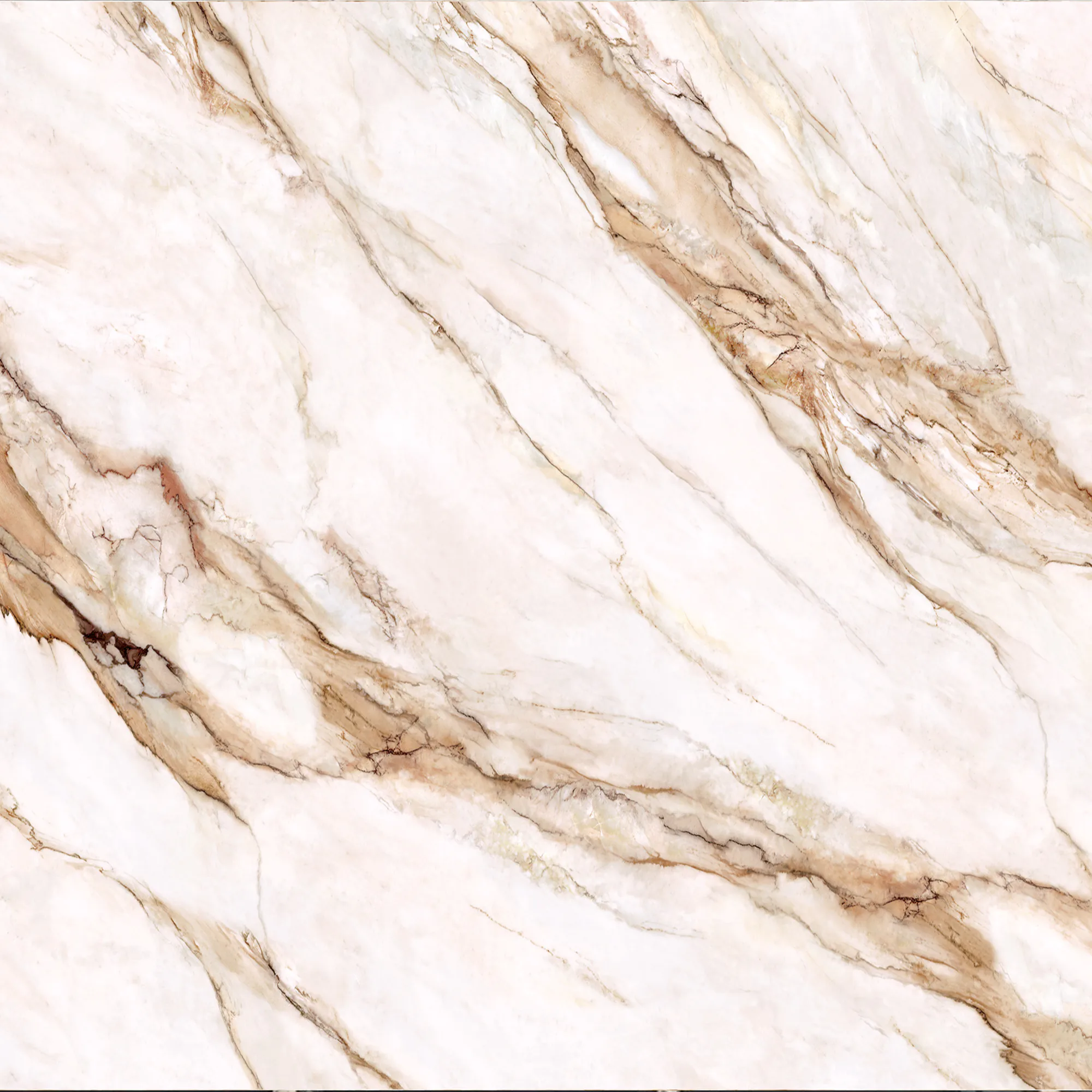
| Primärfarb(en) | Crisp Pure White |
| Akzentfarbe(n) | Bold Warm Gold Vein + Amber Brown Line |
| Handwerk | Gedruckt |
| Fertigstellungen | Poliert / Geschliffen / Wildleder / Leder |
| Maßgeschneiderte Größe | 138″ × 79″ / 126″ × 63″ / Anpassbar |
| Dicke | 20mm/30mm/Customizable |
| Randstil | Abgeschrägte polierte Kante/2+2cm lamellierte Kante/Gehrungskante |
| Land | Thailand |
| Vollflächig bedruckter Quarz | Ja |
| Buchungsübereinstimmung verfügbar | Ja |
| Arbeitsplatten Wohngebiet: Ja Gewerblich: Ja |
| Mauer Wohngebiet: Ja Gewerblich: Ja |
| Bodenbelag Wohngebiet: Ja Gewerblich: Ja |
Beschreibung:
Häufig gestellte Fragen
Who makes Calacatta Gold Quartz?
Most fabricators will tell you that ‘Calacatta Gold’ is a design style, not a specific brand — so it’s made by multiple engineered quartz manufacturers.
You’ll find versions from various producers, but the key is in the consistency of the vein pattern and how well the slab matches the reference sample.
In Thailand, Grand Quartz Tech produces a full-body printed Calacatta Gold Quartz that closely replicates the natural stone look with high pattern fidelity across large slabs.
They use low-silica resin in their production lines, which helps reduce thermal expansion issues during fabrication.
Their slabs are made entirely in Chonburi, from raw materials to finished product, and they offer super jumbo sizes up to 138″x79″ — which means fewer seams in large kitchen runs.
That said, any ‘Calacatta Gold’ you see in the U.S. market is likely sourced from a factory like this one, either directly or through an OEM partner.
The difference between manufacturers comes down to pattern consistency, resin stability under UV, and how well the color holds over time.
Some versions tend to fade slightly in direct sunlight, especially if the pigment isn’t locked into a full-body print.
If you’re sourcing for a commercial project, it’s worth asking for a batch certificate and checking if the factory has NSF and SGS certifications.
Why Consider Calacatta Gold Quartz Worktops for Your ?
In real-world kitchens, Calacatta Gold Quartz worktops are chosen because they look like the real thing — but without the sealing, staining, or cracking risks of natural marble.
Installers usually recommend them for clients who want that Italian stone feel but need something that can handle daily wear: hot pans, cutting, spills.
The gold veining adds warmth, especially when paired with warm wood cabinets or brushed brass fixtures.
But there’s a tradeoff: the contrast in the pattern can make seams more visible if not matched carefully.
A frequent complaint we hear is that some ‘Calacatta Gold’ slabs have inconsistent veining — one slab might be dense with gold streaks, the next nearly blank.
That’s why it’s critical to do a dry-lay approval before fabrication.
Also, polished surfaces show fingerprints and smudges more than honed or matte finishes, which might be a concern in high-traffic areas.
For commercial spaces, the durability is a big plus — it resists etching from acidic foods better than marble, and the resin used in most modern quartz slabs is stable under heat, though not immune to thermal shock if a red-hot pan is placed directly on it.
If you’re going with a white or cream base, keep in mind that hard water spots show up faster than on darker stones.
So, cleaning with a microfiber cloth and mild soap is the way to go.
Avoid abrasive pads — they’ll scratch the surface over time.
Why I Keep Thinking About Calacatta Gold Quartz?
Homeowners often report after a year or two that they keep thinking about Calacatta Gold Quartz because it looks like it’s evolving.
The veining seems to deepen in certain lighting, especially under LED or natural daylight, and the gold tones shift depending on the time of day.
That’s partly due to how the pigments are layered in the resin — some full-body printed slabs have a slight depth that mimics the way light moves through natural stone.
But it’s also psychological: the pattern feels organic, not repetitive, and it doesn’t look ‘manufactured’ like some solid whites or speckled patterns.
In high-traffic commercial spaces, installers sometimes say it’s one of the few designs that doesn’t get ‘dated’ quickly — the gold veins give it a timeless quality.
That said, it’s not without drawbacks.
The contrast between the white base and gold veining means fingerprints and smudges show up easily on polished surfaces, and the pattern can make seams more noticeable if the slabs aren’t matched properly.
Also, if the slab is exposed to direct UV light for long periods, some versions may develop a slight yellowing in the resin, especially around edges.
That’s why it’s important to source from a factory with UV-stable pigments — like Grand Quartz Tech, which uses low-silica resin and full-body printing to lock in the color.
So you keep thinking about it because it’s visually compelling — but you should also think about how it will behave in your space over time.
-1000x1000.webp)