



- Start
- Quarz
- Quarzplatten
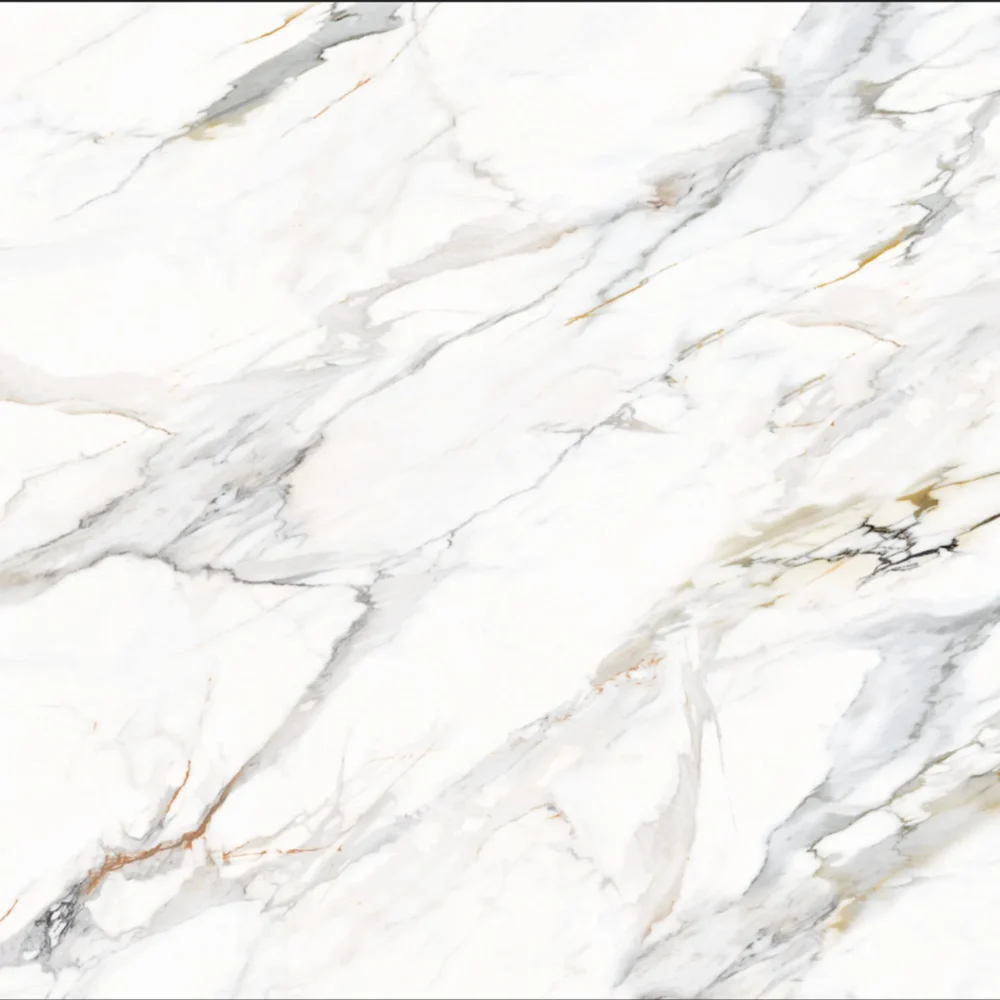
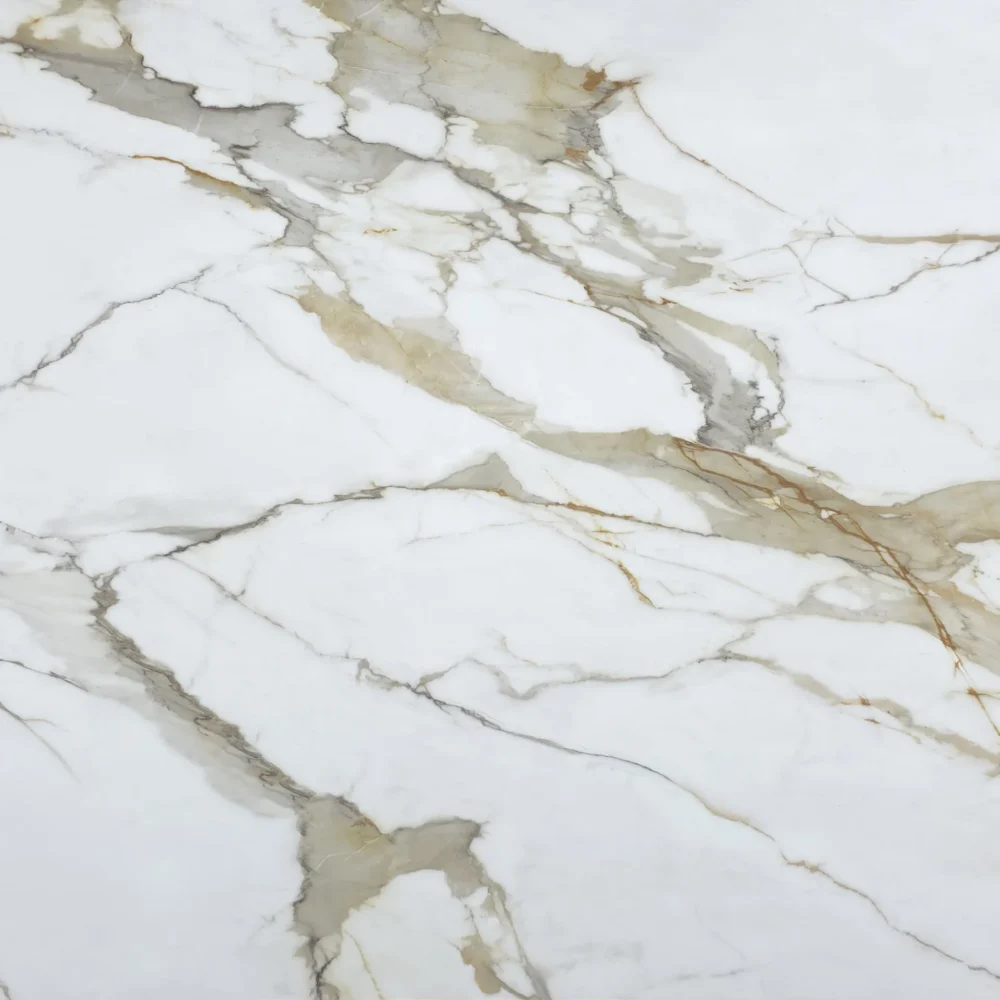
- Warm Calacatta Gold Quartz Slab GQ-T389 for wholesale
Warm Calacatta Gold Quartz Slab GQ-T389 for wholesale
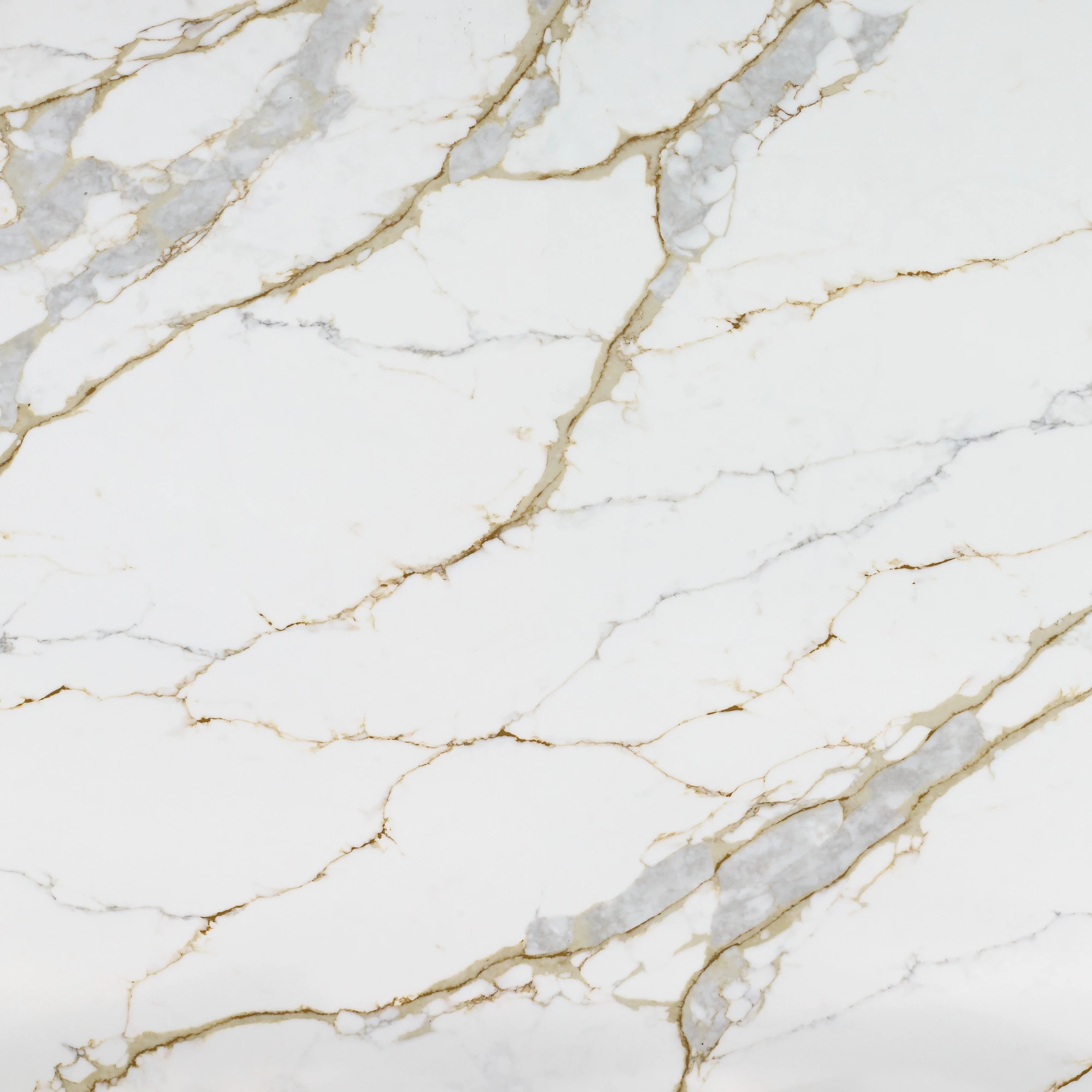
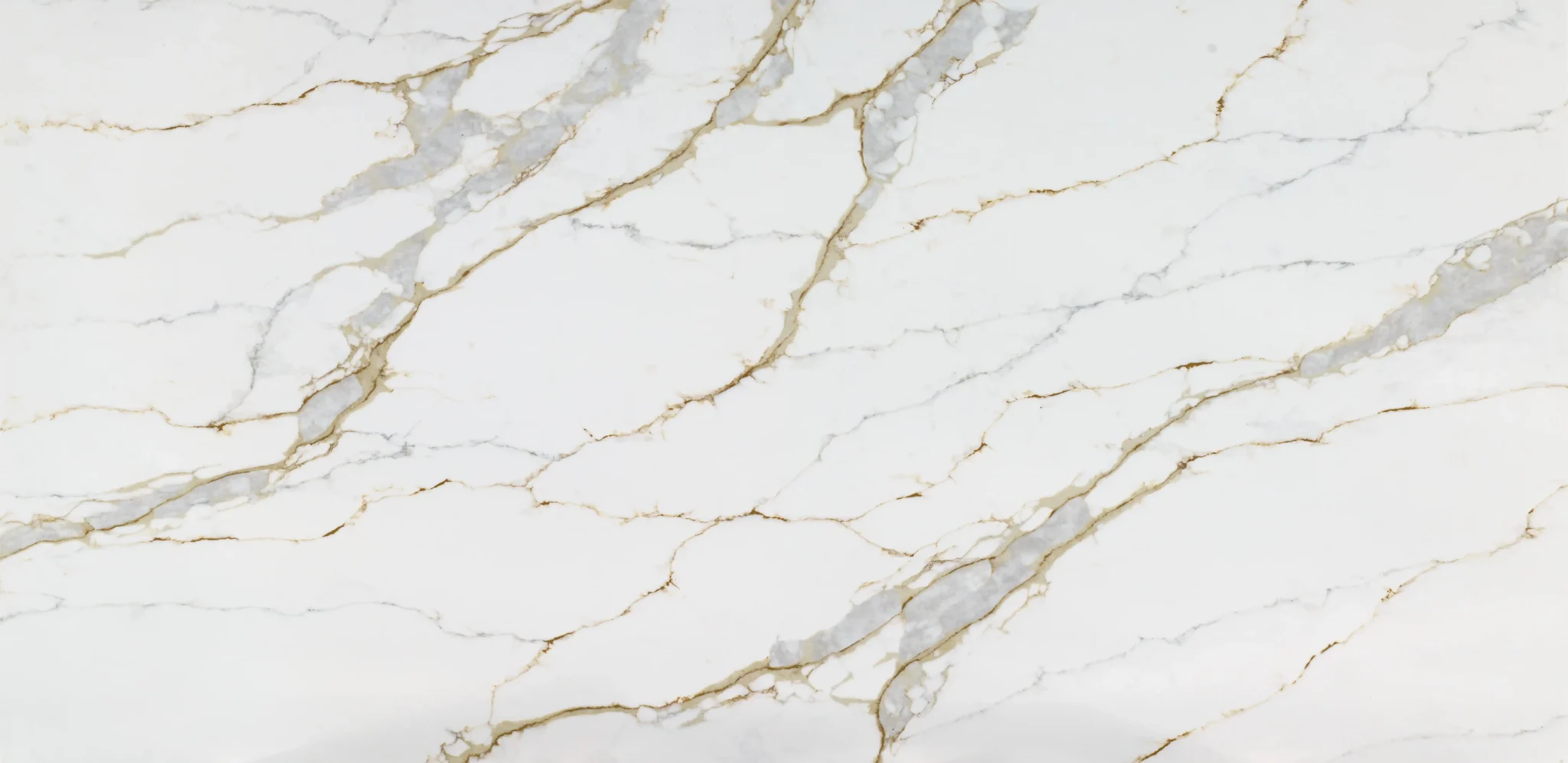
| Primärfarb(en) | Crisp Pure White |
| Akzentfarbe(n) | Delicate Gold Vein + Soft Silver-Grey Linear Accent |
| Handwerk | Regelmäßig |
| Fertigstellungen | Poliert / Geschliffen / Wildleder / Leder |
| Maßgeschneiderte Größe | 138″ × 79″ / 126″ × 63″ / Anpassbar |
| Dicke | 20mm/30mm/Customizable |
| Randstil | Abgeschrägte polierte Kante/2+2cm lamellierte Kante/Gehrungskante |
| Land | Thailand |
| Full Body Quartz | Ja |
| Buchungsübereinstimmung verfügbar | Ja |
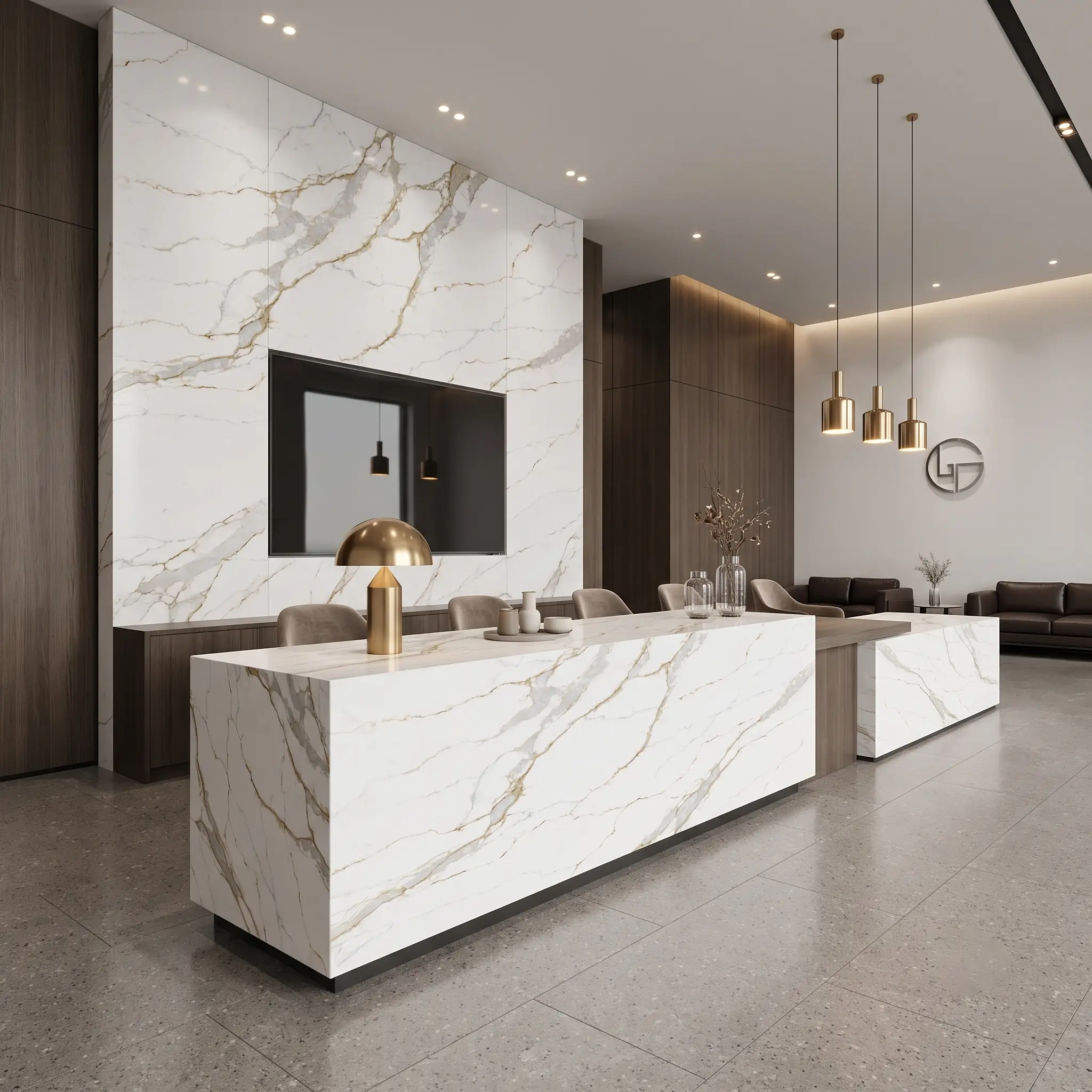
| Arbeitsplatten Wohngebiet: Ja Gewerblich: Ja |
| Mauer Wohngebiet: Ja Gewerblich: Ja |
| Bodenbelag Wohngebiet: Ja Gewerblich: Ja |
Beschreibung:
Häufig gestellte Fragen
How To Choose And Verify A Quartzite Slab?
Most fabricators will tell you the first thing to check is the source — real quartzite comes from quarries, not factories, so look for documentation showing where it was mined.
The slab should have a consistent grain and veining pattern, but be wary of ‘too perfect’ patterns; natural quartzite varies.
Always inspect the slab in person or via high-res photos under different lighting — UV exposure can reveal resin discoloration, especially in polished finishes.
Check for chipped edges or surface cracks, and confirm it’s been properly sealed if honed or matte.
In real-world kitchens, we’ve seen homeowners report issues with etching after acidic spills on unsealed surfaces.
For verification, ask for a material test report (ASTM C1028) and look for NSF certification if it’s for food prep.
Installers usually recommend avoiding slabs with heavy veining in high-traffic areas, as the seams are more visible.
If you’re sourcing from a manufacturer like Grand Quartz Tech, they offer full-body printed quartz slabs that mimic quartzite — these are consistent, don’t require sealing, and can be shipped in jumbo sizes up to 138″x79″, which reduces seams.
But if you’re going for real quartzite, know that it’s more porous, heavier, and demands regular maintenance.
Always confirm the finish — polished shows fingerprints and smudges more, while honed hides them better but can scratch easier.
Why is cristallo quartzite so expensive?
Cristallo Quartzite is expensive because it is a rare natural stone with limited availability, complex processing requirements, and high demand for its luxurious appearance.
As a natural quartzite, Cristallo is valued for its bright crystal-like background, translucent effect, and elegant flowing veins. However, several factors contribute to its high cost:
- Limited natural supply – Cristallo Quartzite can only be sourced from specific quarries, and each quarry produces a limited amount of suitable material.
- Complex extraction and processing – Large blocks need to be carefully extracted, cut, polished, and inspected to preserve the natural patterns and reduce material loss.
- Natural variation – Every slab is unique, which creates exclusivity but can also make color and pattern matching more challenging for large-scale projects.
- Transportation and handling costs – International sourcing, heavy slab transportation, and careful handling significantly increase the final project cost.
For many projects, designers choose Cristallo because they want the look of a rare natural stone. However, modern engineered quartz technology has significantly advanced. With high-resolution printing technology, advanced surface treatment, and carefully selected raw materials, Cristallo-inspired quartz can now reproduce the depth, movement, and natural texture of Cristallo Quartzite with exceptional realism.
At GrandQuartz Tech, our quartz slabs are designed to capture the visual characteristics of natural stones — including the crystal-like background, delicate veining, and luxurious surface appearance. With current manufacturing technology, many engineered quartz designs are so realistic that it can be difficult to distinguish them from natural stone at first glance.
Compared with natural Cristallo Quartzite, engineered quartz provides additional advantages for many commercial and residential projects:
- More consistent patterns and color availability for large projects
- Non-porous performance with easier maintenance
- Reliable supply without depending on quarry limitations
- Better consistency for repeated installations and large developments
For homeowners, designers, and contractors who want the luxury appearance of Cristallo Quartzite with more predictable performance and supply, Cristallo-look quartz offers a practical alternative without compromising the visual experience.
What is the downside of quartzite?
A frequent complaint we hear is that quartzite, despite being harder than marble, still requires sealing — and that’s a big deal for homeowners who expect low maintenance.
Even with proper sealing, acidic substances like lemon juice or vinegar can etch the surface, especially on polished finishes.
In real-world kitchens, this shows up as dull spots or hazing over time.
Another downside is its weight — it’s denser than quartz, so fabrication and installation are more labor-intensive, and support structures may need reinforcing.
It’s also more prone to thermal shock than engineered quartz, meaning hot pans can cause micro-cracks if not handled carefully.
Homeowners often report issues with seams — since each slab is unique, matching veins across joints is tricky, and even with skilled fabrication, the seam can be visible.
Honed finishes hide imperfections better but are more susceptible to scratches and water stains.
Installers usually recommend avoiding quartzite in high-moisture areas like bathrooms unless it’s properly sealed and maintained.
And while it’s durable, it’s not immune to chipping at edges, especially on thin or unsupported overhangs.
Lastly, it’s more expensive than engineered options, and sourcing can be inconsistent — not every quarry produces the same quality, so verifying origin and material testing is critical.
If you’re looking for a consistent, low-maintenance alternative, manufacturers like Grand Quartz Tech offer full-body printed quartz slabs that mimic quartzite without the sealing needs or weight.
What Is Quartzite? The Complete Guide From a 30-Year ?
From a 30-year fabricator’s perspective, quartzite is metamorphosed sandstone — meaning it’s made of quartz crystals that have been compressed and heated over millions of years.
It’s not the same as engineered quartz; it’s a natural stone, and that means each slab is unique.
The good news?
It’s harder than granite, which makes it resistant to scratches and abrasions.
But it’s not indestructible — it’s still porous, so it needs sealing, especially in kitchens.
In real-world use, we’ve seen quartzite hold up well in commercial spaces and high-traffic homes, but only if it’s properly maintained.
The finish matters — polished surfaces show fingerprints and smudges more, while honed or matte finishes hide them better but can scratch easier.
Many people confuse it with marble, but quartzite has more crystalline structure and less calcite, so it’s less prone to acid etching — though not immune.
It comes in a range of colors, from pure white to gray and even pink or blue, depending on mineral inclusions.
The biggest issue?
Consistency — no two slabs are alike, and matching veins across large layouts is tough.
Installers usually recommend it for projects where the client wants a natural, look and is willing to commit to regular care.
And while it’s durable, it’s also heavier than engineered quartz, which affects installation costs and structural needs.
For those wanting the look without the upkeep, some manufacturers like Grand Quartz Tech offer printed quartz slabs that replicate quartzite patterns with full-body consistency, zero porosity, and no sealing required.