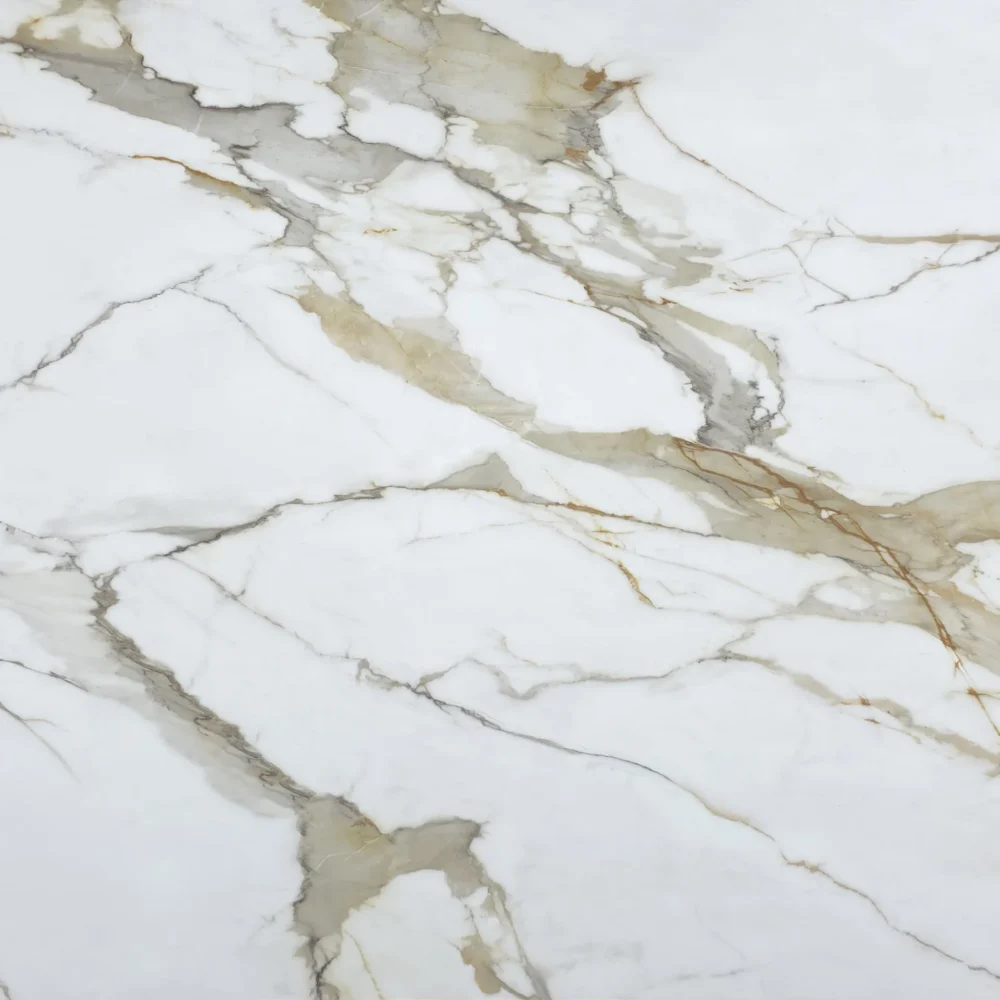
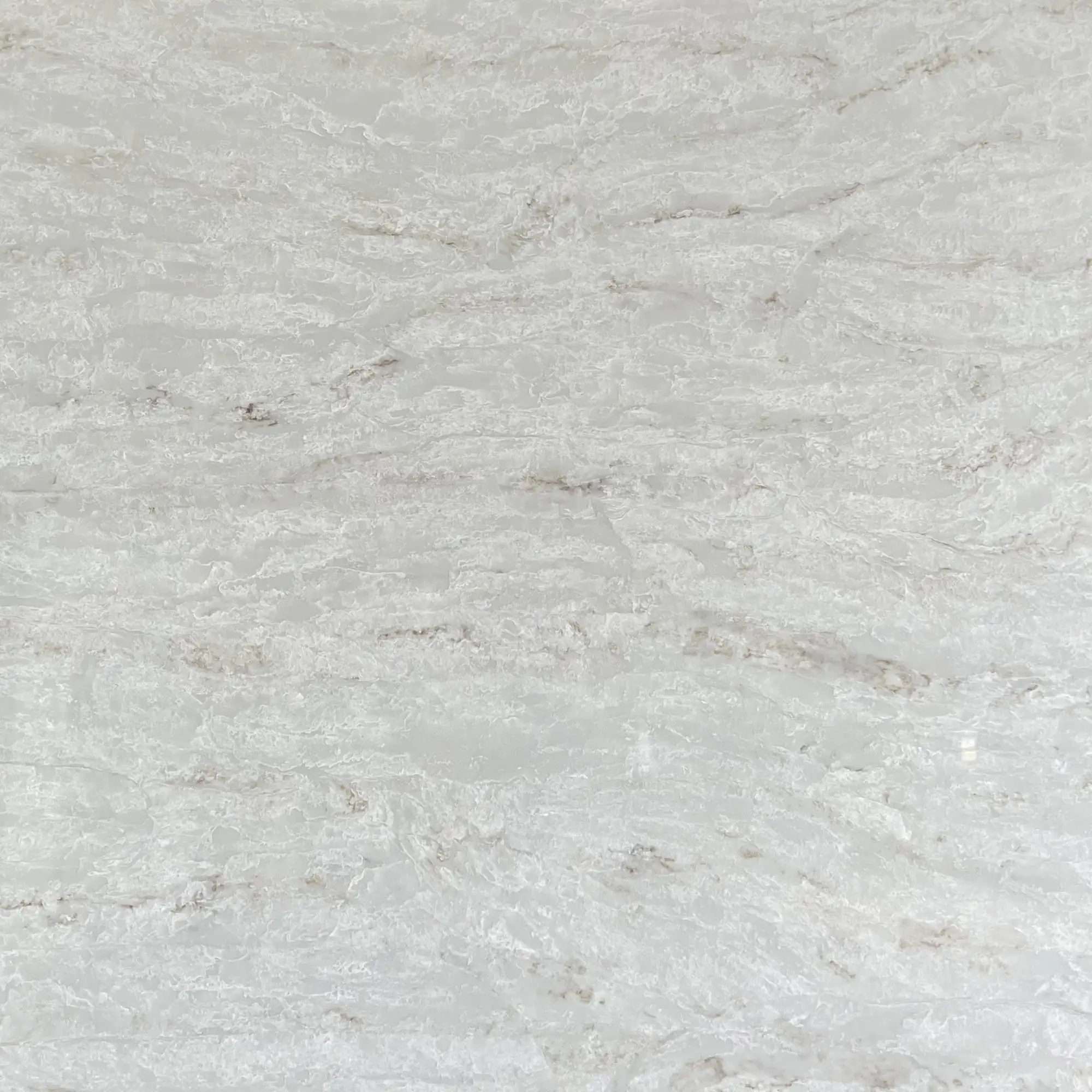
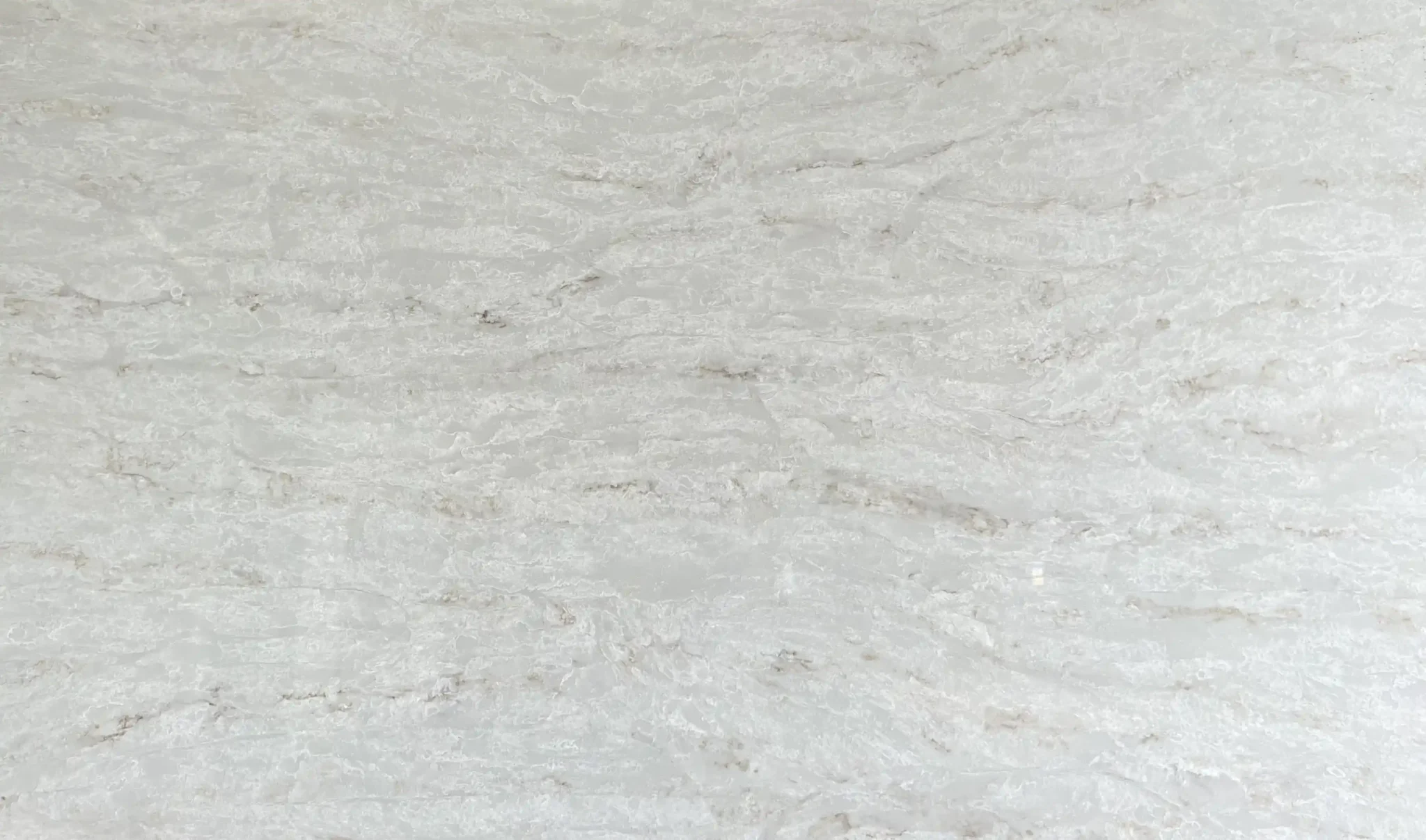
| Primärfarb(en) | Pale Icy Grey-White |
| Akzentfarbe(n) | Soft Cool Grey Wavy Vein + Faint Taupe Undertone |
| Handwerk | Regelmäßig |
| Fertigstellungen | Poliert / Geschliffen / Wildleder / Leder |
| Maßgeschneiderte Größe | 138″ × 79″ / 126″ × 63″ / Anpassbar |
| Dicke | 20mm/30mm/Customizable |
| Randstil | Abgeschrägte polierte Kante/2+2cm lamellierte Kante/Gehrungskante |
| Land | Thailand |
| Full Body Quartz | Ja |
| Buchungsübereinstimmung verfügbar | Ja |
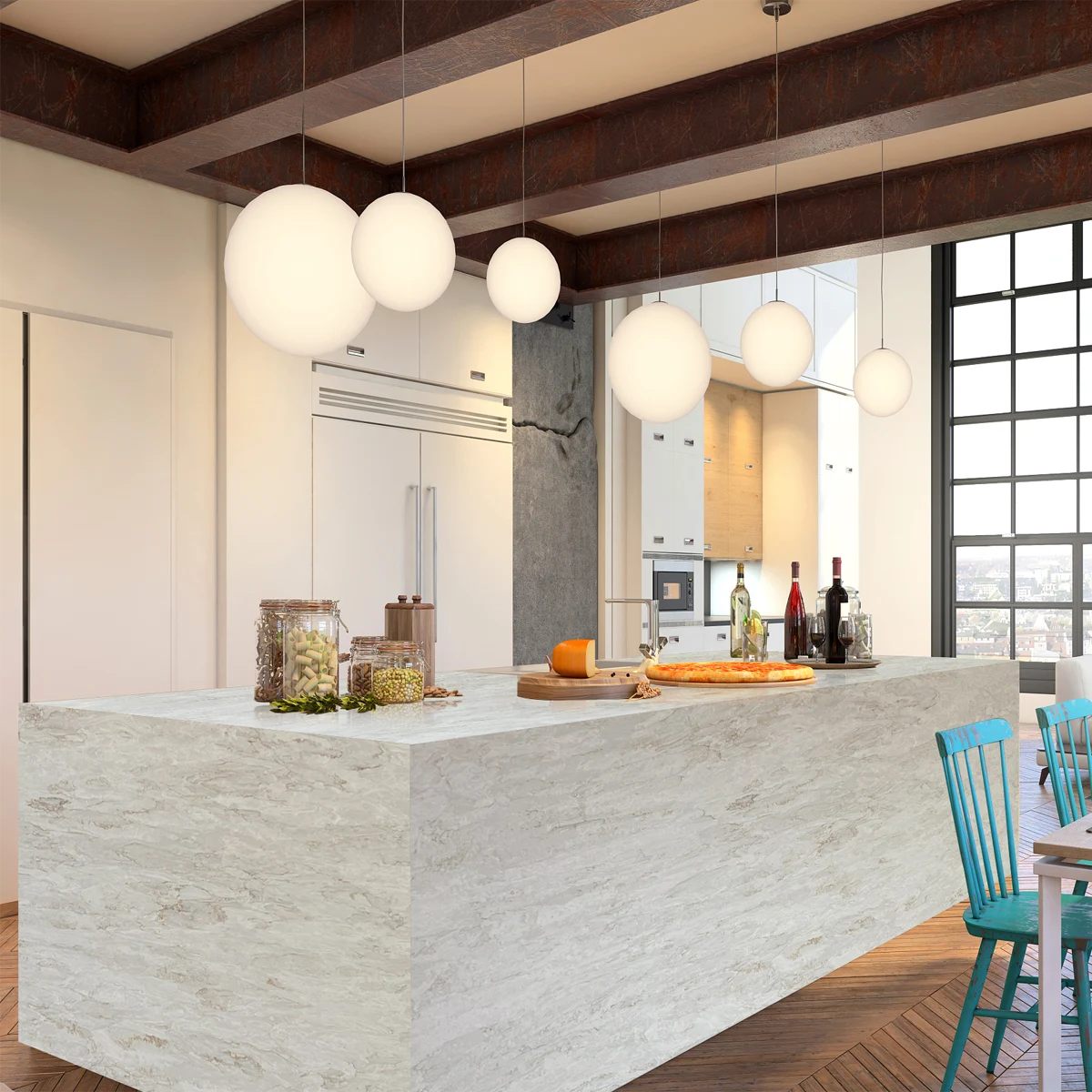
| Arbeitsplatten Wohngebiet: Ja Gewerblich: Ja |
| Mauer Wohngebiet: Ja Gewerblich: Ja |
| Bodenbelag Wohngebiet: Ja Gewerblich: Ja |
When we talk about onyx in the context of countertops, we’re usually referring to natural onyx, not engineered quartz that mimics its look.
The real downsides?
Natural onyx is extremely porous—so much so that it needs sealing every few months, and even then, it stains from coffee, wine, and citrus juices.
In real-world kitchens, homeowners often report it turning yellow over time, especially in areas with direct sunlight or near sinks.
It also scratches easily and can’t handle hot pans or abrasive cleaners.
Unlike engineered quartz, it’s not heat-resistant—just a few seconds on a hot pot and you’ll see discoloration or etching.
Installers usually recommend against it for busy kitchens or commercial spaces.
If you’re looking at a product like Grand Quartz Tech’s Warm Onyx Quartz (GQ-T431), which is a full-body printed quartz slab, then those issues don’t apply.
It’s non-porous, doesn’t need sealing, and can handle standard kitchen use.
But if you’re talking about natural onyx, it’s high-maintenance and not built for daily life.
Not exactly.
Onyx is a type of chalcedony, which is a microcrystalline form of quartz, so it does contain quartz crystals, but it’s not classified as a single crystal like a piece of amethyst or citrine.
Natural onyx forms in layers, usually in sedimentary rock, and its banded structure is what gives it that dramatic look.
But when we talk about engineered quartz countertops—like Grand Quartz Tech’s White Onyx Quartz (GQ-T431)—we’re not dealing with natural crystals at all.
Instead, it’s a manufactured composite of ground quartz (about 90%), resin, and pigments.
The ‘onyx’ look is achieved through digital printing and full-body technology, not crystal formation.
So while natural onyx has crystalline structure, engineered quartz is a man-made material that mimics the appearance.
Contractor will tell you: it’s the performance that matters, not the mineral classification.
Our slabs are NSF certified, heat-resistant, and don’t require sealing—none of which applies to natural onyx.
Ihr vertrauenswürdiger Quarz
Manufaktur seit 1989.
Unser Team ist rund um die Uhr verfügbar.





-1000x1000.webp)