- Home
- Quartz
- Quartz Slabs
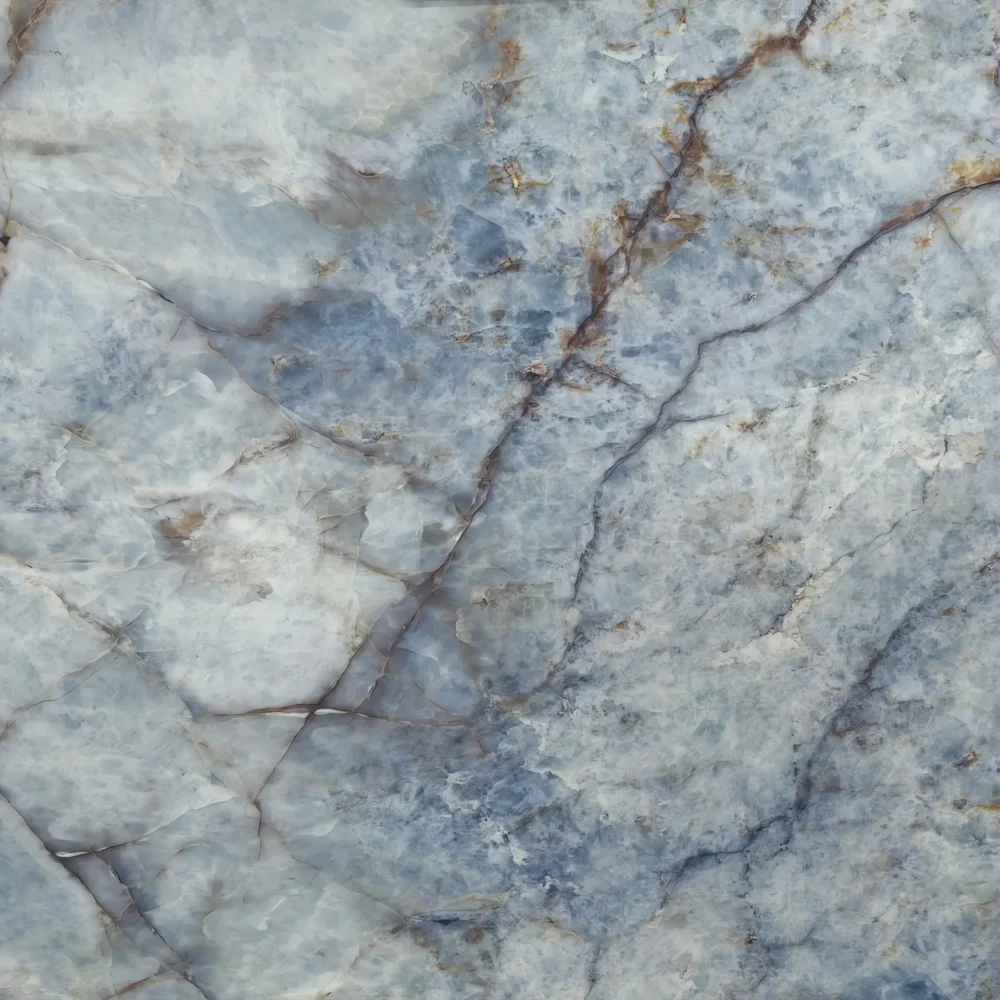
- Amazon Green Emerald Vein Printed Quartz GQ-R0248 for wholesale
Amazon Green Emerald Vein Printed Quartz GQ-R0248 for wholesale
| Primary Color(s) | Amazon Green |
| Accent Color(s) | Crisp White, Copper Brown |
| Craft | Printed |
| Finishes | Polished / Honed / Suede / Leathered |
| Customized Size | 138″ × 79″ / 126″ × 63″ / Customizable |
| Thickness | 30mm / Customizable |
| Edge Style | Eased polished edge / 2+2cm laminated edge / Mitred edge |
| Country | Thailand |
| Variations | High |
| Full Body Printed Quartz | Yes |
| Bookmatch Available | Yes |
| Countertops Residential: Yes Commercial: Yes |
| Wall Residential: Yes Commercial: Yes |
| Flooring Residential: Yes Commercial: Yes |
Description:
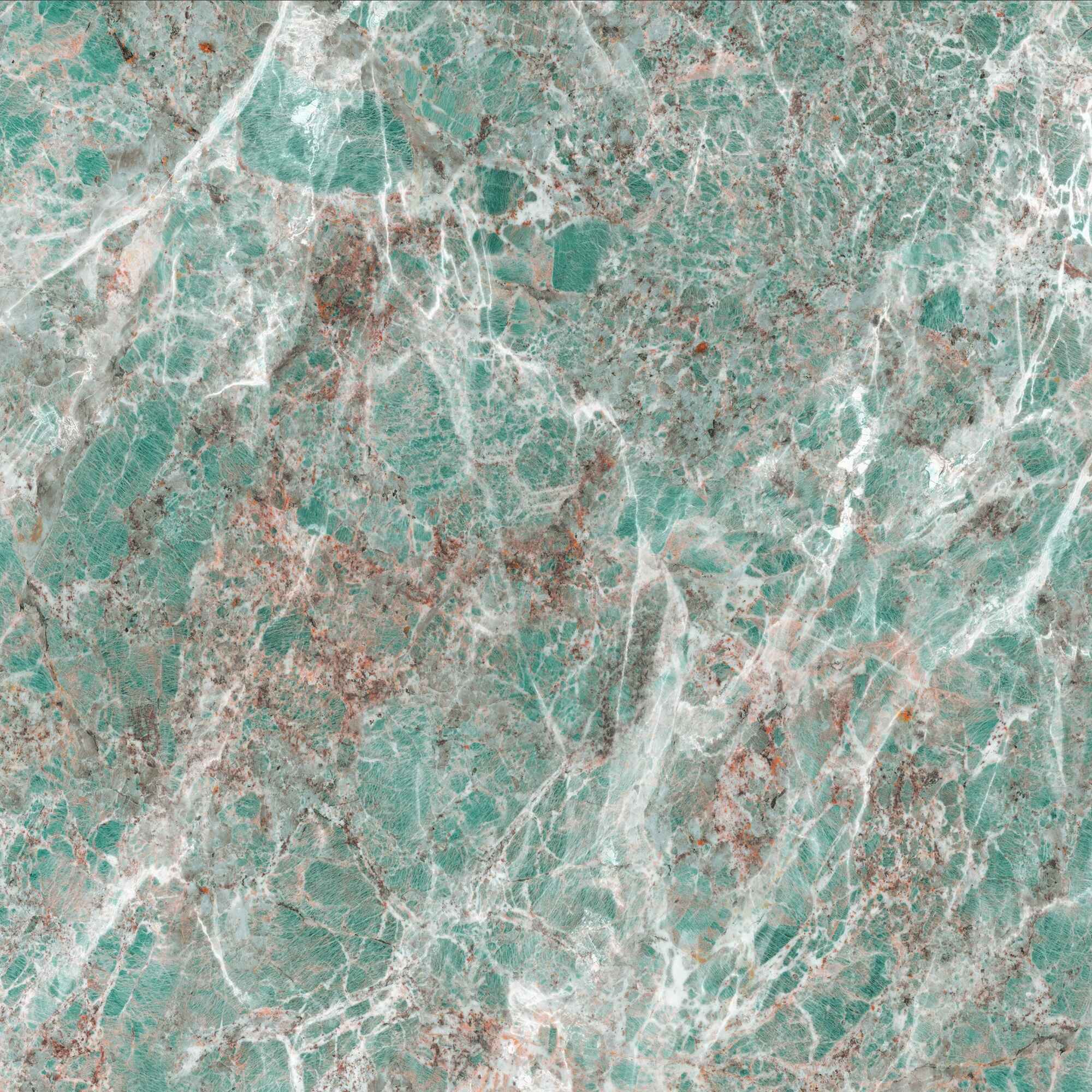
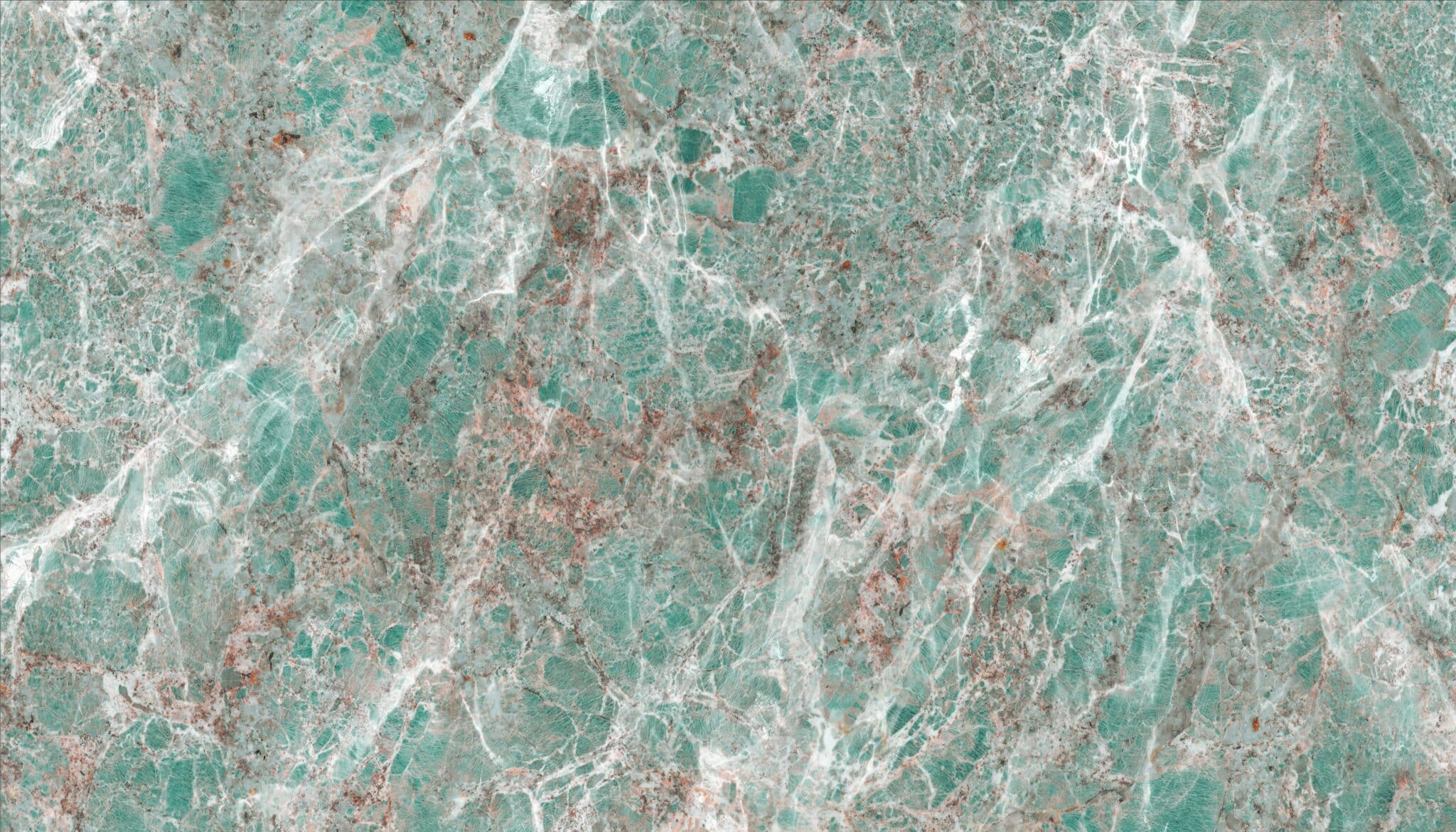
GQ-R0248 moves away from the quiet white-marble category and enters a more gemstone-inspired direction. Its teal, sea-green, and blue-green base is broken by milky white, pale gray, and cloudy mineral zones, giving the slab the feeling of polished sea glass locked inside crystalline stone. Across the surface, fine white and light-gray veins scatter in a dense, irregular web; some lines brighten into thicker branches, while smaller hairline marks spread through the green fields like natural fractures inside quartzite. Rust, copper, brown, and dark gray mineral flecks add a grounded contrast, preventing the color from feeling artificial. The overall pattern is active, layered, and exotic, with no single straight flow, making it ideal for buyers who want a statement countertop rather than a neutral background surface.
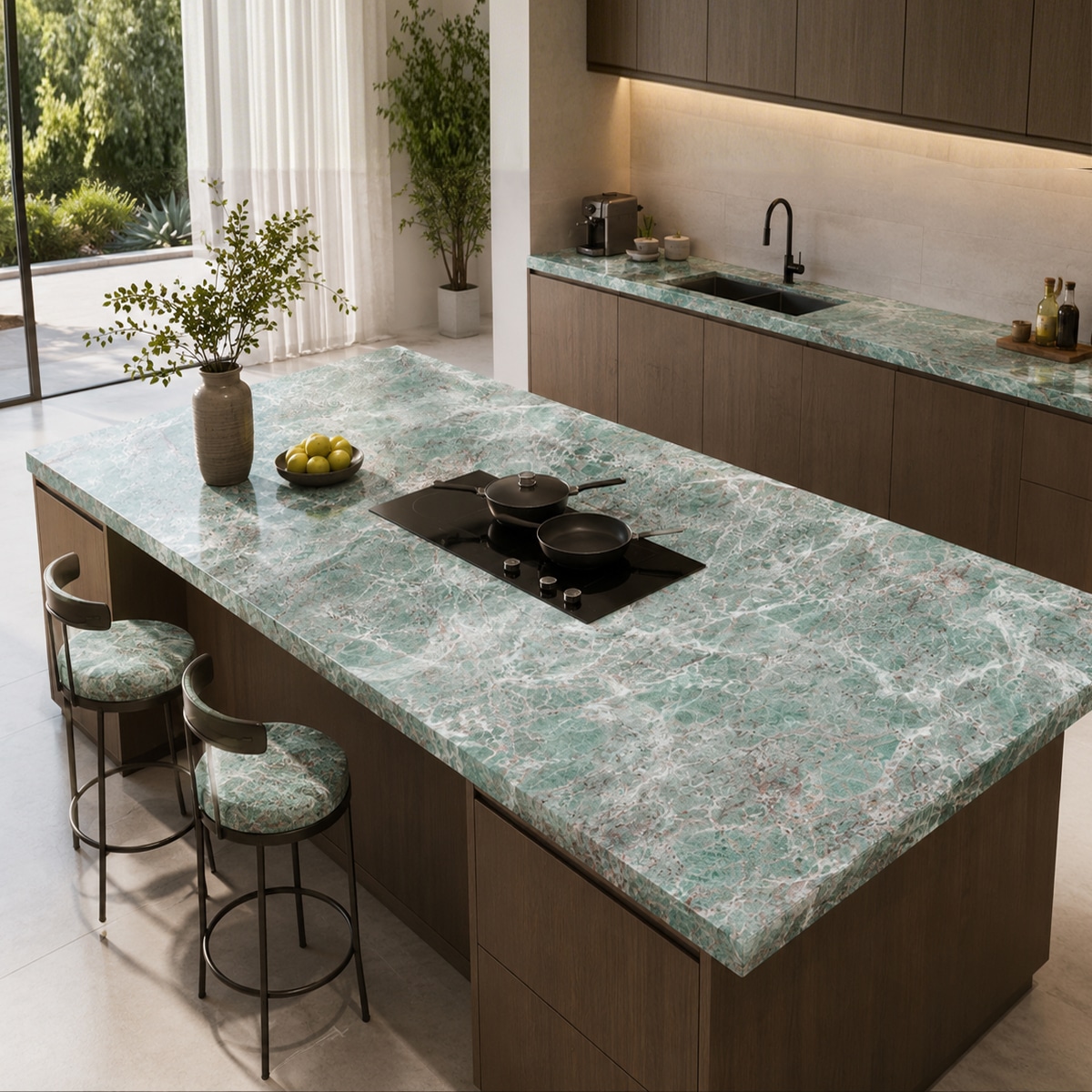
In American interiors, this color is best used with intention and space around it. In a luxury coastal kitchen, GQ-R0248 can become the main island surface, especially as a waterfall island paired with white shaker cabinetry, pale oak floors, brushed brass hardware, and simple white perimeter counters. The teal tones bring a cool, oceanic brightness into the room, while the white veining keeps the surface connected to classic cabinetry. In a modern eclectic powder room, the slab works beautifully as a vanity top or full vanity wall behind a floating sink, where warm sconces, unlacquered brass fixtures, and deep green paint can turn a small footprint into a jewel-box experience. It is also a strong option for a contemporary home bar, where dark walnut cabinets, brass shelving, ribbed glass doors, and low evening lighting allow the green crystalline movement to feel rich, intimate, and memorable.
As a case-inspired small commercial concept, imagine a 760-square-foot boutique coastal real estate sales lounge with a compact reception desk, a refreshment niche, two client meeting tables, and one powder room. The designer selects GQ-R0248 for the 9-foot check-in counter, the beverage bar top, and a matching vanity backsplash to give the office a distinctive coastal identity without relying on nautical decor. During slab layout, the fabricator places the most saturated teal clusters across the front face of the reception counter, while the softer gray-white zones are reserved near writing areas where brochures, tablets, and contract folders need visual clarity. Under 3500K lighting, the surface feels cool and luminous during daytime appointments, then more dramatic in the evening as brass signage, walnut wall panels, ivory upholstery, and matte black window frames pick up the slab’s copper and charcoal mineral details. The result is practical for daily client traffic, but visually strong enough to make the compact office feel like a curated design destination.
Frequently asked questions
Why do some patterned quartz countertops look fake or cringy, and how do I choose one that won’t clash with the kitchen?
A lot of lower-priced patterned quartz looks fake because the veining is printed too evenly, repeats too obviously, or doesn’t continue convincingly through edges, seams, and corners. In a small sample it may look fine, but across a full island the pattern can feel artificial or busy. As a fabricator, I’d pay attention to the slab photos, not just the showroom sample. Look for softer movement, less obvious repetition, and a color that relates to your cabinets, flooring, backsplash, and wall color. The countertop should not be chosen in isolation. If the cabinets or backsplash already have strong pattern or texture, a quieter quartz usually ages better. If everything else is plain, a more dramatic quartz can work, but it needs enough negative space and good seam planning. Also ask the fabricator where seams will land and how the veining will be oriented, because even a nice quartz can look cheap if the layout is awkward.
Do quartz countertops need extra support, and does slab thickness change how they should be installed?
Yes. Quartz is strong in everyday use, but it is not forgiving when it is left unsupported, especially around overhangs, dishwashers, sinks, seams, and thin cabinet rails. Most residential quartz is either 2 cm or 3 cm thick. A 3 cm slab is common for kitchen countertops because it can usually span normal cabinet openings better and does not need a built-up laminated edge. A 2 cm slab often needs plywood or other continuous support, depending on the manufacturer, layout, and edge detail.
For overhangs, the exact limit depends on the quartz brand, thickness, and whether the area will be used for seating. As a practical rule, small overhangs may be fine unsupported, but deeper breakfast-bar overhangs usually need hidden steel brackets, corbels, or posts. Do not rely on quartz alone for a long cantilever just because it “feels solid.” Flexing, cabinet movement, or someone leaning on the edge can lead to cracks later.
Good installation also means cabinets must be level, flat, and securely fastened before templating. Quartz should not be forced down onto uneven cabinets with shims randomly stuffed underneath. Sink cutouts need proper support, seams should be placed where the slab and cabinets can carry them, and dishwashers or wide appliance openings often need added support rails. A lot of quartz failures blamed on the material are really layout, cabinet, or support problems.
For care, quartz is low maintenance but not bulletproof. Clean with mild soap and water, avoid abrasive pads, and do not put hot pans directly on it. The resin in quartz can discolor or scorch from high heat. It also should not be used outdoors unless the specific product is rated for UV exposure, because sunlight can yellow or fade many quartz surfaces.