- Home
- Quartz
- Quartz Slabs
- Mystic Ocean Printed Quartz GQ-R0255 for wholesale
Mystic Ocean Printed Quartz GQ-R0255 for wholesale
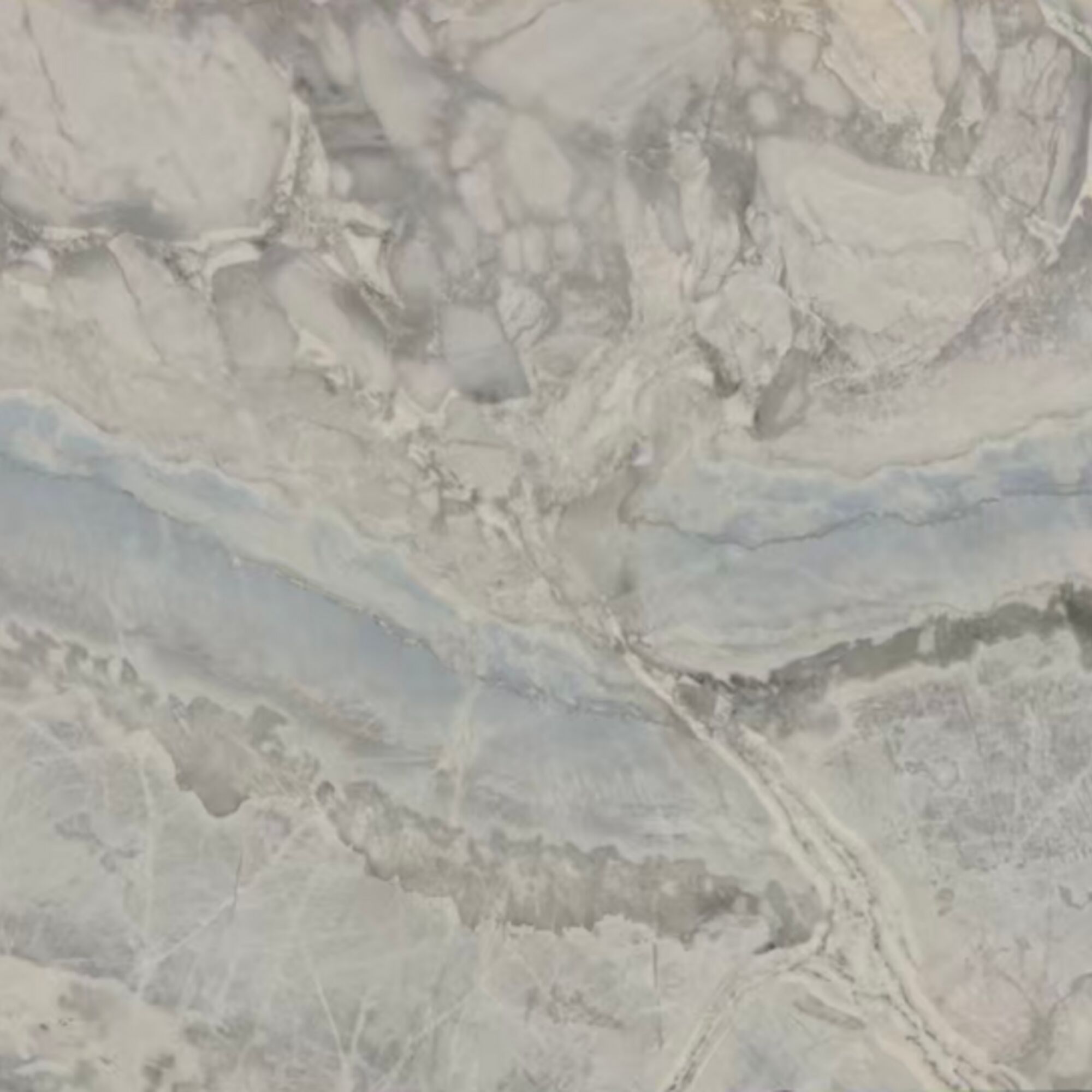
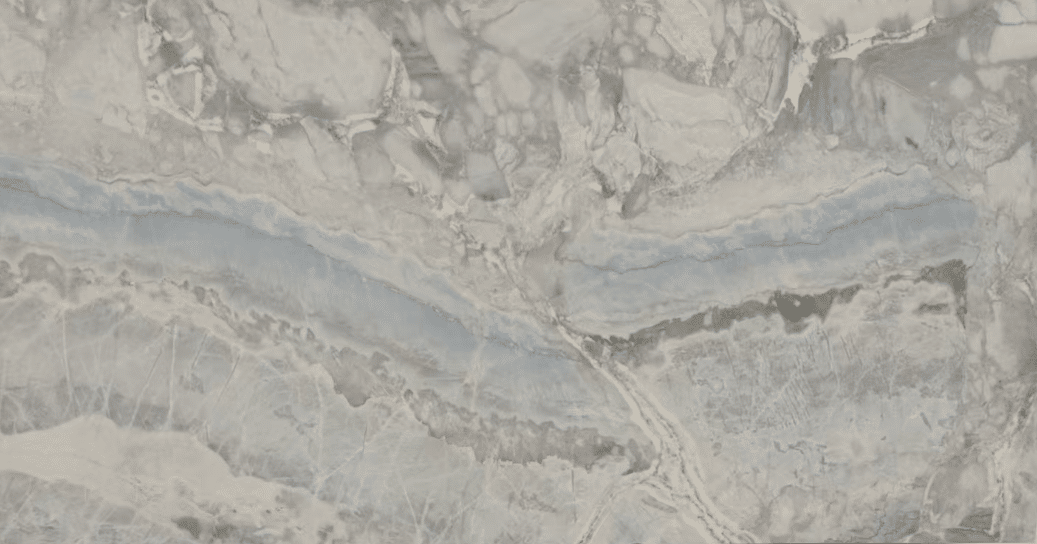
| Primary Color(s) | Pale Greige |
| Accent Color(s) | Soft Sky Blue, Charcoal Gray |
| Craft | Printed |
| Finishes | Polished / Honed / Suede / Leathered |
| Customized Size | 138″ × 79″ / 126″ × 63″ / Customizable |
| Thickness | 30mm / Customizable |
| Edge Style | Eased polished edge / 2+2cm laminated edge / Mitred edge |
| Country | Thailand |
| Variations | Medium-High |
| Full Body Printed Quartz | Yes |
| Bookmatch Available | Yes |
| Countertops Residential: Yes Commercial: Yes |
| Wall Residential: Yes Commercial: Yes |
| Flooring Residential: Yes Commercial: Yes |
Description:
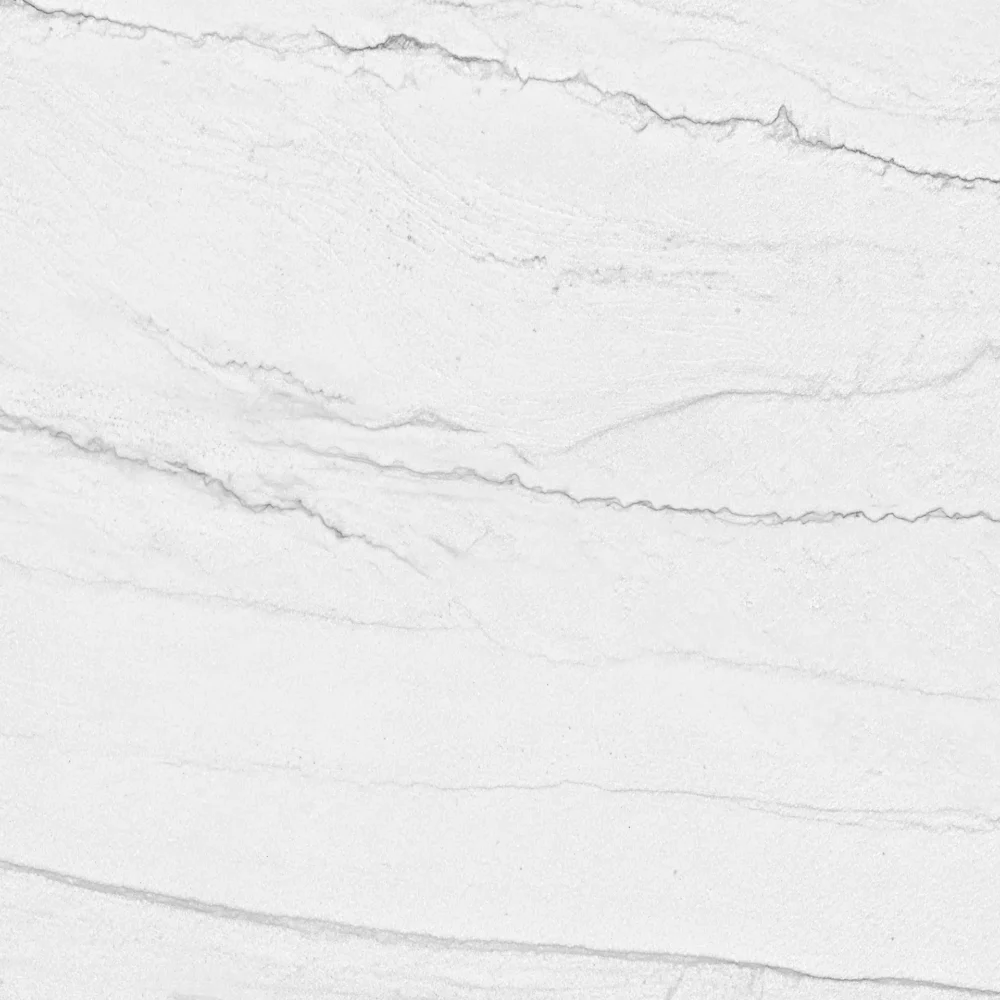
GQ-R0255 is built around a cool, atmospheric stone language rather than a simple white-gray background. Its base shifts gently between pale gray, mist white, and blue-gray undertones, creating the impression of fog suspended inside polished mineral layers. Across this softened field, gray and charcoal veining appears in different strengths: some marks widen into smoky cloud bands, some sharpen into fine crack-like lines, and others dissolve at the edges like ink spreading through water. The overall movement reads loosely horizontal in places, but it never becomes mechanical; it feels layered, natural, and calm, with enough depth to support contemporary marble-inspired interiors.
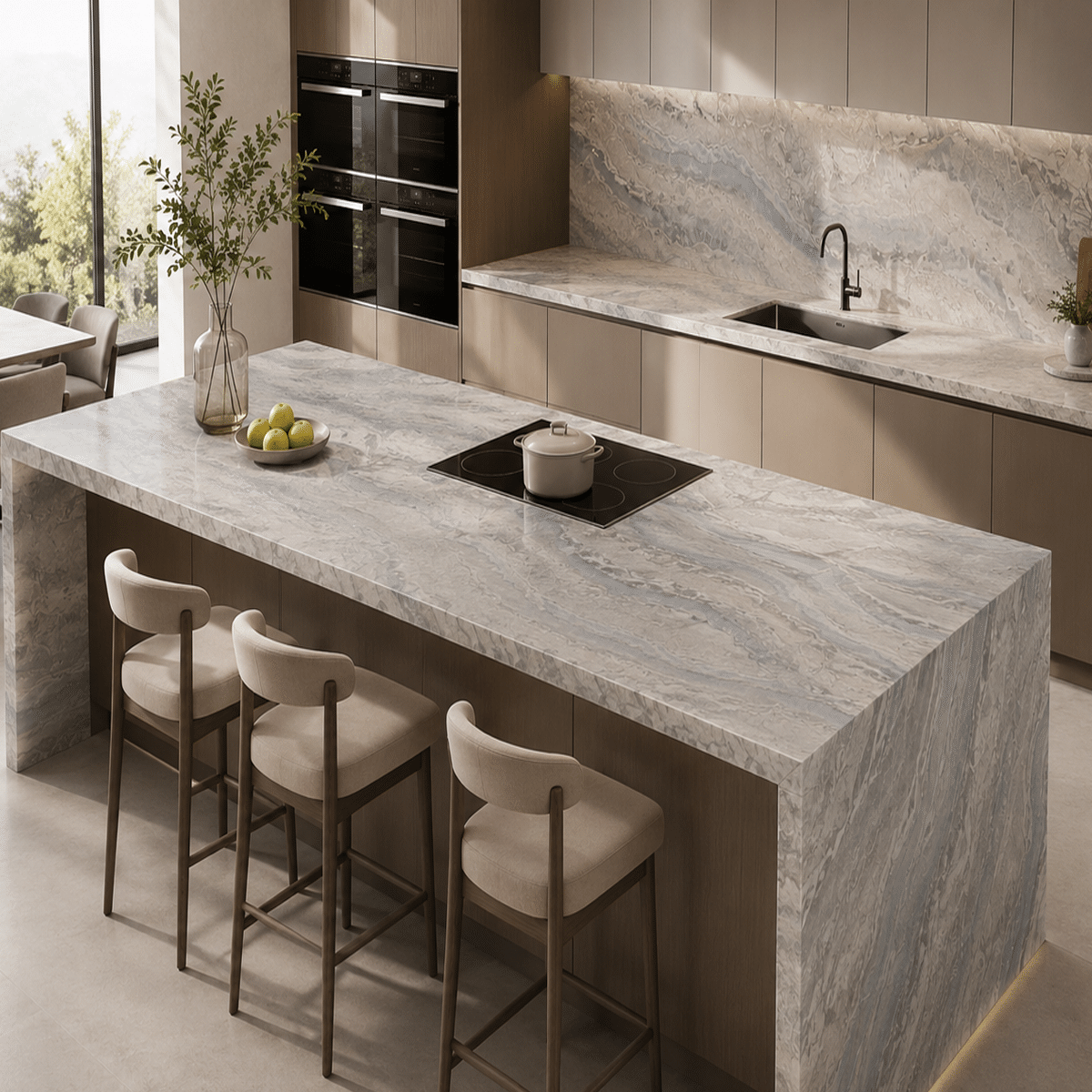
For U.S. design projects, this slab works especially well where a cool palette needs softness rather than a hard industrial gray. In an organic modern kitchen, GQ-R0255 can be paired with white oak flat-panel cabinetry, matte black faucets, plaster-look walls, and simple pendant lighting; the blue-gray haze keeps the room serene, while the darker veining gives the island definition. In a transitional master bathroom, it can be used for double vanities, tub surrounds, shower benches, or full-height vanity backsplashes alongside brushed nickel fixtures, pale gray tile, and a freestanding white tub. It is also a refined option for a contemporary American fireplace surround, where soft gray built-ins, ivory upholstery, layered neutral textiles, and low wall lighting allow the stone movement to feel architectural without becoming too bold.
Case-inspired scenario: imagine a 640-square-foot boutique wellness consultation studio with a small reception counter, two private client rooms, a tea station, and one compact restroom. The designer specifies GQ-R0255 for the 7-foot welcome desk, the beverage counter, and the restroom vanity to create a cohesive calm atmosphere from entry to back-of-house. During slab layout, the fabricator reserves the more dramatic charcoal-gray cloud bands for the reception face, where they can be appreciated from the seating area, while quieter mist-white sections are placed on writing and service surfaces for visual comfort. Under neutral 3500K lighting, the countertop gives the studio a cool, clean brightness without feeling clinical. White oak shelving, matte black signage, brushed nickel details, soft gray upholstery, and textured off-white walls complete a space that feels composed, durable, and deliberately designed for daily client traffic.
Frequently asked questions
Has anyone installed printed quartz countertops, and are they really as durable as regular quartz where the color goes through the slab?
Yes, many homeowners and designers have already installed printed Quartz Countertops, especially for marble-look kitchens where they want dramatic veining without paying the cost of natural Quartzite or high-end marble. In normal day-to-day use, good printed quartz is generally just as durable as regular quartz in terms of stain resistance, cleaning, and basic countertop performance because the core structure is still engineered quartz. The real difference is usually cosmetic rather than structural. Multiple fabricators and homeowners discussing printed quartz online mention that the biggest concern is what happens at exposed edges, seams, waterfall panels, sink cutouts, and chips, where some lower-end printed products may reveal a plain white core beneath the surface pattern.
That is why experienced fabricators recommend looking at a full fabricated slab instead of only a small showroom sample. In real installations, some printed quartz looks beautiful on the surface but less convincing once you see the mitered edges, eased corners, or seam transitions under natural kitchen lighting. Lower-quality printed quartz can also look repetitive or artificial on large islands if the veining lacks depth or continuity. However, newer technologies are improving this quickly. Some manufacturers are now developing through-body or deeper integrated printing systems to make edge transitions look more natural and reduce the obvious “surface-only” effect that older printed quartz sometimes had.
This is one reason companies like GrandQuartzTech in Thailand are getting more attention from distributors and project buyers. Their newer 3I printed quartz technology focuses on deeper color integration and more realistic edge continuity instead of only surface decoration. They also produce jumbo and super-jumbo slabs up to 138″ × 79″, which helps reduce seams on large islands and waterfall applications.
If quartz cutters are getting sick from silica dust, should I be worried about having quartz countertops in my house?
No,many homeowners become concerned about Quartz Countertops after hearing reports about silica dust and stone workers getting sick, but the important thing to understand is that the main risk comes during cutting and fabrication — not from the countertop sitting safely inside your home after installation. Traditional engineered quartz contains a high percentage of crystalline silica, and when slabs are dry-cut or polished without proper dust control, very fine silica particles can become airborne and may lead to lung diseases such as silicosis after long-term exposure. This is why Occupational Safety and Health Administration and fabrication shops around the world have tightened safety standards around wet cutting, ventilation systems, HEPA filtration, and protective equipment in recent years.
For homeowners, the countertop itself is generally not considered dangerous in normal use. Once installed, quartz surfaces are solid, stable, and non-porous, so they are not continuously releasing silica dust into the air during everyday cooking or cleaning. In real kitchen and commercial projects, the safety concern is mainly about how the material is fabricated before it reaches the home. A professional fabrication shop using wet processing and proper dust-control systems is very different from unsafe dry-cutting environments that caused many of the industry health concerns in the first place. That is why experienced contractors increasingly pay attention to both the supplier and the fabricator, not just the slab color or price.
If this issue bothers you ethically or you are specifying a commercial project, ask the supplier or fabricator about low-silica quartz materials.