



Low Silica Quartz Safety Guide for Importers and Contractors
OSHA PEL, 8-HOUR TWA
LOW-SILICA THRESHOLD
ZERO-SILICA TARGET
Low silica quartz safety starts with source reduction, verified documentation, and fabrication controls that match OSHA’s respirable crystalline silica requirements.
Grand Quartz Tech manufactures low- and zero-silica quartz slabs in Thailand for Global importers, contractors, and kitchen & bath channels that need performance, design range, and clearer compliance files.
The Silica Problem in Fabrication
Traditional engineered quartz commonly contains about 90% crystalline silica by weight. The slab is not the main exposure problem while it sits in a warehouse. The hazard appears when shops cut, grind, drill, polish, or dry sweep dust from fabricated stone.
What OSHA requires shops to control?
- OSHA’s respirable crystalline silica standard for construction, 29 CFR 1926.1153, sets a permissible exposure limit of 50 micrograms per cubic meter of air — 50 μg/m³ — averaged over an 8-hour time-weighted average.
- NIOSH recommends a more protective exposure limit of 25 μg/m³. Contractors businesses may also need to evaluate requirements under general industry rules, state-plan OSHA programs, and local enforcement priorities.
Typical Applications:
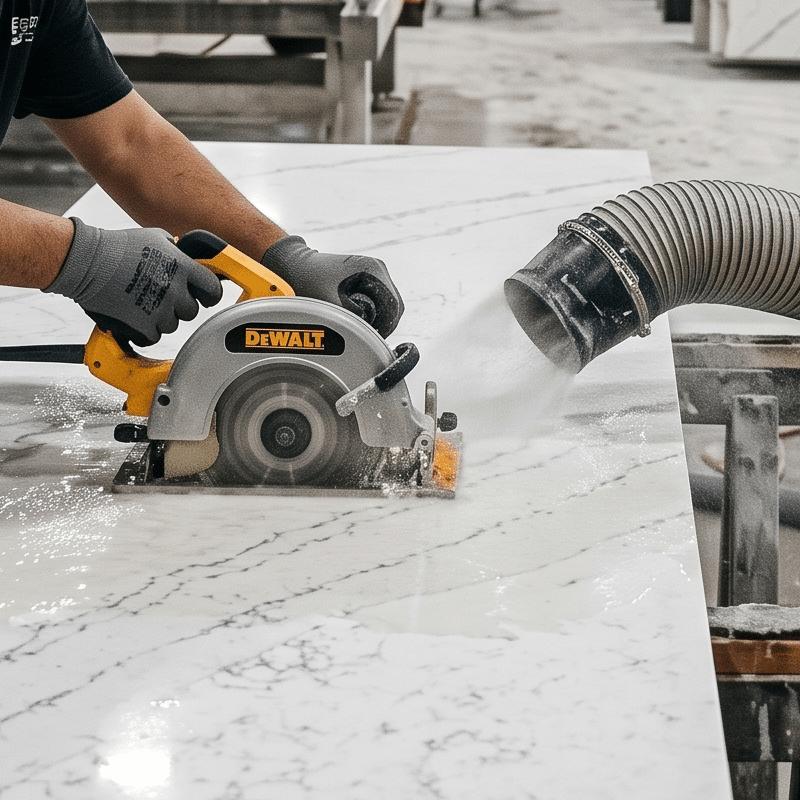
- Use wet methods and local exhaust ventilation during cutting and grinding.
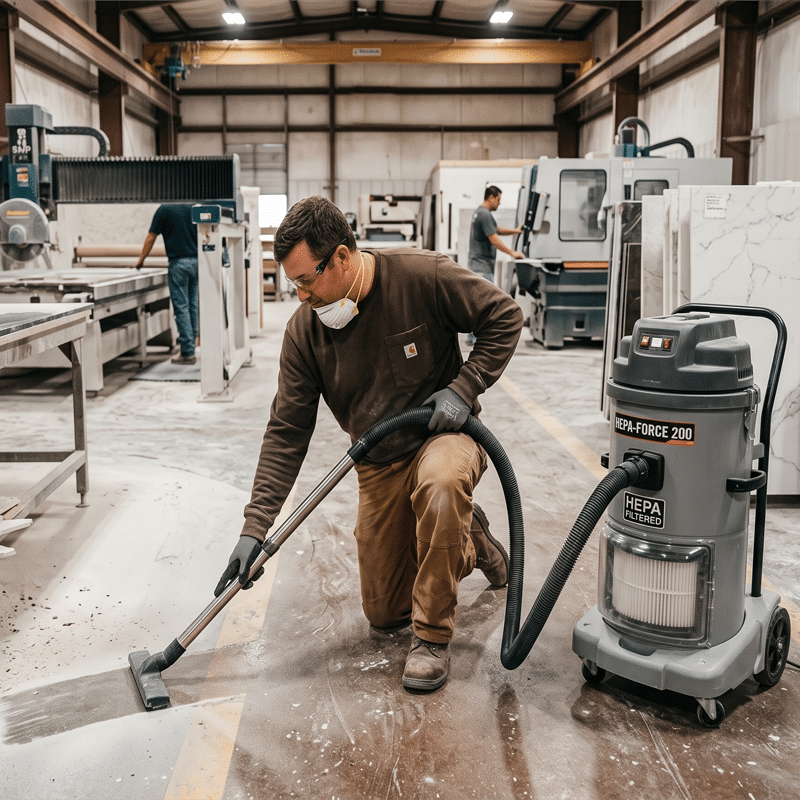
- Use HEPA-filtered vacuums for cleanup; avoid dry sweeping compressed dust.
- Conduct exposure assessment where required.
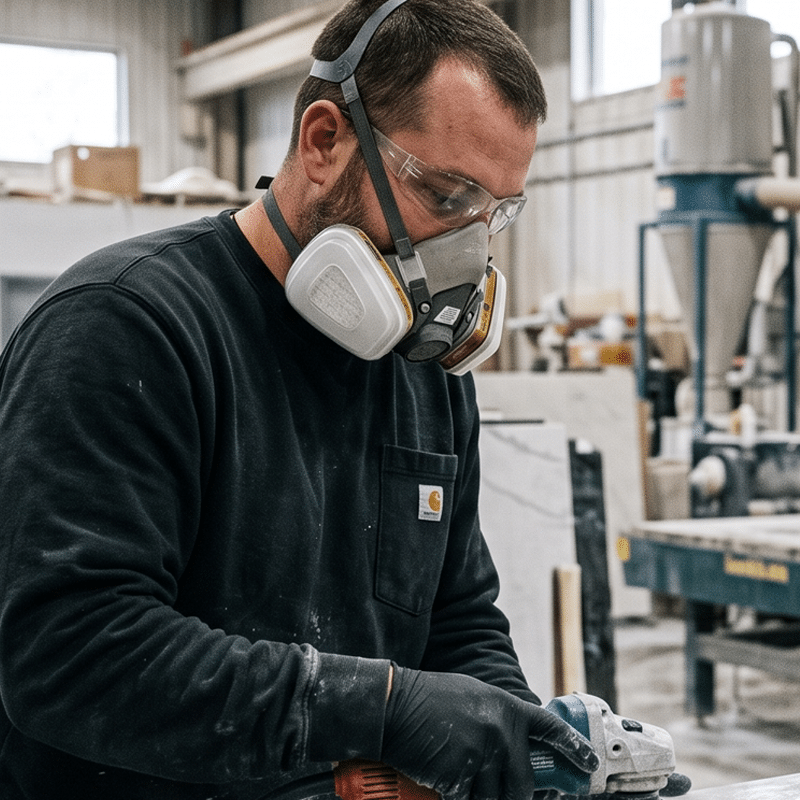
- Provide respirators, training, and medical surveillance when triggered.
Do Zero Silica Options Limit Your Design Choices?
- A common misconception is that zero-silica quartz is only available in a handful of colors or patterns.
- The truth is, the silica level and the design are two separate things.
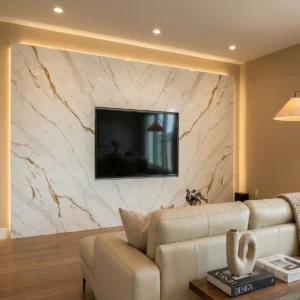
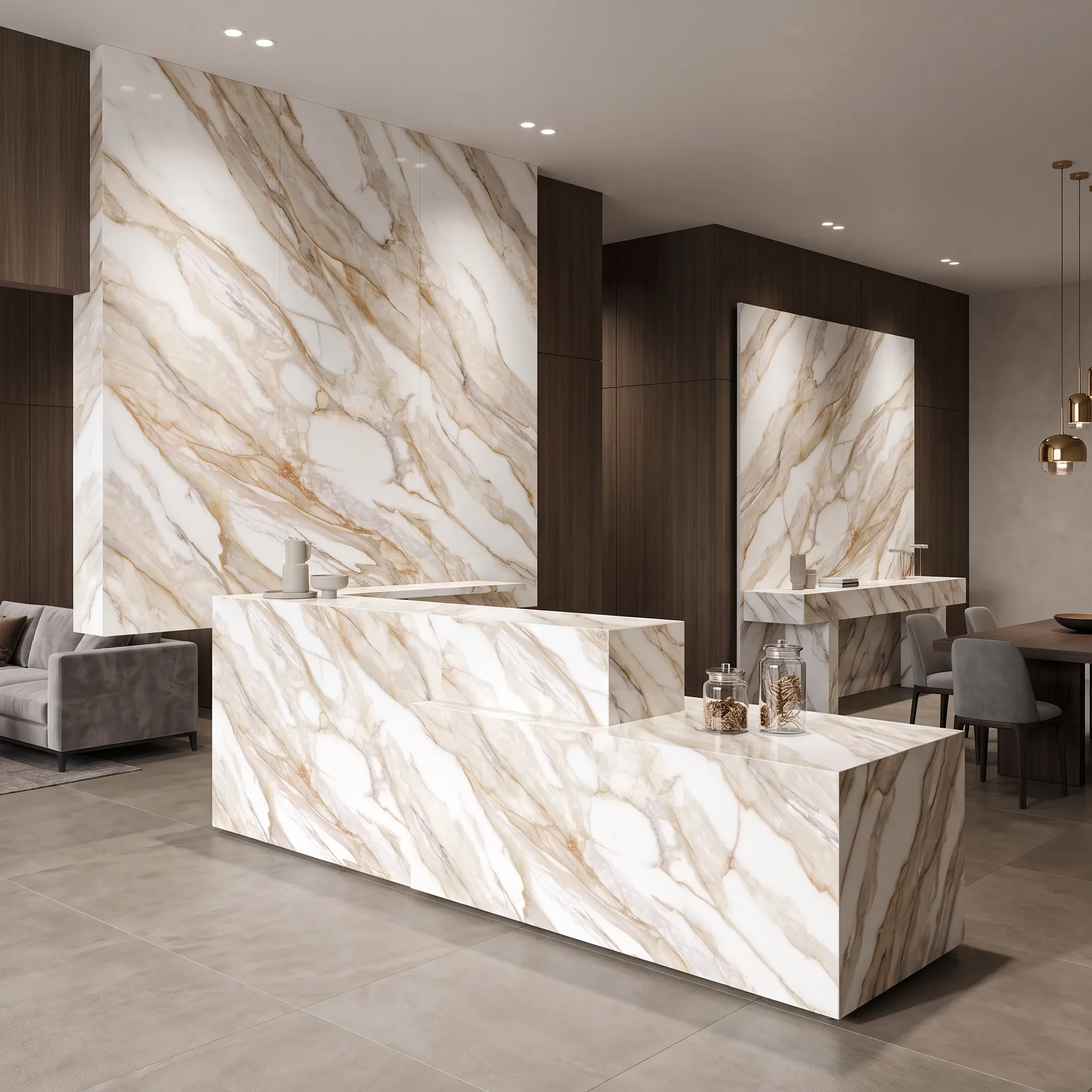
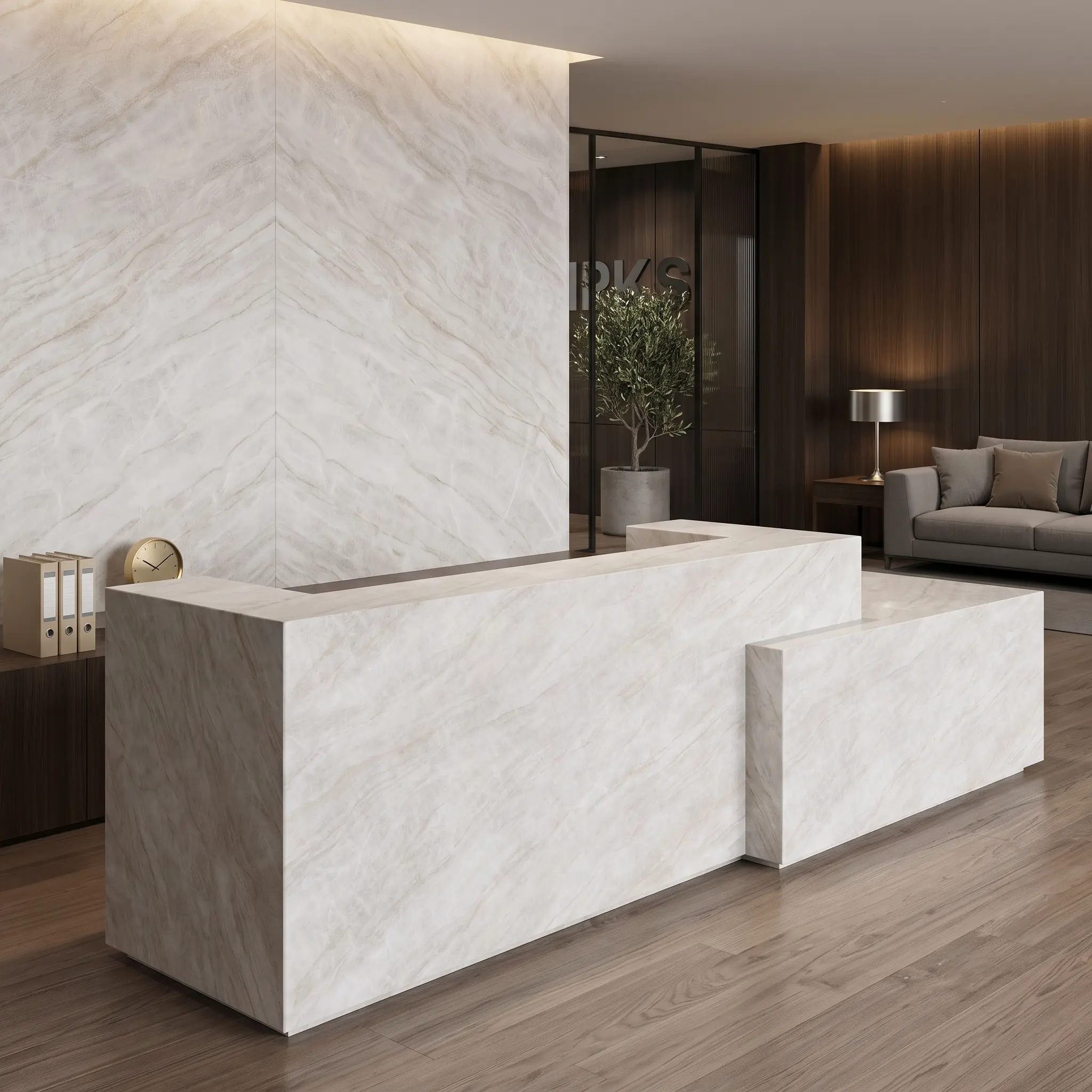
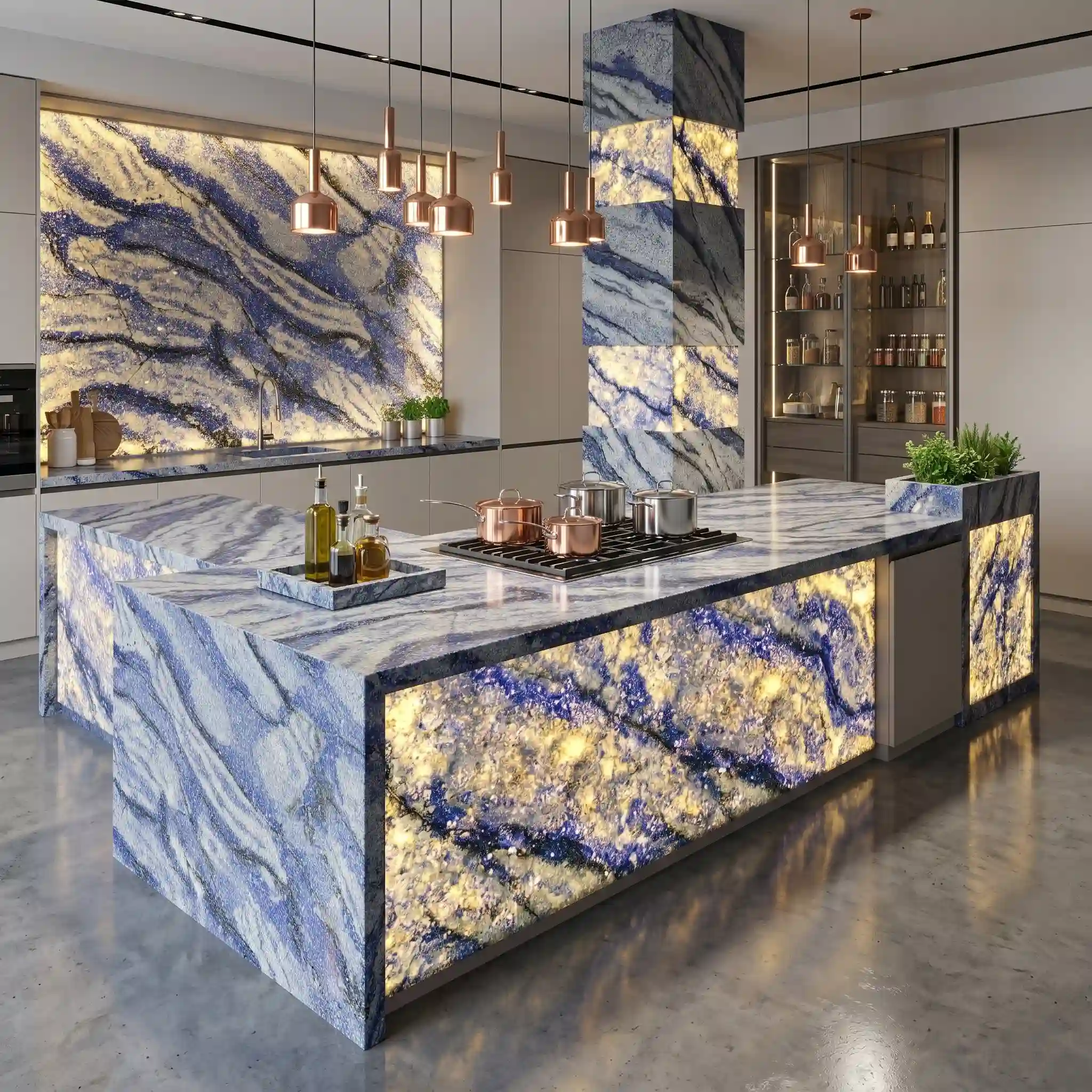
- Changing from conventional quartz to Zero Silica doesn’t mean changing the appearance of the slab. It simply means using a different raw material system while maintaining the same design language.
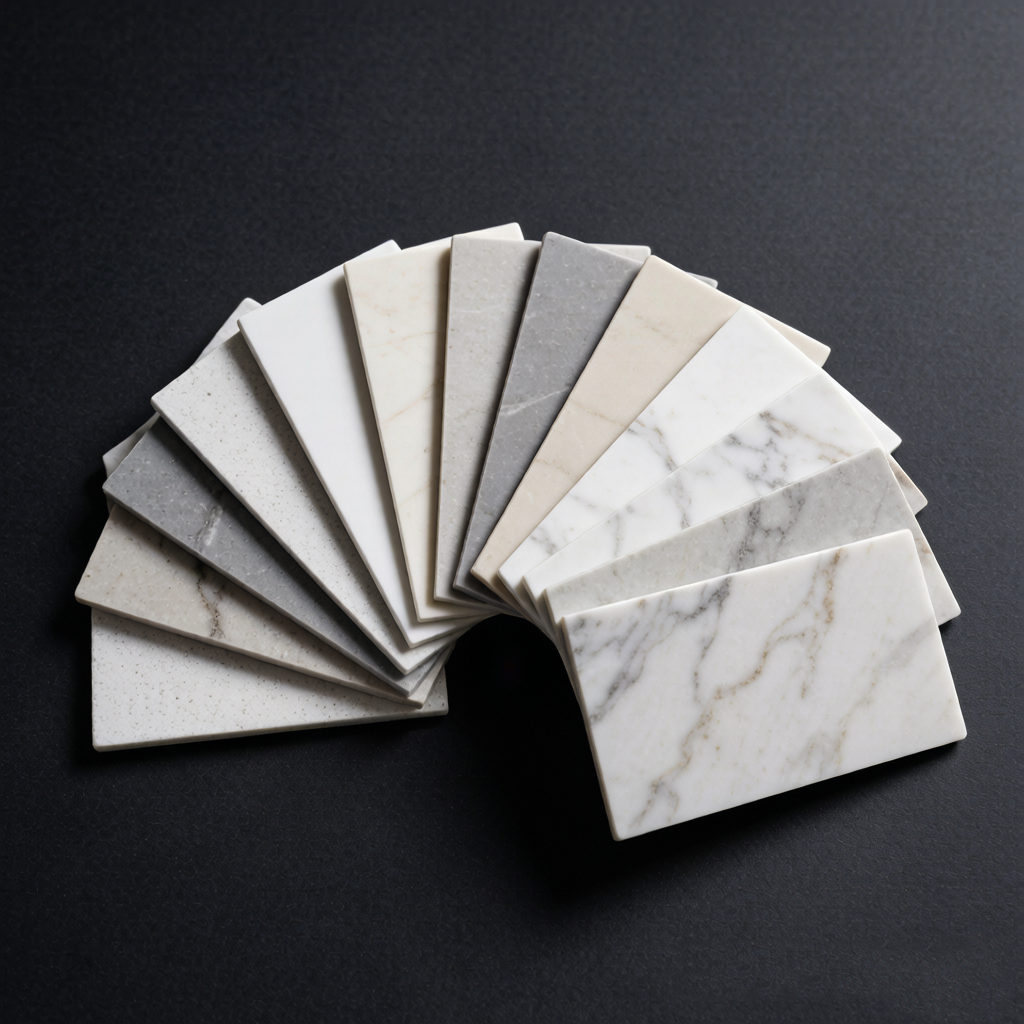
At GQT, we’ve developed proven manufacturing technologies for Zero Silica, Ultra-Low Silica, and Low Silica quartz. From Calacatta collections and quartzite looks to solid colors, concrete finishes, and printed surfaces, virtually every design can be produced across different silica levels to meet your project or market needs.
Low-Silica vs Zero-Silica Quartz: What Buyers Should Verify
“Low silica” is not a single regulated US product category. Manufacturers use different thresholds. For clear purchasing language, GQT recommends specifying the maximum crystalline silica percentage by SKU and attaching the current Safety Data Sheet to each quote.
| Product type | Typical crystalline silica | Common composition | Fabrication safety meaning | Buyer verification |
|---|---|---|---|---|
| Traditional engineered quartz | Approximately 90%; many legacy products range near 90% to 93% | Quartz aggregate, resin binder, pigments, additives | Higher potential source of respirable crystalline silica dust during cutting, grinding, and edge profiling | Please refer to our SGS silicon content report |
| Low-silica quartz | <40% crystalline silica | Reduced quartz content with feldspar, recycled glass, porcelain-derived material, alternative minerals, resin, pigments | Lower source crystalline silica content; fabrication controls still required | Please refer to our SGS silicon content report |
| Ultra-low-silica quartz | Often <10% crystalline silica, depending on SKU | Higher share of alternative minerals and glass-based aggregates | Further source reduction; still creates dust from resins, pigments, fillers, and any remaining silica | Please refer to our SGS silicon content report |
| Zero-silica quartz | <1% crystalline silica | Non-quartz mineral blends, recycled glass, feldspar or other alternative mineral systems, resin, pigments | Designed to minimize crystalline silica at the source; shops still need dust control for total particulate and other constituents | Please refer to our SGS silicon content report |
Specification language: Instead of writing “silica-free” without a limit, write “engineered quartz slab with crystalline silica content below 1% by weight, supported by current SDS and SKU-level documentation.”
How Grand Quartz Tech Controls Silica
From Raw Material to Finished Slab
Factory control starts before the press. GQT manages crystalline silica content through formulation, supplier approval, automated production, enclosed dust collection, and quality-control records at our Thailand facility.
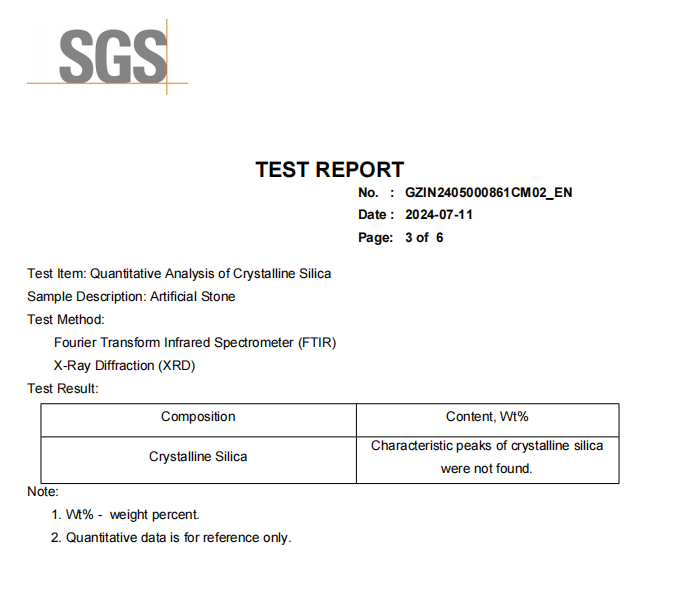
Our Third-Party Silica-Free Certificate
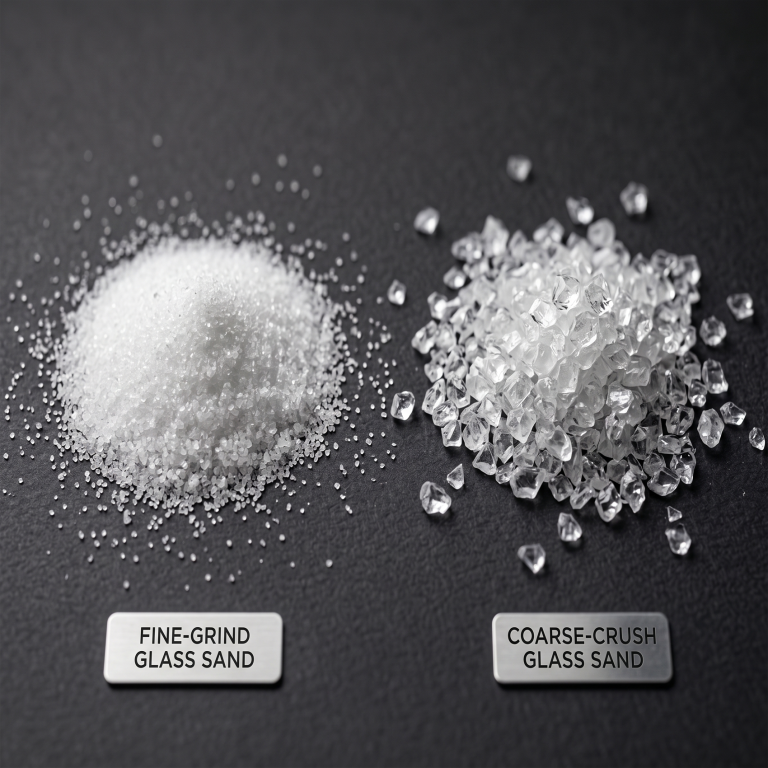
Material sourcing
GQT specifies mineral blends by product line. Low-silica formulas reduce quartz loading with feldspar, recycled glass, and selected alternative minerals. Zero-silica formulas target less than 1% crystalline silica.
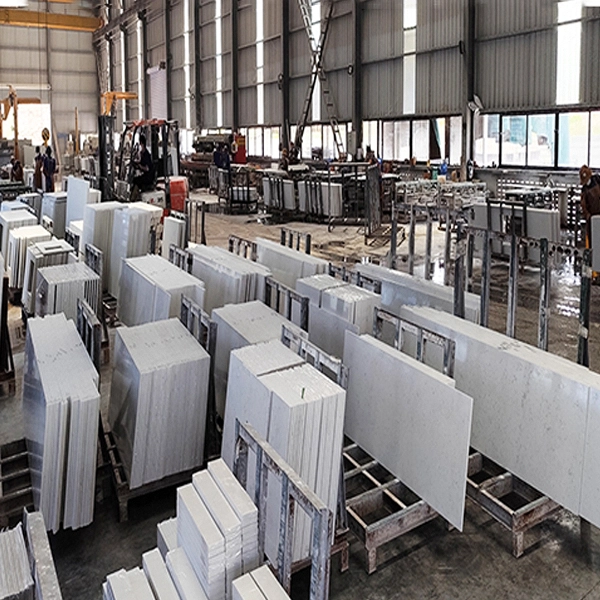
Automated Bretonstone lines
Automated dosing, mixing, vibration, vacuum compaction, curing, and calibration reduce variation compared with manual batching. Production records support repeatability by color and lot.
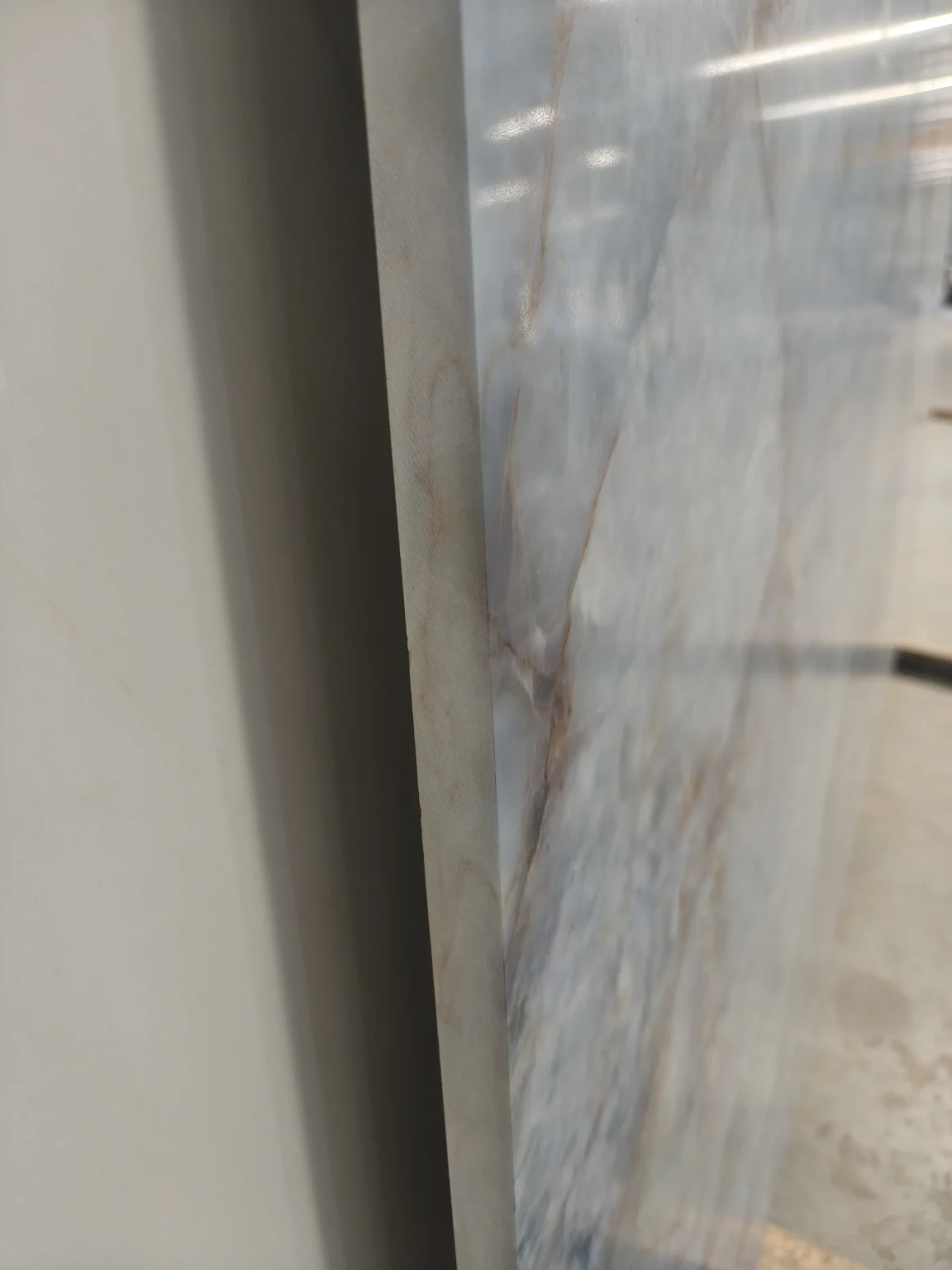
3I Full Body Tech
GQT uses CNC equipment with enclosed dust collection and wet-processing practices where applicable. Integrated collection reduces uncontrolled dust migration inside the plant.
ISO 9001 QC protocols
Inspection covers raw material checks, slab appearance, thickness, dimensional tolerance, hardness, density targets, packaging condition, and traceability before container loading.
Factory perspective: safer slabs still need fabrication discipline
Manufacturers can lower the crystalline silica percentage in the slab. Contractors control the exposure event. We provide recommended cutting parameters because tool condition, water flow, RPM, feed rate, and dust collection affect both worker exposure and slab edge quality.
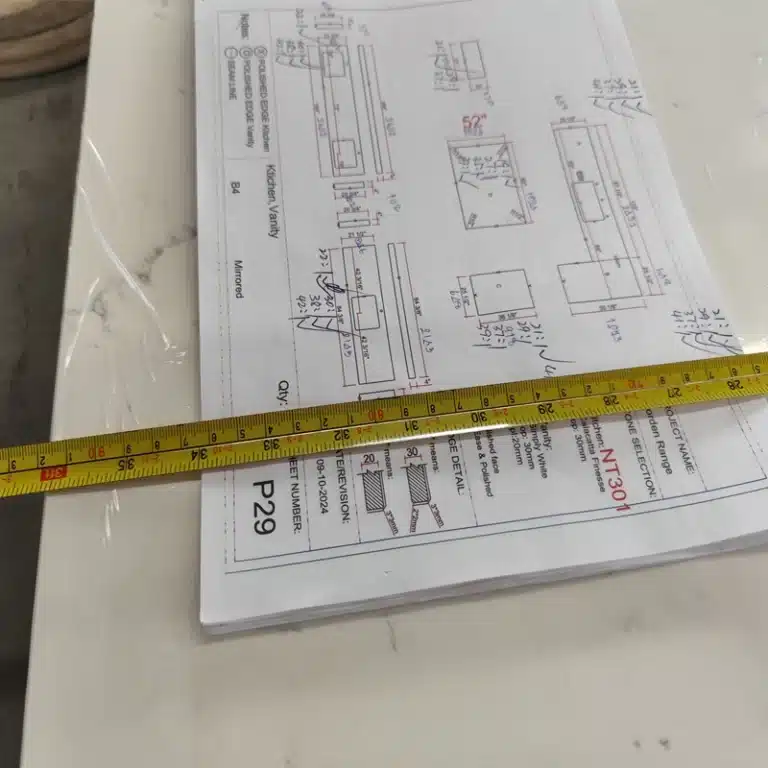
In one after-sales investigation involving 20 mm solid white slabs, edge chipping increased when a shop used a worn diamond blade beyond its replacement interval, ran an aggressive feed rate, and supplied insufficient water cooling. GQT added fabrication guidance cards to slab shipments to help reduce preventable failures.
For compliance planning, use GQT fabrication guidance together with OSHA, state-plan OSHA, and your industrial hygienist’s exposure data.
GQT Low-Silica & Zero-Silica Product Line
GQT supplies container-volume slab programs for US wholesalers, distributors, fabrication networks, and commercial projects. SKU availability depends on color, finish, silica threshold, and order quantity.
Low-Silica Quartz
<40% crystalline silica
- Alternative minerals include feldspar and recycled glass blends
- Available in whites, warm neutrals, concrete tones, and marble-look veining
- Suitable for distributors moving from high-silica legacy quartz
Zero-Silica Quartz
<1% crystalline silica
- Designed for projects requesting the lowest crystalline silica category
- SGS & NSF certifacation documentation available with RFQ
- Recommended for compliance-sensitive commercial channels
Slab Formats
- Jumbo: 126 in x 63 in
- Super Jumbo: 138 in x 79 in
- Oversize programs available by production schedule
- Thickness: 20 mm / 30 mm / Customized
- Finishes: polished / honed / Suede / Leather finishes
Documentation and standards package
For qualified buyers, GQT can provide a document set aligned with import, sales, and fabrication needs:
- Crystalline silica threshold by product line and SKU where available
- ISO 9001 quality-management documentation for the Thailand factory
- SGS & NSF test reports as applicable, including density, absorption, flexural strength, and compressive strength methods
- ANSI or project-specific test documentation when required for commercial specifications
- Contractors best-practice guide covering blade condition, RPM, feed rate, and water flow
Ready for a Safer Future in Stonemasonry?
Connect with our zero silica-based safety consultants to audit your current sourcing and transition to low-silica standards.
Buyer's Compliance Checklist
Use this checklist before adding a low- or zero-silica quartz line to your US inventory. It helps purchasing, compliance, sales, and fabrication teams work from the same facts.
Request the current SDS
Ask for the Safety Data Sheet tied to the specific color, thickness, and formulation you plan to import.
Confirm the crystalline silica threshold
Write the maximum content in the purchase specification: traditional near 90%, low-silica below 40%, or zero-silica below 1% by weight.
Check laws fabrication guidance
For example:verify that the supplier provides wet cutting, dust collection, tool, and cleanup recommendations that support OSHA 29 CFR 1926.1153 planning.
Keep hazard communication files complete
Maintain SDS access, product labels, employee training records, and downstream customer communication consistent with OSHA Hazard Communication expectations.
Review country/state-specific requirements
Australia, the Middle East, and different states across the United States may have their own occupational safety regulations, enforcement requirements, or documentation expectations that go beyond general industry standards.
Ask for physical performance test data
Lower silica content should not mean unclear performance. Request ASTM or ANSI test data relevant to absorption, strength, abrasion, stain resistance, and project use.
Verify factory quality systems
Look for ISO 9001 procedures, batch traceability, inspection records, packing standards, and a clear after-sales process for slab claims.
Train sales teams on accurate claims
Use measured language. Say “below 40% crystalline silica” or “below 1% crystalline silica” instead of broad claims that imply no controls are needed.
Distributor note: When selling to fabricators, provide SDS files, fabrication parameters, and a reminder that wet cutting can reduce airborne silica dust by approximately 85% to 95% when water delivery is maintained and paired with suitable engineering controls.
FAQ: Low- and Zero-Silica Quartz Safety
Does low-silica quartz remove the need for OSHA silica controls?
No. Low-silica quartz reduces crystalline silica content at the source, but fabrication can still generate respirable dust. US shops must follow OSHA 29 CFR 1926.1153 or applicable general industry requirements, including exposure assessment, wet methods, ventilation, respiratory protection when required, housekeeping, training, and medical surveillance where triggered.
What is OSHA's permissible exposure limit for respirable crystalline silica?
OSHA’s permissible exposure limit is 50 μg/m³ averaged over an 8-hour time-weighted average. NIOSH recommends a lower REL of 25 μg/m³ over a work shift.
What percentage of silica is in traditional engineered quartz?
Traditional engineered quartz commonly contains about 90% crystalline silica by weight, although the exact percentage varies by brand, color, aggregate blend, and resin system.
What does low-silica quartz mean?
For this guide, low-silica quartz means engineered stone with less than 40% crystalline silica by weight. Manufacturers usually achieve this by replacing part of the quartz with feldspar, recycled glass, porcelain-derived material, or other alternative minerals.
What does zero-silica quartz mean?
Zero-silica quartz generally refers to engineered slabs with less than 1% crystalline silica by weight. Buyers should verify the claim with an SDS and, when needed, third-party laboratory data for the exact SKU.
How much does wet cutting reduce airborne silica dust?
Wet cutting and grinding can reduce airborne respirable crystalline silica dust by approximately 85% to 95% when water flow is adequate and the process is maintained correctly. It should be paired with local exhaust ventilation, HEPA filtration, housekeeping controls, and exposure monitoring.
Does GQT manufacture low- and zero-silica slabs in Thailand?
Yes. Grand Quartz Tech manufactures engineered quartz slabs in Thailand using automated Bretonstone production lines, CNC processing with enclosed dust collection, controlled material sourcing, and ISO 9001 quality-management procedures.