



- Home
- Quartz
- Quartz Slabs
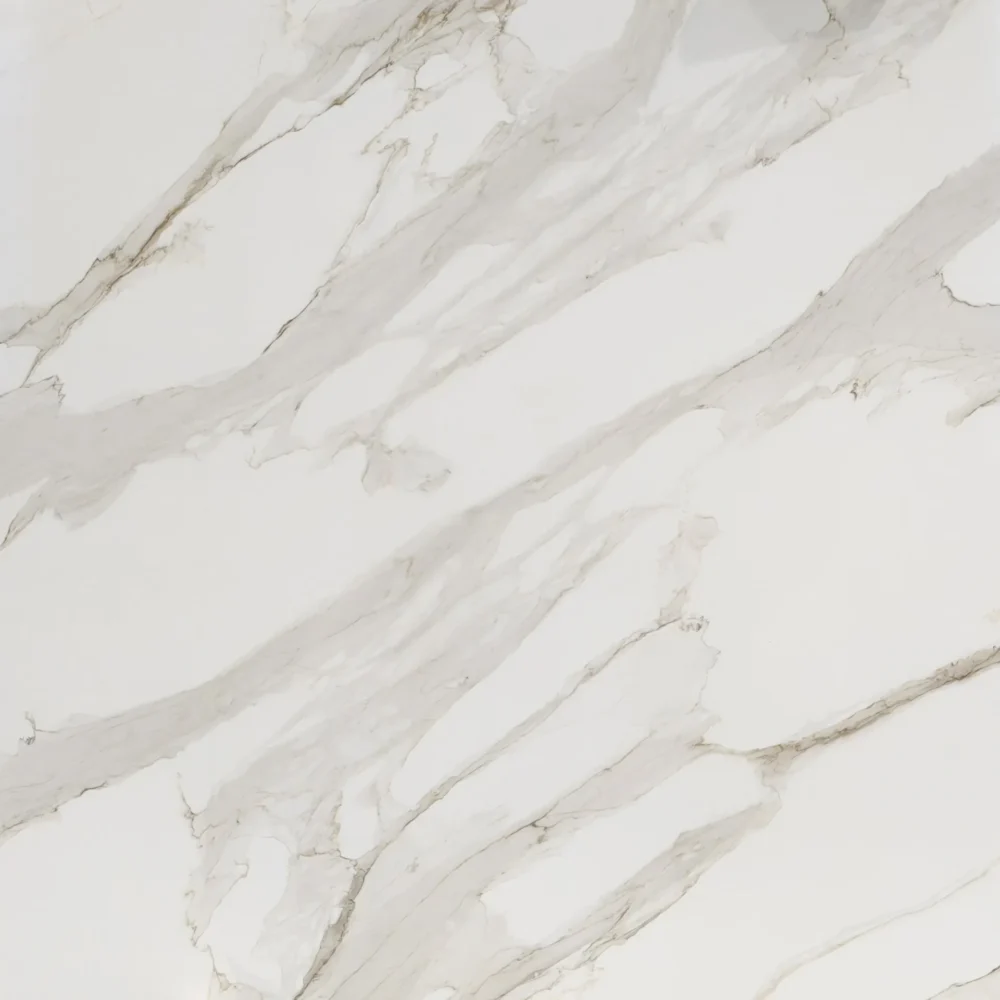
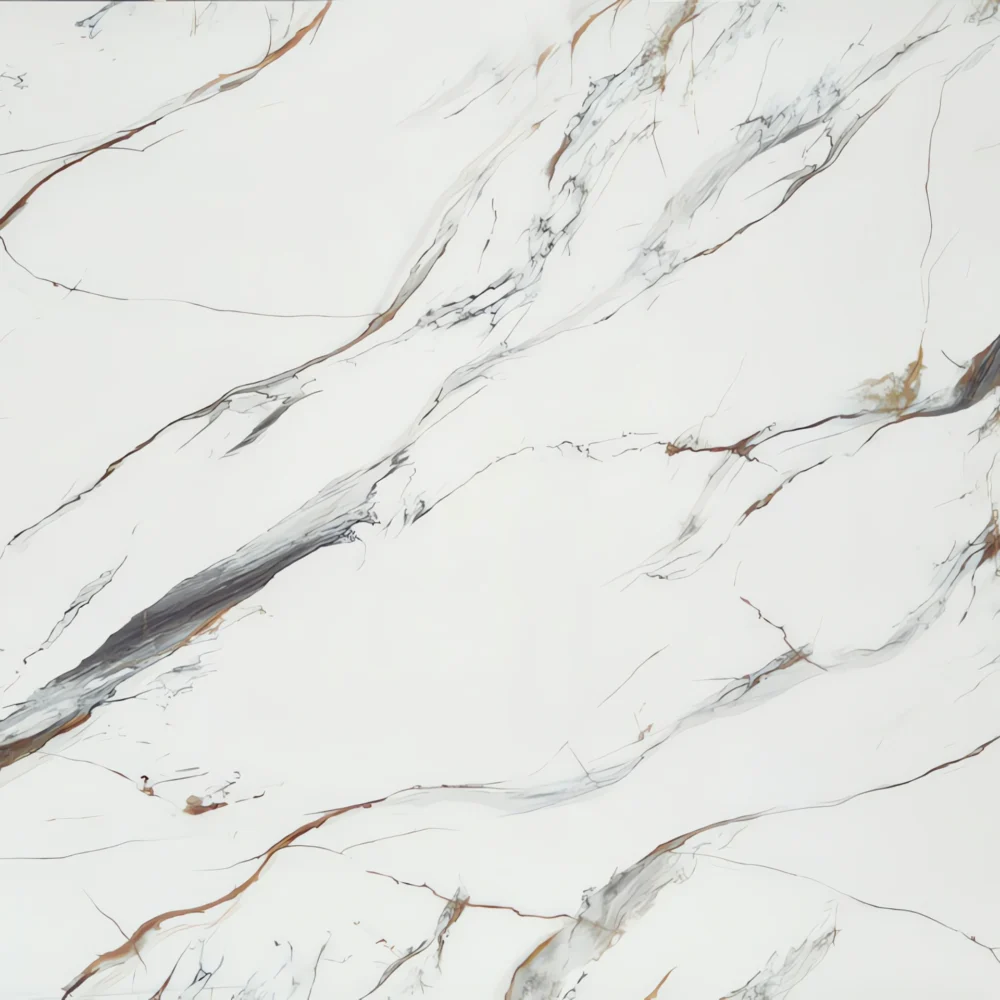
- Calacatta Ice Grey Quartz GQ-T367 for Wholesale
Calacatta Ice Grey Quartz GQ-T367 for Wholesale
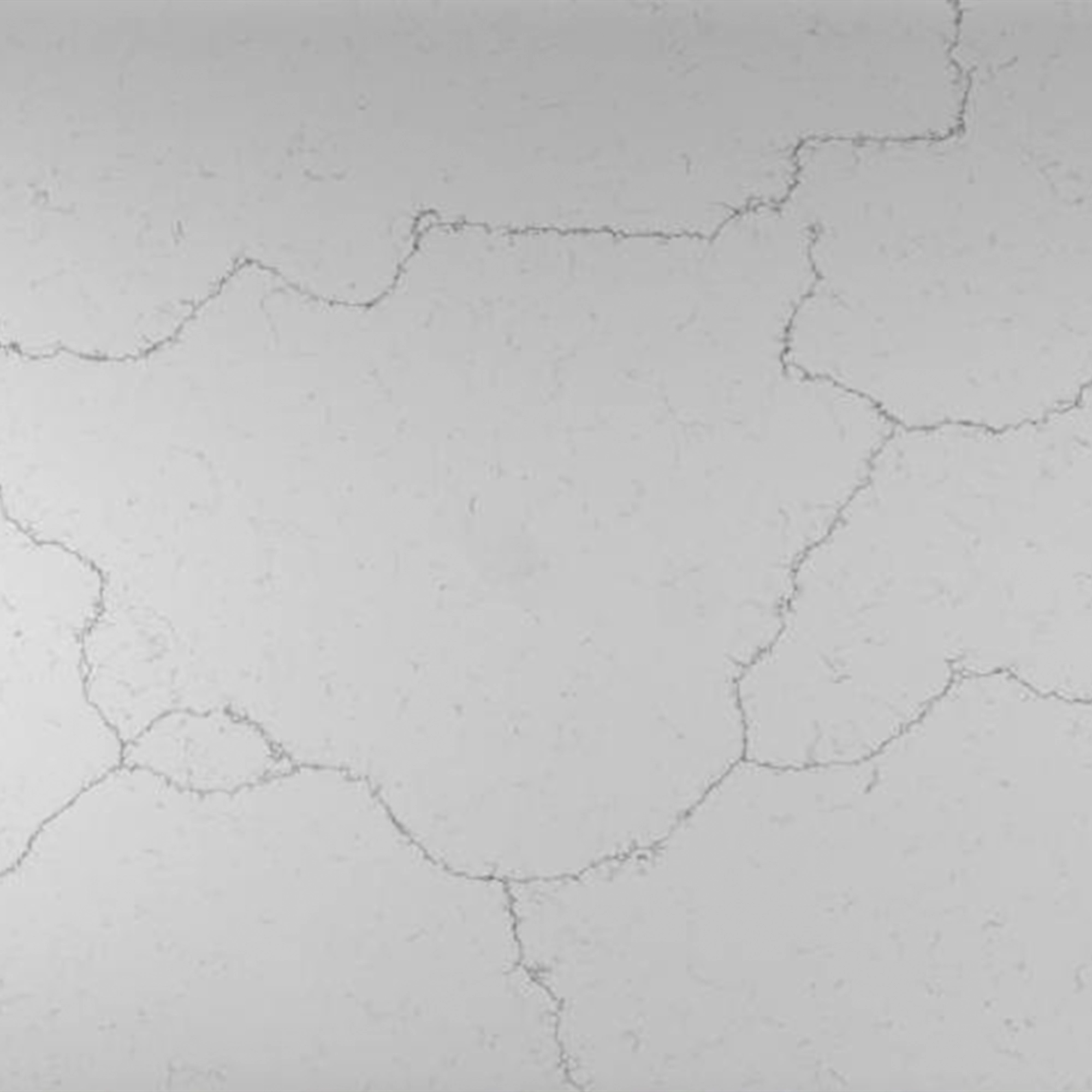
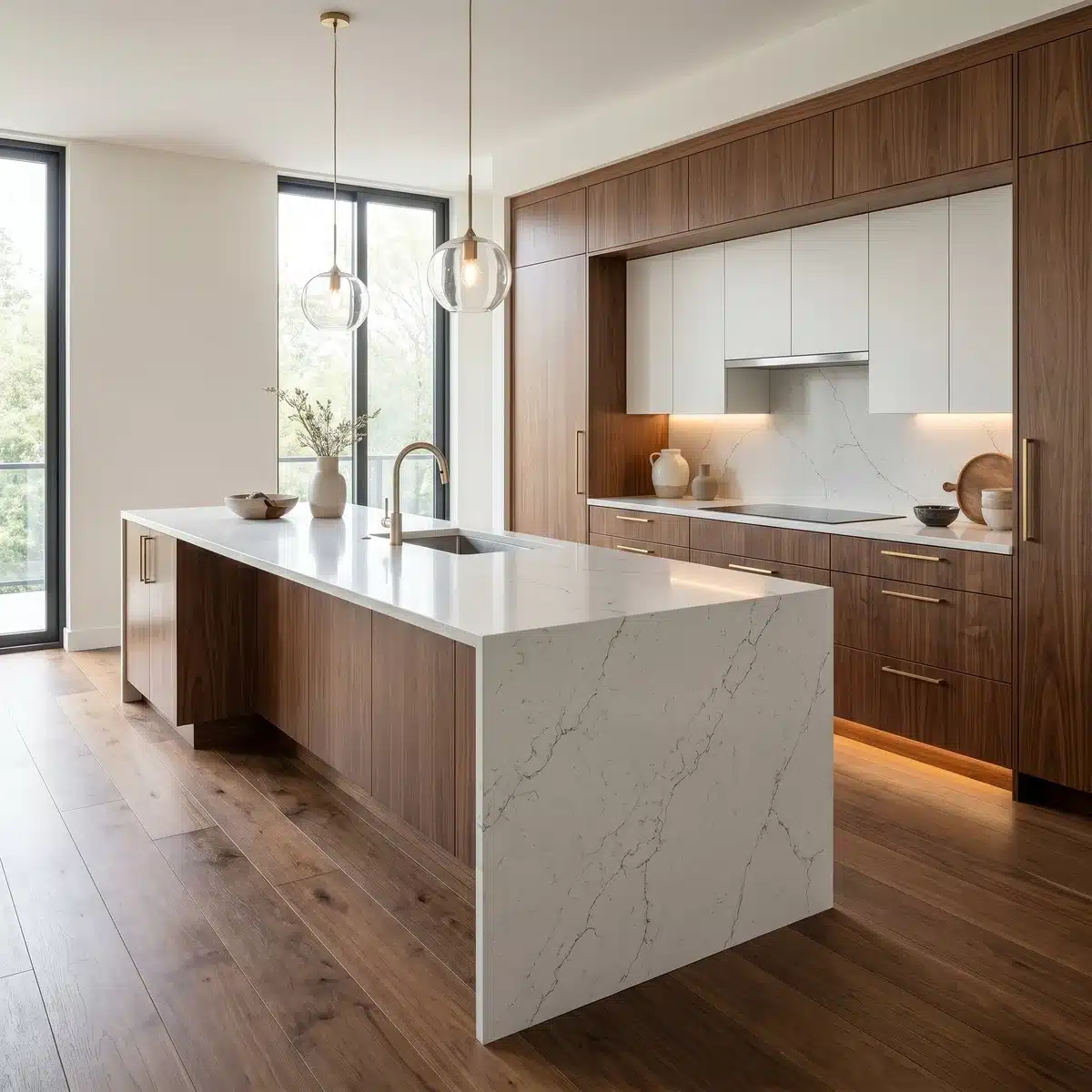
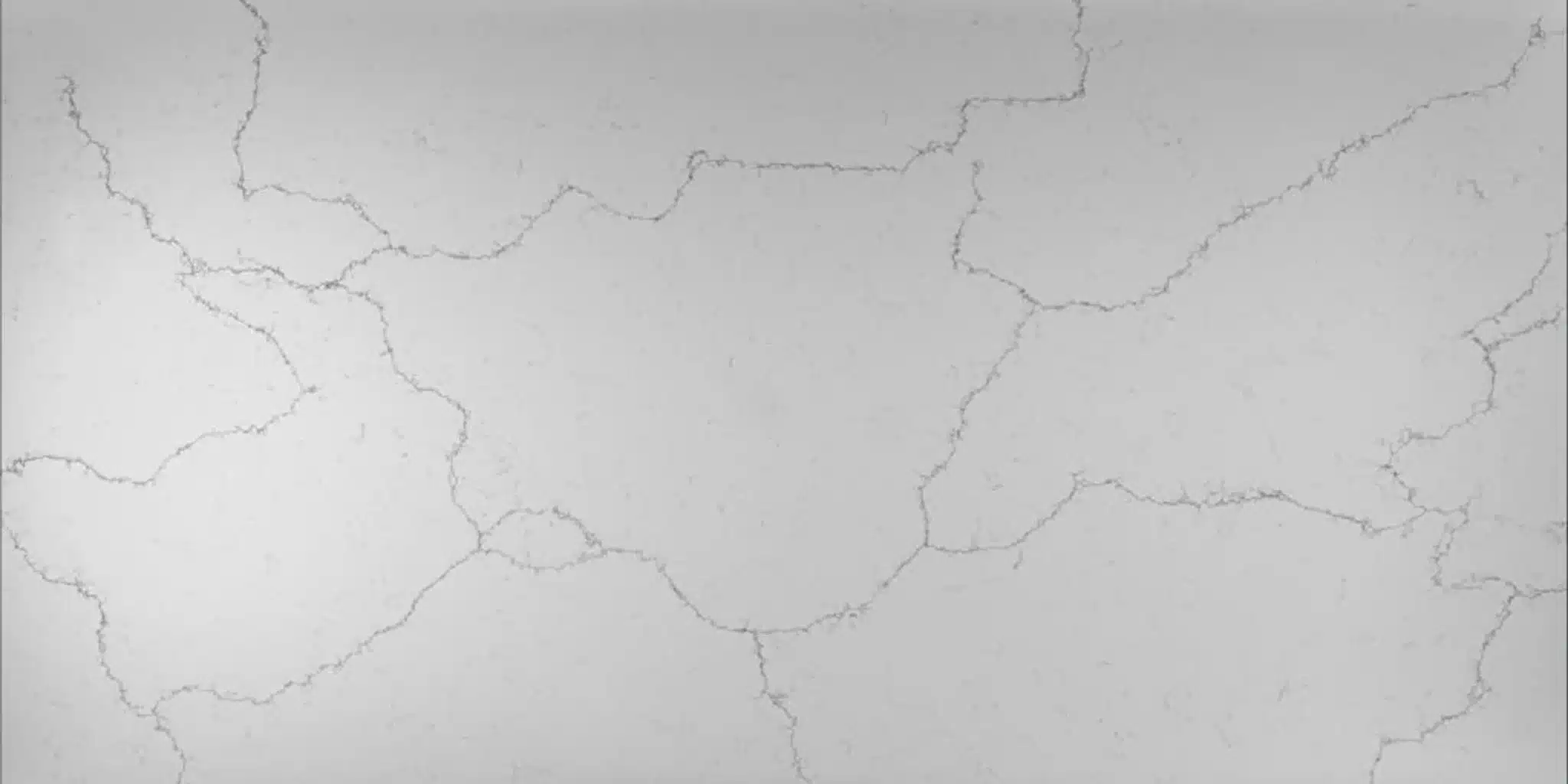
| Primary Color(s) | Off-White |
| Accent Color(s) | Dark Charcoal Grey Veins + Faint Light Grey Flecks |
| Craft | Regular |
| Finishes | Polished / Honed / Suede / Leathered |
| Customized Size | 138″ × 79″ / 126″ × 63″ / Customizable |
| Thickness | 20mm/30mm/Customizable |
| Edge Style | Eased polished edge/2+2cm laminated edge/Mitred edge |
| Full Body Quartz | Yes |
| Bookmatch Available | Yes |
| Place of Origin | Thailand |
| Port of Transportation | Thailand |
| Packaging | Foam or carton inside + strong wooden crates with reinforced straps outside and fumigation |
| Delivery time | 15-20 days / Express service is negotiable. |
| MOQ | 10 ㎡ |
| Payment terms | 30%T/T after confirm the order and the 70% T/T by copy of B/L |
| Countertops Residential: Yes Commercial: Yes |
| Wall Residential: Yes Commercial: Yes |
| Flooring Residential: Yes Commercial: Yes |
Description:
Frequently asked questions
Is engineered quartz cheaper than granite?
Not necessarily—and it depends on what you're comparing.
Most fabricators will tell you that mid-tier engineered quartz runs close to mid-tier granite in material cost, but the real difference shows up in labor and long-term handling.
Granite often needs sealing at install and every 1–2 years after, plus more careful edge fabrication due to natural fissures or soft spots.
Quartz skips all that—no sealant, consistent density, tighter tolerances on edges and cutouts.
That saves time and reduces callbacks.
On the flip side, high-contrast veined quartz with full-body printing—like GQ-T367—can cost more than average granite slabs because of the inkjet process and jumbo slab yield.
Freight and duties also play a role: since Grand Quartz Tech slabs are made fully in Thailand, landed cost varies by port and order size.
For commercial jobs where schedule predictability matters, quartz usually wins—not because it's cheaper upfront, but because there’s less rework, fewer surprises on color match, and no last-minute granite slab rejects.
What are the benefits of engineered quartz?
From a fabricator’s standpoint, engineered quartz solves real headaches—especially with consistency and prep time.
You get uniform thickness across every slab, so no shimming or lipping during installation.
No sealing means one less step before handoff, and no etching from lemon juice or vinegar—critical in kitchens where homeowners skip trivets.
Polished finishes on light colors hide smudges well, but dark polished slabs like GQ-T367 show fingerprints and water marks until wiped.
Honed or matte finishes reduce that, though they’re slightly more porous at the surface and need more frequent cleaning in high-splash zones.
Full Body Printed Quartz—like what Grand Quartz Tech uses—means veining goes all the way through, so seams don’t telegraph as badly on busy patterns.
In hospitality projects, we’ve seen fewer seam repairs over 3–5 years compared to natural stone.
Just keep in mind: quartz isn’t fireproof.
Thermal shock from hot pans directly on the surface can cause microfractures, especially near cutouts.
Always use trivets—and remind clients.
Is engineered quartz expensive?
It depends on what you’re buying—and how you’re buying it.
A basic white or gray quartz slab is often priced close to mid-range granite, but design complexity changes everything.
GQ-T367, for example, uses Full Body Printed Quartz technology, which requires precise inkjet calibration and higher-grade raw quartz—so it sits above entry-level lines.
Slab size matters too: Grand Quartz Tech offers super jumbo slabs up to 138" x 79", which cuts waste on large islands or seamless countertops, but those slabs carry a over standard 126" x 63" sizes.
Finish plays a role—polished is standard; leathered or brushed adds labor and cost.
Project volume shifts the math: wholesale buyers ordering container loads get better terms, and lead times stay tight (20–30 days) because production is in-house in Chonburi.
Fabricators report lower overall job cost on quartz versus granite—not because material is cheap, but because there’s less sanding, no sealer touch-ups, and fewer edge breaks during CNC routing.
So 'expensive' only tells half the story.
It’s about where the money goes—and where it doesn’t.
Is All Quartz Engineered? What You Need to Know?
No—'quartz' alone doesn’t tell you what you’re getting.
Engineered quartz is a manufactured product: ~93% ground quartz aggregate, bound with polyester or vinyl ester resin, pigments, and sometimes glass or mirror chips.
That’s what Grand Quartz Tech makes—fully controlled, NSF-certified, low-silica production lines.
Natural quartzite is completely different: it’s a metamorphic rock, quarried like granite, with variable hardness and porosity.
It etches easily, needs sealing, and often has iron deposits that rust if wet for too long.
You’ll see both sold under 'quartz' labels at some distributors—especially online—so always check the spec sheet.
If it says 'engineered stone', 'man-made quartz', or lists resin content, it’s engineered.
If it says 'quartzite' or 'natural stone', it’s not.
GQ-T367 is engineered quartz—printed, consistent, non-porous—but it’s designed to mimic natural Calacatta marble, not quartzite.
Mistaking the two leads to unhappy clients, callbacks on staining, and warranty disputes.
Ask for the mill certificate.
Better yet, request a sample slab and do an acid test—real quartzite fizzes; engineered quartz won’t.