



- Home
- Quartz
- Quartz Slabs
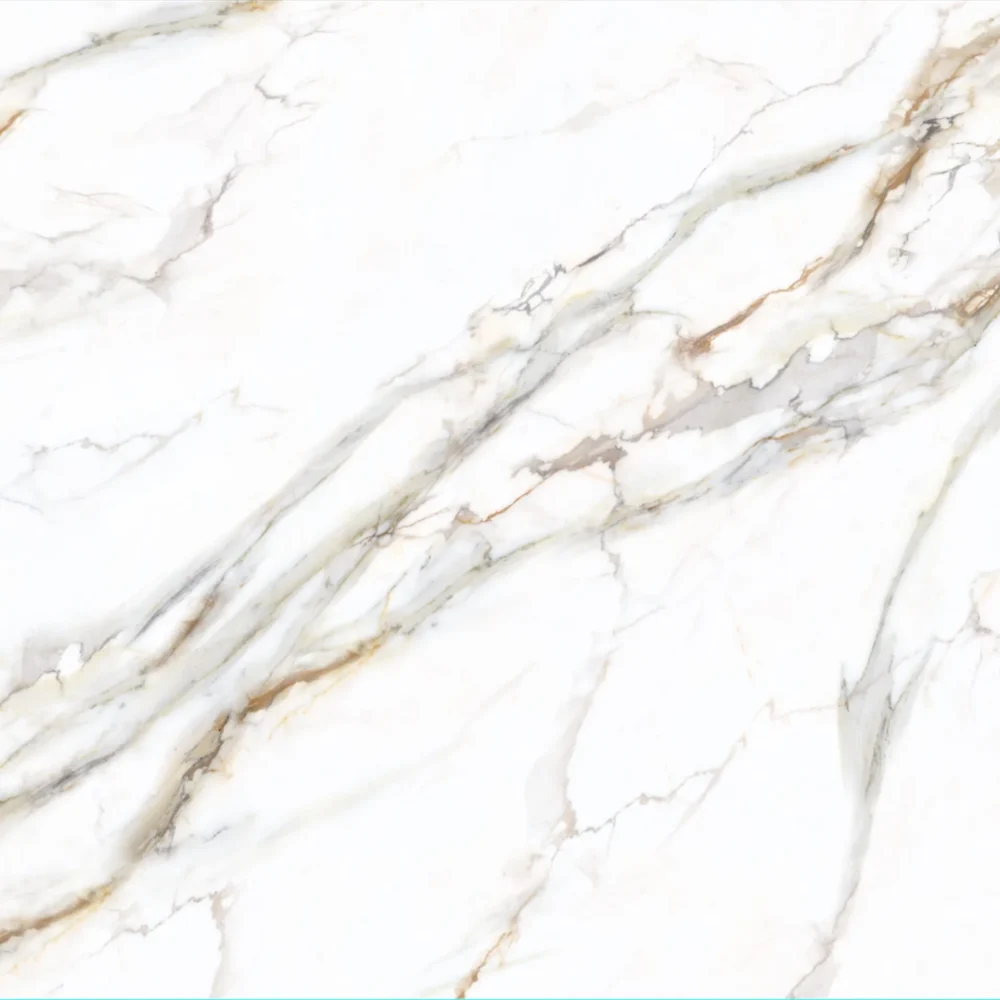
- Calacatta Gaia Quartz Slabs GQ-T281 for wholesale
Calacatta Gaia Quartz Slabs GQ-T281 for wholesale
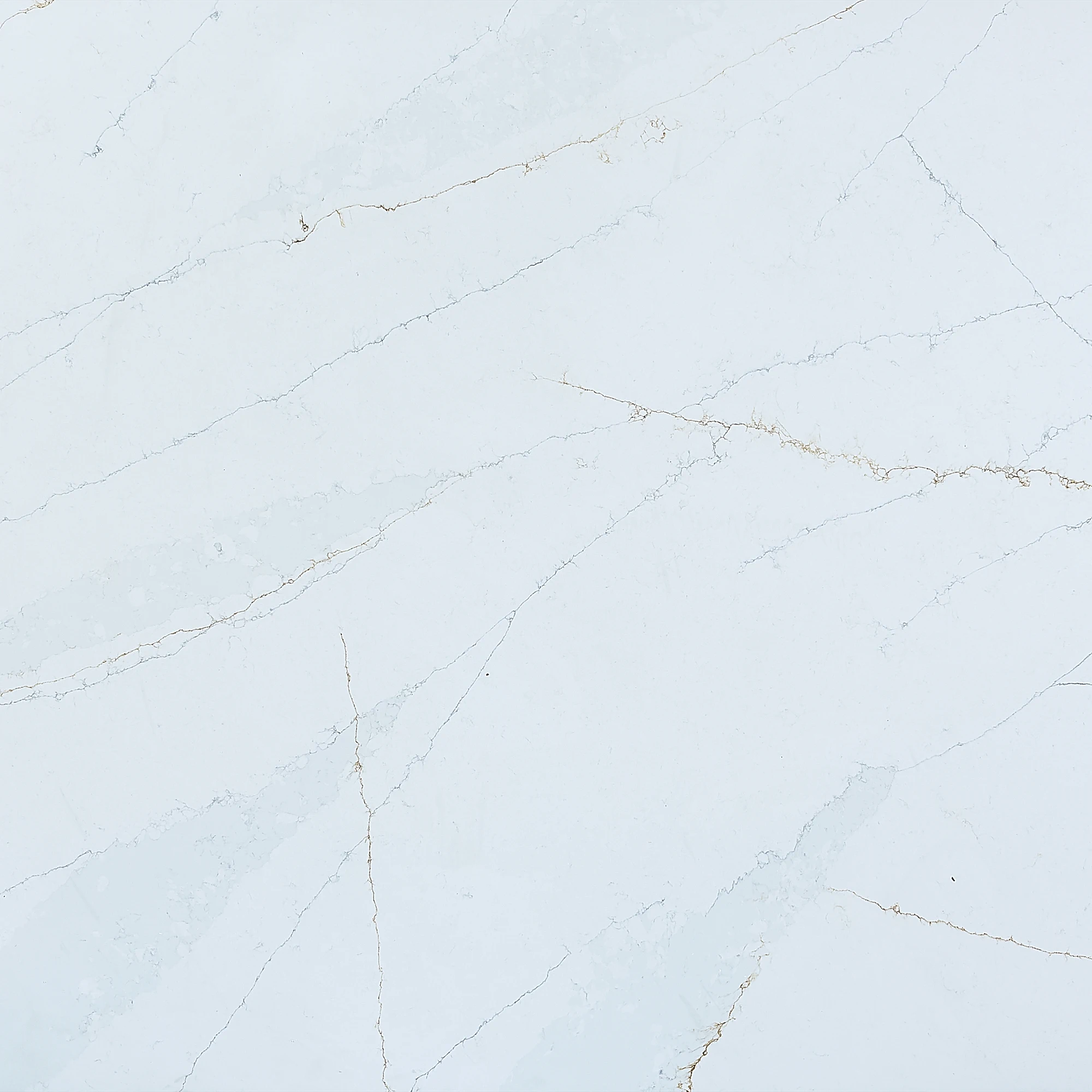
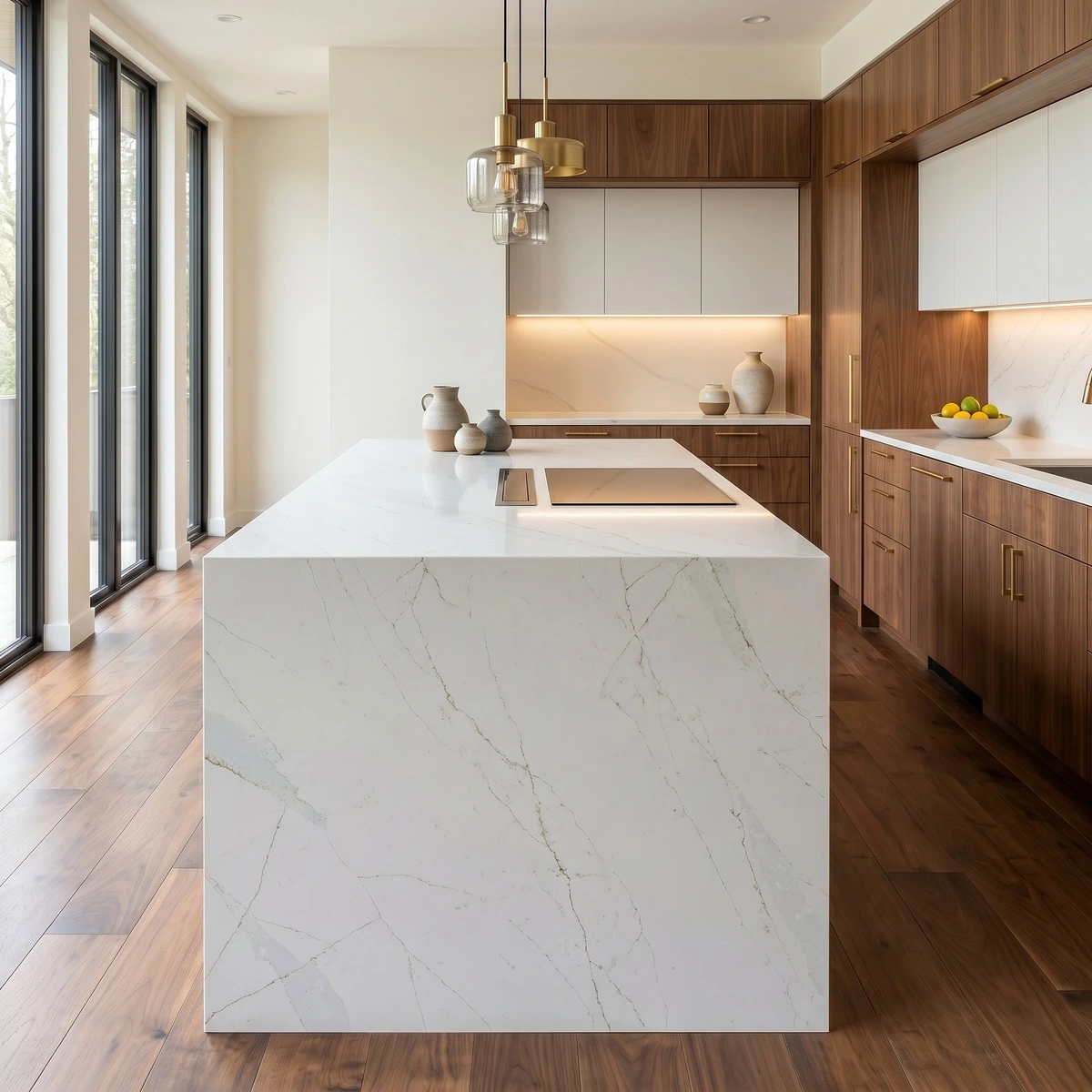
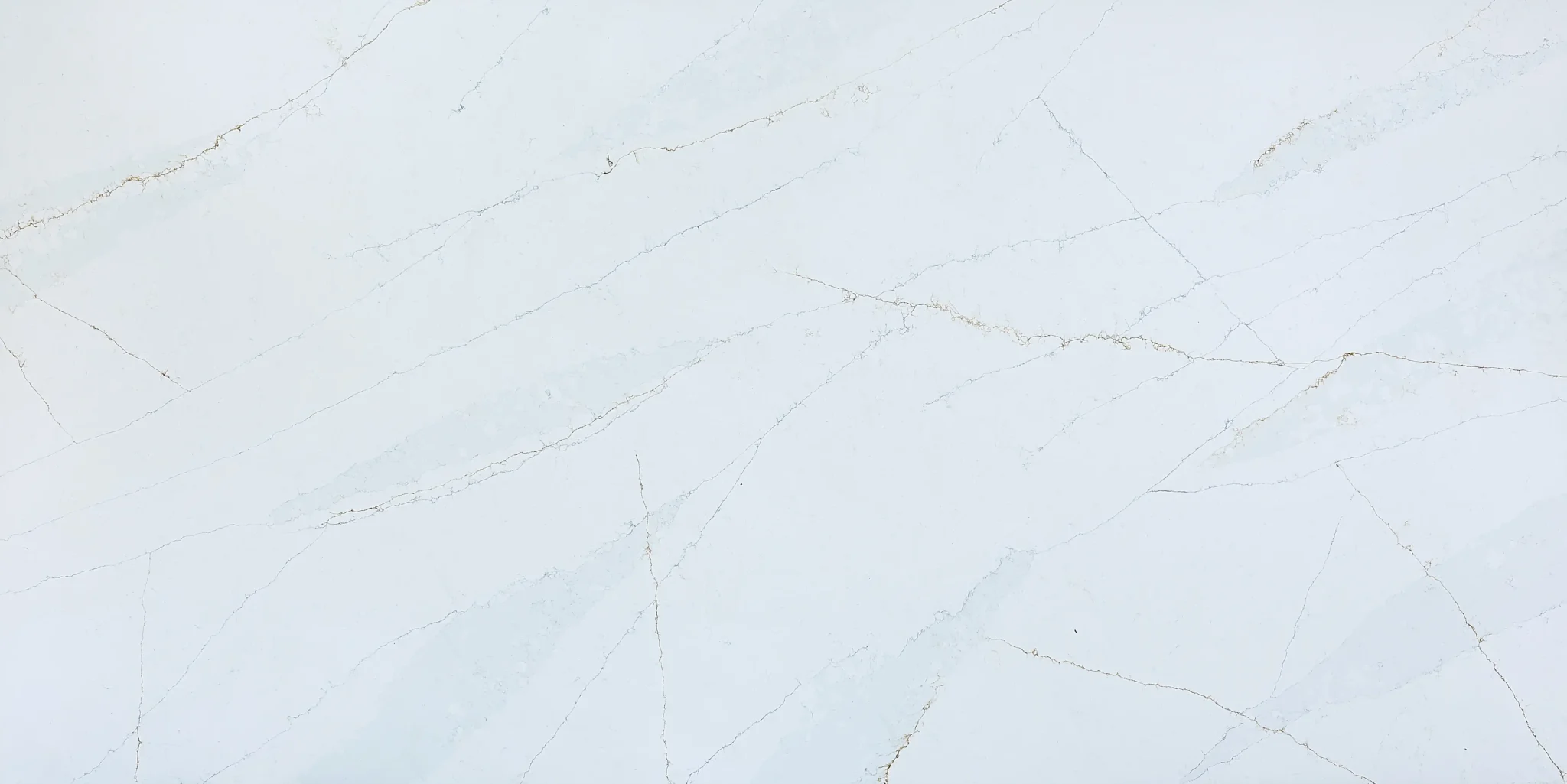
| Primary Color(s) | Bright Crisp White |
| Accent Color(s) | Delicate Light Gold Veins + Subtle Grey Veining |
| Craft | Regular |
| Finishes | Polished / Honed / Suede / Leathered |
| Customized Size | 138″ × 79″ / 126″ × 63″ / Customizable |
| Thickness | 20mm/30mm/Customizable |
| Edge Style | Eased polished edge/2+2cm laminated edge/Mitred edge |
| Full Body Quartz | Yes |
| Bookmatch Available | Yes |
| Place of Origin | Thailand |
| Port of Transportation | Thailand |
| Packaging | Foam or carton inside + strong wooden crates with reinforced straps outside and fumigation |
| Delivery time | 15-20 days / Express service is negotiable. |
| MOQ | 10 ㎡ |
| Payment terms | 30%T/T after confirm the order and the 70% T/T by copy of B/L |
| Countertops Residential: Yes Commercial: Yes |
| Wall Residential: Yes Commercial: Yes |
| Flooring Residential: Yes Commercial: Yes |
Description:
Frequently asked questions
Does calacatta quartz need to be sealed?
No—calacatta quartz doesn’t need sealing.
It’s engineered quartz: ground quartz bound with resin, so it’s non-porous by design.
That means no absorption, no moisture migration, and no risk of staining from everyday spills.
Most fabricators will tell you this is the biggest time-saver on job sites—no waiting for sealant to cure, no resealing schedules, no guesswork about when it’s safe to use the countertop.
But don’t mistake that for zero maintenance.
In real-world kitchens, grease builds up on polished surfaces, especially around cooktops and sinks.
A damp microfiber cloth and pH-neutral cleaner are all you need—but skip vinegar, bleach, or citrus-based cleaners.
They won’t stain the slab, but they can break down the resin binder over time, dulling the finish or softening edges during fabrication.
Honed or matte calacatta quartz hides smudges better than polished, but both react the same way to harsh chemistry.
So yes—no sealing, ever.
But yes, smart cleaning matters.
Is Calacatta quartz cheap?
It depends on what you’re comparing it to—and how much you value consistency, lead time, and layout control.
Calacatta-style quartz isn’t priced like basic solid-color slabs.
The cost reflects the complexity of the full-body printed veining, tighter tolerances for bookmatching, and demand for that marble-like aesthetic.
Most contractors see a noticeable step-up in price versus entry-level quartz—especially when ordering jumbo slabs (138" x 79") to minimize seams in large islands or wall-to-wall installations.
Freight, duties, and project volume also shift the number—Thai-made slabs like Grand Quartz Tech’s GQ-T281 move faster and more predictably than some offshore alternatives, which can offset higher per-slab costs on tight timelines.
And while it’s not ‘cheap,’ it avoids the big hidden expenses of natural stone: no slab rejection due to fissures or inconsistent veining, no extra labor for sealing or honing on-site, and no surprise repairs from etching or staining.
So the real cost isn’t just the slab—it’s the whole install cycle.
What is the difference between Calacatta quartz and regular quartz?
It’s mostly about visual language—not composition.
Both are engineered quartz: same base materials, same resin binders, same performance specs.
But calacatta-style quartz uses full-body printed technology to replicate the bold, organic veining of natural Calacatta marble—warm golds, soft creams, and irregular gray veins that flow across the slab.
Regular quartz usually means solids, subtle flecks, or low-contrast patterns—easier to fabricate, easier to stage, and less demanding on layout.
Installers know calacatta requires extra attention: matching veins across seams, orienting slabs for waterfall ends, and planning cutouts so veining doesn’t dead-end at a sink or cooktop.
That adds time—and sometimes waste—if not coordinated early.
From a fabrication standpoint, the resin content and thermal behavior are identical, but the visual weight changes how clients perceive value.
Grand Quartz Tech prints those veins through the full thickness, so edge treatments and mitered corners hold the pattern.
So functionally?
Same material.
Visually and logistically?
A different conversation with your client—and your shop foreman.
Does calacatta quartz stain easily?
Not under normal use—but it’s not invincible.
The resin matrix blocks liquid absorption, so coffee, wine, or olive oil won’t soak in.
What *can* happen is surface residue: soy sauce left overnight may leave a faint film; red wine spilled near a seam might wick into the joint if the epoxy wasn’t fully cured.
And polished calacatta shows smudges and fingerprints more than honed or leathered finishes—especially in darker vein tones.
Some installers report slight yellowing on light-colored slabs after years of direct sun exposure, particularly near south-facing windows—UV stability varies by resin formulation.
Grand Quartz Tech uses UV-stabilized resins in their Stone Look line, but even then, prolonged exposure accelerates aging.
The bigger risk isn’t staining—it’s abrasion.
Steel wool, gritty scrub pads, or repeated use of alkaline cleaners degrade the polish over time, making the surface more prone to showing marks.
So the rule isn’t ‘wipe it and forget it’—it’s ‘wipe it *right*, and keep abrasive tools off the surface.’ That’s how it stays clean-looking, not just stain-resistant.