



- Home
- Quartz
- Quartz Slabs
- Wholesale Calacatta Thin Linear Grey and Gold Quartz Surface GQ-T0101
Wholesale Calacatta Thin Linear Grey and Gold Quartz Surface GQ-T0101
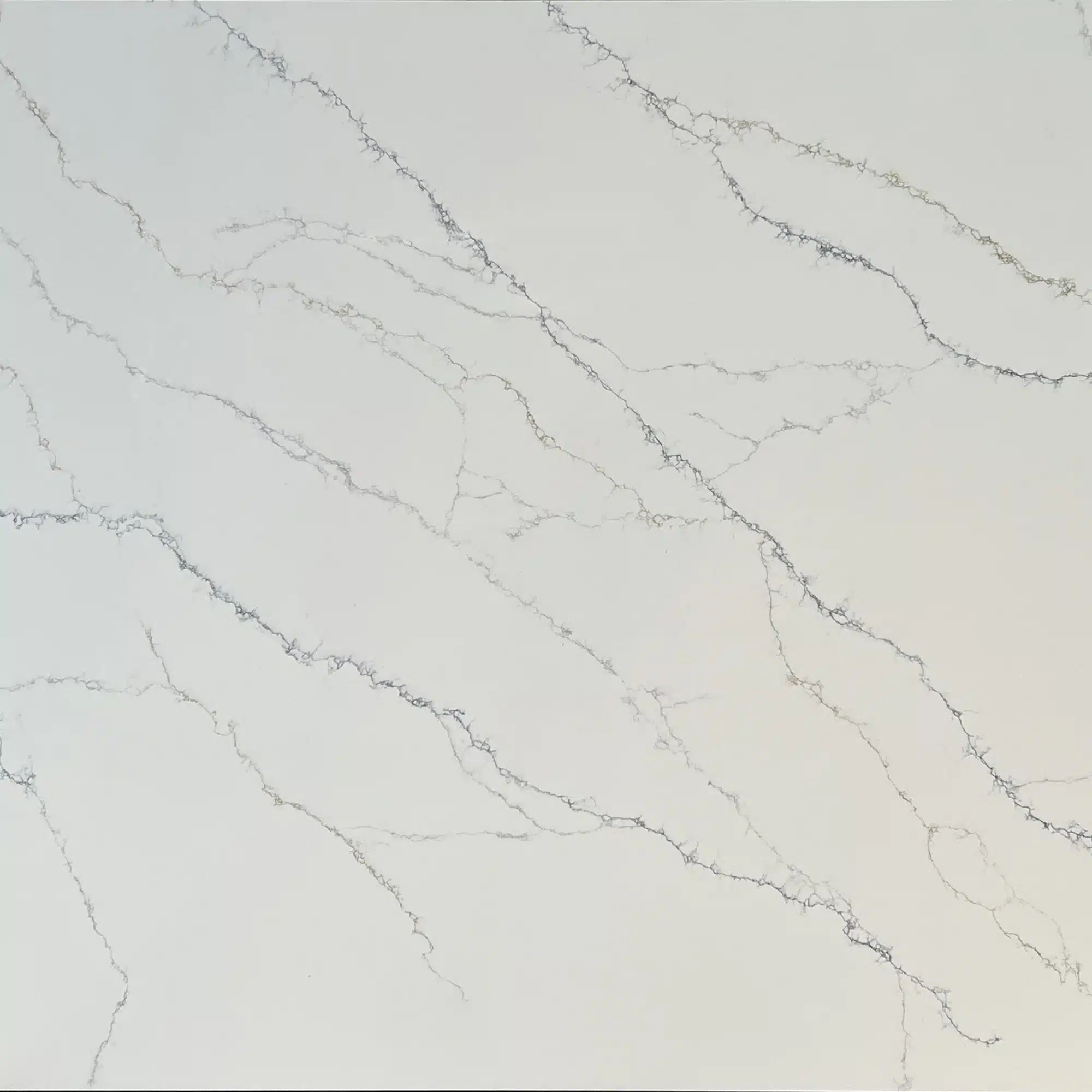
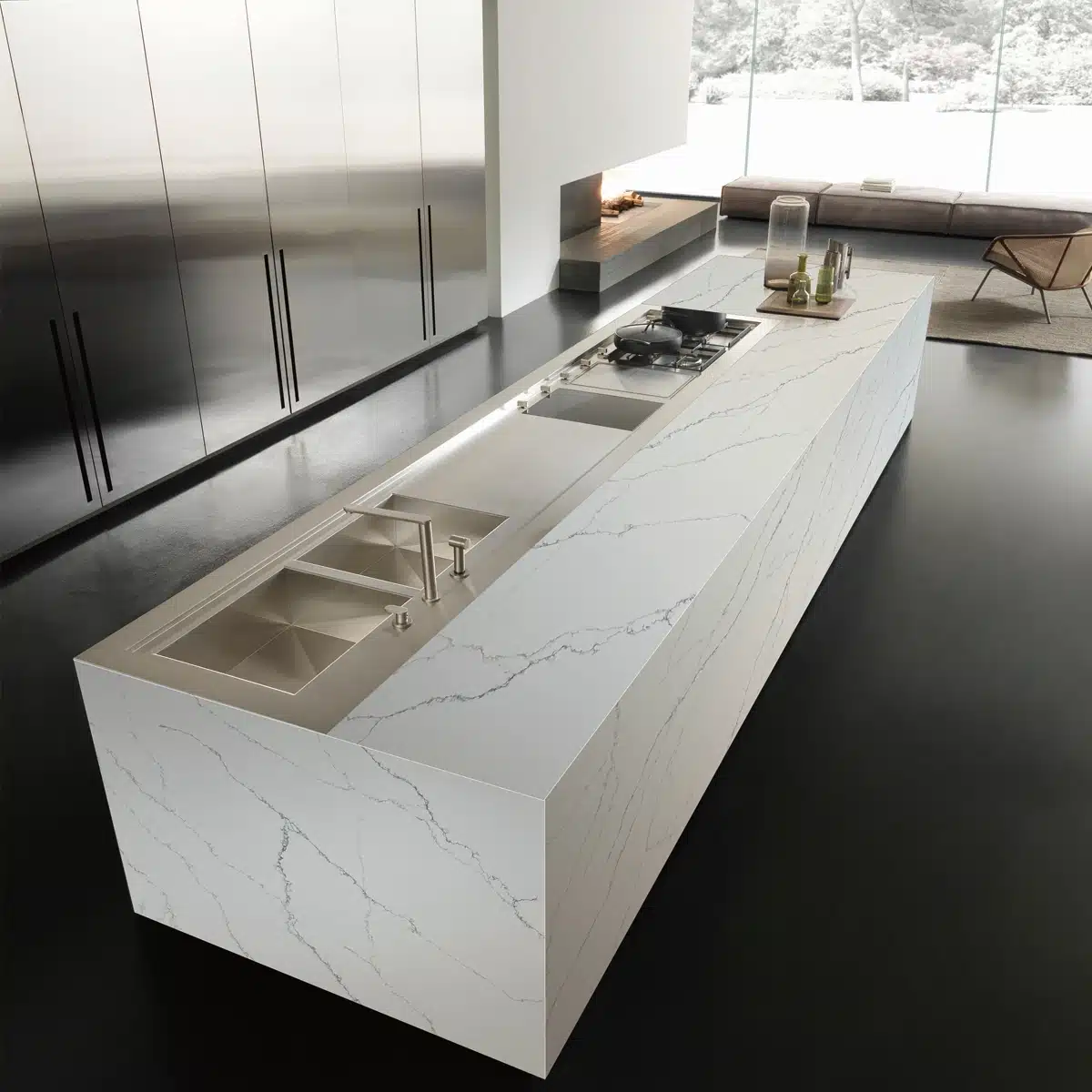
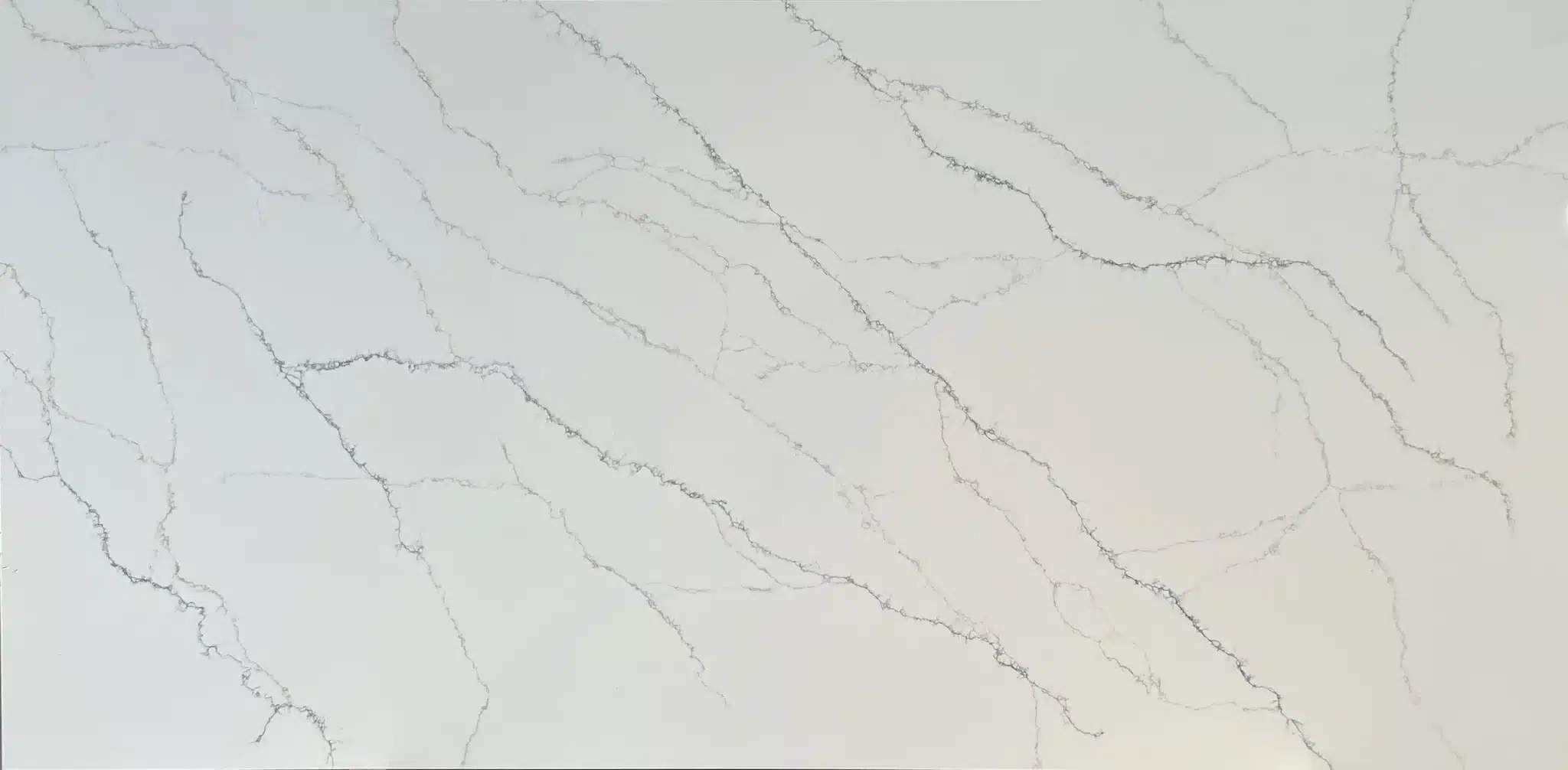
| Primary Color(s) | Soft Pearl White |
| Accent Color(s) | Delicate Silver Grey Vein |
| Craft | Regular |
| Finishes | Polished / Honed / Suede / Leathered |
| Customized Size | 138″ × 79″ / 126″ × 63″ / Customizable |
| Thickness | 20mm/30mm/Customizable |
| Edge Style | Eased polished edge/2+2cm laminated edge/Mitred edge |
| Full Body Quartz | Yes |
| Bookmatch Available | Yes |
| Place of Origin | Thailand |
| Port of Transportation | Thailand |
| Packaging | Foam or carton inside + strong wooden crates with reinforced straps outside and fumigation |
| Delivery time | 15-20 days / Express service is negotiable. |
| MOQ | 10 ㎡ |
| Payment terms | 30%T/T after confirm the order and the 70% T/T by copy of B/L |
| Countertops Residential: Yes Commercial: Yes |
| Wall Residential: Yes Commercial: Yes |
| Flooring Residential: Yes Commercial: Yes |
Description:
Frequently asked questions
How hard are black/dark dark grey quartz countertops to ?
Dark grey or black quartz countertops aren’t inherently harder to maintain than lighter colors, but they do show scratches, etching, and fingerprints more easily—especially if you’re using abrasive cleaners or placing hot pans directly on them. In real-world kitchen settings, they tend to attract smudges from cooking oils and hands, so daily wiping with a mild soap and water solution is key. The good news? They’re resistant to stains and don’t need sealing. But if you’re not on top of cleaning, those surface marks can build up quickly. For high-traffic kitchens, we recommend a matte finish to hide minor scratches, or go with a slightly veined pattern that distracts from imperfections. Overall, they’re durable but demand more consistent upkeep than lighter shades.
Quartz vs. Granite: Which Is Better for Countertops?
Quartz and granite each have their place, and the ‘better’ choice depends on your priorities. Quartz wins in durability, maintenance, and consistency—it’s non-porous, so it resists stains and doesn’t need sealing. It’s also available in uniform colors and patterns, which appeals to people who want a clean, modern look. Granite, on the other hand, has more character with natural veining and depth, and it holds up well in busy kitchens if properly sealed. But it’s porous and can stain if not maintained. If you want low-maintenance and predictability, go quartz. If you love the organic look of stone and don’t mind regular sealing, granite’s still a solid pick. Bottom line: quartz is easier for most homeowners; granite offers more soul—but requires more effort.
Which quartz countertops are best for kitchens?
For kitchens, the best quartz countertops are those that balance durability, stain resistance, and visual appeal. Solid colors like white, grey, or beige with subtle veining (e.g., GQ Calacatta Gold or Cambria’s Taj Mahal dupe) are top picks—they hide spills and scratches better than high-contrast patterns. Darker shades like charcoal or black are stylish but show smudges and fingerprints fast. Look for slabs with full-body printing and consistent color distribution to avoid seam lines being too obvious. Jumbo or super-jumbo slabs reduce seams, which is ideal for large islands. Also, consider finishes: polished surfaces are easier to clean but show scratches; matte or leathered finishes hide wear better. Ultimately, the best quartz for your kitchen depends on your lifestyle—busy families might prefer neutral, low-variation options; design-focused homeowners may go bold with high-contrast veining.
What are quartz countertops like for kitchen use?
Quartz countertops are a rock-solid choice for kitchens—literally. They’re engineered to be non-porous, so they resist stains, bacteria, and liquids without sealing. They’re also incredibly hard, making them resistant to scratches and etching from acidic substances like lemon juice, provided you don’t leave them sitting. But they’re not indestructible: hot pots can cause thermal shock and leave marks, so always use trivets. Cleaning is simple—just wipe with mild soap and water or a non-abrasive cleaner. Clorox wipes are fine in moderation, but overuse can dull the finish. Quartz is also consistent in color and pattern, which helps with matching seams. The downside? It can’t be refinished like granite if it gets deeply scratched. But for most homeowners, quartz delivers a sleek, low-maintenance surface that holds up under daily kitchen life.
-1000x1000.webp)