



- Home
- Quartz
- Quartz Slabs
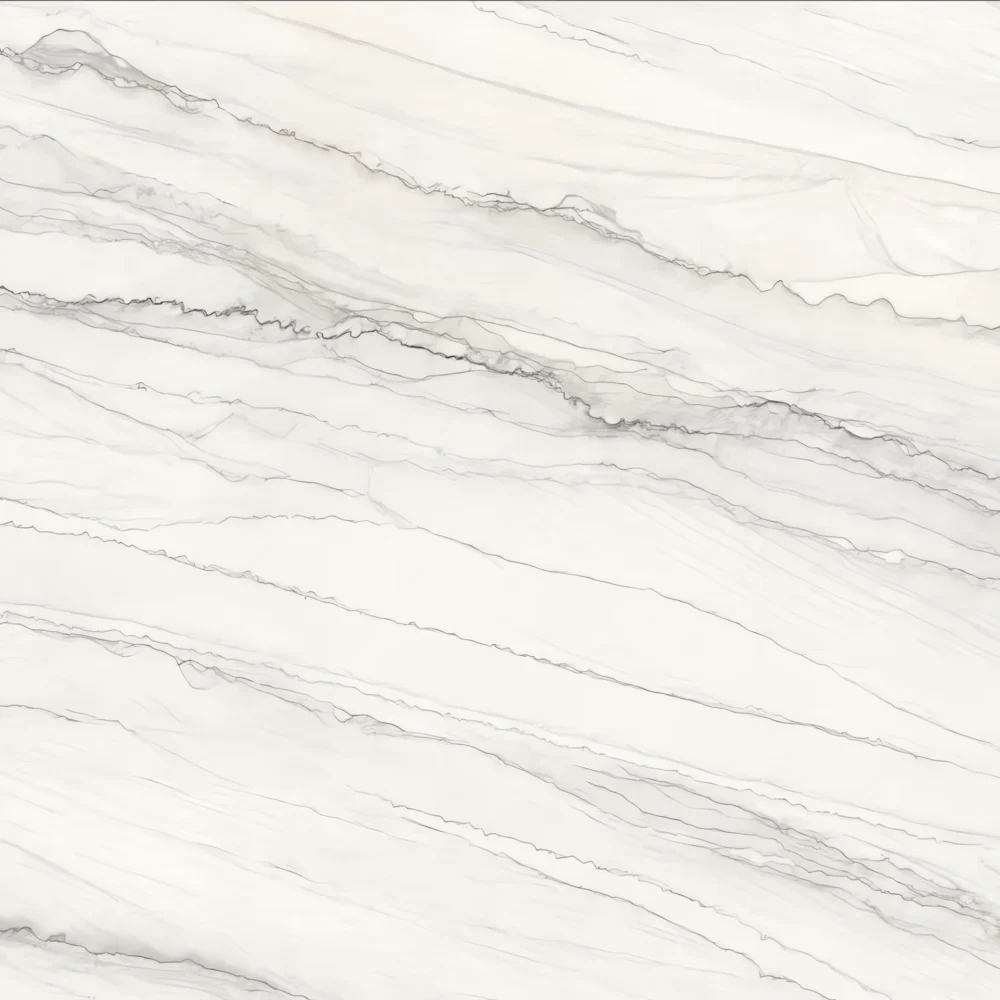
- Natural Statuario Light White Quartz Slabs GQ-T397 for wholesale
Natural Statuario Light White Quartz Slabs GQ-T397 for wholesale


| Primary Color (s) | Light Cloud White |
| ACCENT COLOR (S) | Faint Taupe Vein |
| Craft | Regular |
| Finishes | Polished / Honed / Suede / Leathered |
| Customized Size | 138″× 79″ / 126″× 63″ / Customizable |
| Thickness | 20mm/30mm/Customizable |
| Edge Style | Eased polished edge/2+2cm laminated edge/Mitred edge |
| Full Body Quartz | Yes |
| Bookmatch Available | Yes |
| Place of Origin | Thailand |
| Port of Transportation | Thailand |
| Packaging | Foam or carton inside + strong wooden crates with reinforced straps outside and fumigation |
| Delivery time | 15-20 days / Express service is negotiable. |
| MOQ | 10 ㎡ |
| Payment terms | 30%T/T after confirm the order and the 70% T/T by copy of B/L |
| Countertops Residential: Yes Commercial: Yes |
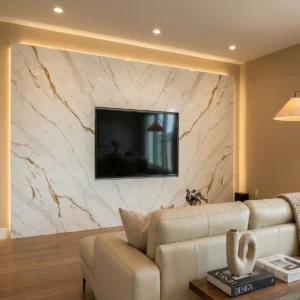
| Wall Residential: Yes Commercial: Yes |
| Flooring Residential: Yes Commercial: Yes |
Description:
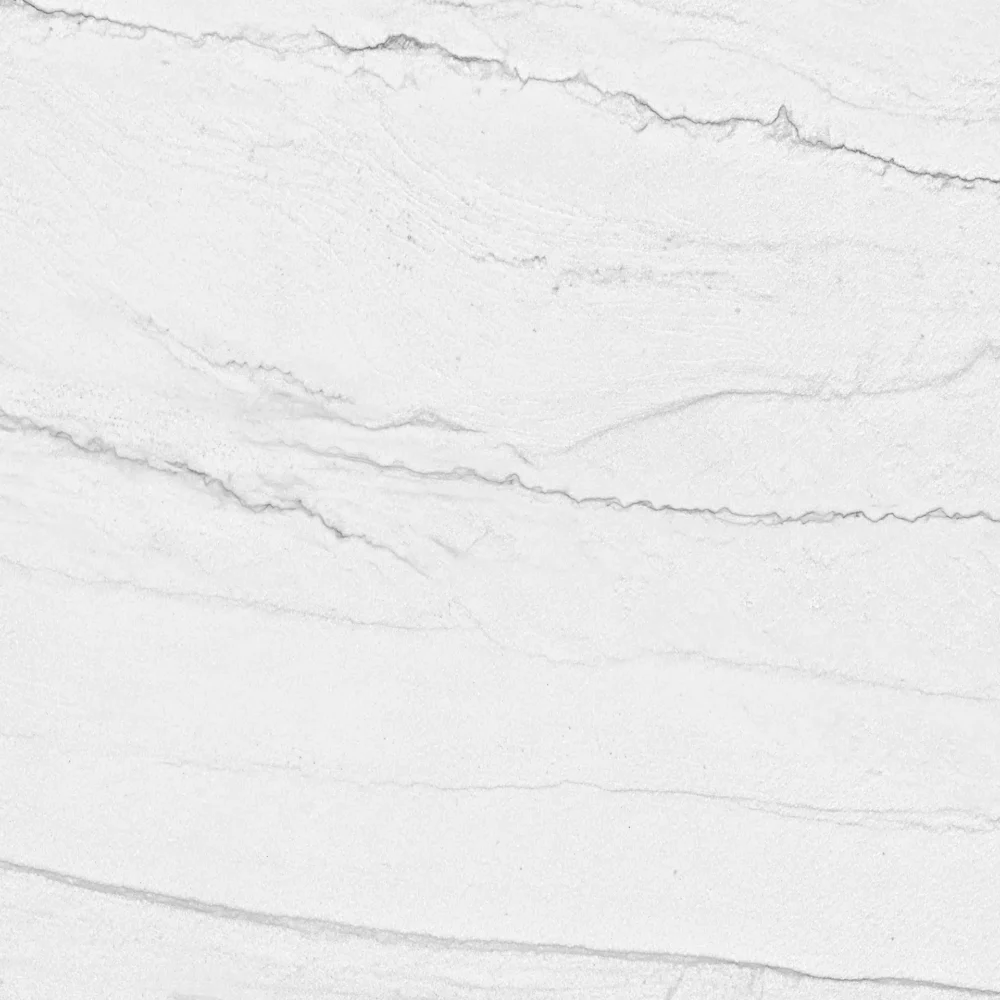
Quiet surface reading: GQ-T397 is a low-contrast quartz countertop built on a soft light gray to off-white base, giving the slab a cool, muted calm rather than a stark white appearance. Its veining stays delicate: white and very pale gray threads drift across the surface as thin, broken, feathered marks. Some areas move in loose linear passages, while others soften into cloudy layering and faint swirl-like mineral texture. The visual effect is similar to frost trails drawn lightly across morning glass—visible enough to create natural stone depth, but restrained enough to keep the full slab clean, quiet, and easy to coordinate in large countertop runs.
Interior application logic: This color is especially useful for American spaces where the surface should brighten the room without becoming the strongest pattern. In a transitional kitchen, GQ-T397 pairs naturally with white or soft gray shaker cabinetry, brushed nickel pulls, pale subway tile, and medium oak flooring; the cool gray undertone keeps the cabinet elevation crisp while the wispy movement prevents the island from looking flat. In a modern farmhouse bathroom, it works beautifully over a white oak vanity with matte black faucets, black-framed mirrors, warm plaster walls, and simple linen towels, balancing rustic wood texture with a refined marble-inspired surface. For a coastal American laundry room, it suits soft gray cabinets, light wood shelving, woven baskets, and brushed nickel utility hardware, creating a fresh work zone that feels orderly even when detergents, folded towels, and cleaning supplies are in daily rotation.
Case-style specification: Consider a 540-square-foot boutique home refresh studio with a compact front consultation counter, a cabinet sample wall, a small laundry-display vignette, and one client restroom. The designer selects GQ-T397 for the welcome counter, the sample-review worktop, and the restroom vanity because its pale gray-white field feels professional, calm, and residentially familiar. During layout planning, the fabricator reserves the quieter off-white-gray portions for paperwork, color boards, and hardware trays, while the slightly denser cloudy vein areas are positioned on the customer-facing counter face for subtle stone detail from the entry. Under warm-neutral showroom lighting, the slab reflects a soft, even brightness rather than glare. Brushed nickel cabinet pulls, matte black restroom accents, white oak trays, soft gray wall panels, cream seating, and light wood shelving all connect back to the countertop’s balanced cool-neutral tone. The result is a practical reference for distributors, builders, and designers specifying subtle marble-look quartz for kitchens, bathroom vanities, laundry tops, boutique counters, small reception desks, and light commercial surfaces.
Frequently asked questions
What is a transparent quartz?
A “transparent quartz” is not a standard category of quartz countertop material. In the stone industry, the term is usually used to describe a quartz surface that allows light to pass through part of the slab, creating a translucent or backlit effect.
From a fabricator’s perspective, transparency exists on a spectrum. Most quartz slabs are completely opaque, but certain designs can be partially translucent due to their composition, color, and pattern structure. Light-colored slabs with crystalline effects or specialized decorative layers tend to transmit light better than dark, dense designs.
When evaluating a translucent quartz slab, there are three key considerations:
1. Light transmission varies by design
Two slabs may look similar in daylight but perform very differently when backlit. The actual translucency depends on the internal structure of the slab, not just its surface appearance.
2. Thickness matters
Thinner slabs generally allow more light to pass through. As slab thickness increases, the backlit effect becomes more subtle.
3. Application is critical
Translucent quartz is typically used for feature walls, reception desks, bar fronts, hospitality spaces, retail displays, and decorative panels rather than standard kitchen countertops. The goal is usually to create a visual effect rather than maximize light transmission.
For projects involving backlighting, we always recommend testing the actual slab before fabrication. A sample may appear translucent, but the effect can change significantly depending on slab thickness, lighting intensity, and installation conditions.
In short, “transparent quartz” usually refers to a quartz surface with translucent properties that can interact with light. The success of the final result depends as much on the lighting design as it does on the slab itself.
Who should avoid clear quartz?
From a stone fabrication perspective, “clear quartz” or highly translucent quartz is a specialty design material rather than a universal solution. While it can create stunning visual effects, it is not the right choice for every project.
Homeowners looking for a low-maintenance, everyday countertop may want to consider other options. Translucent quartz is often selected for its appearance, and achieving its full visual impact may require additional planning for lighting, installation, and maintenance.
Projects with heavy daily use may not benefit from clear quartz’s decorative qualities. In busy family kitchens, commercial food-preparation areas, or high-traffic workspaces, the added cost of translucency may provide little practical value compared to standard quartz designs.
Designs that do not incorporate backlighting should also carefully evaluate whether translucent quartz is necessary. Much of its visual appeal comes from the way light interacts with the material. Without proper lighting, some projects may not fully showcase the effect that makes the material unique.
Budget-sensitive projects may find that translucent quartz requires a larger investment due to specialized manufacturing, slab selection, lighting systems, and installation requirements.
In contrast, clear or translucent quartz is often an excellent choice for feature walls, reception desks, bar fronts, hospitality spaces, luxury retail environments, and decorative architectural elements where lighting and visual impact are central to the design.
In short, if the primary goal is functionality and cost efficiency, standard quartz may be the better fit. If the goal is to create a distinctive illuminated feature, translucent quartz can deliver exceptional results when specified for the right application.