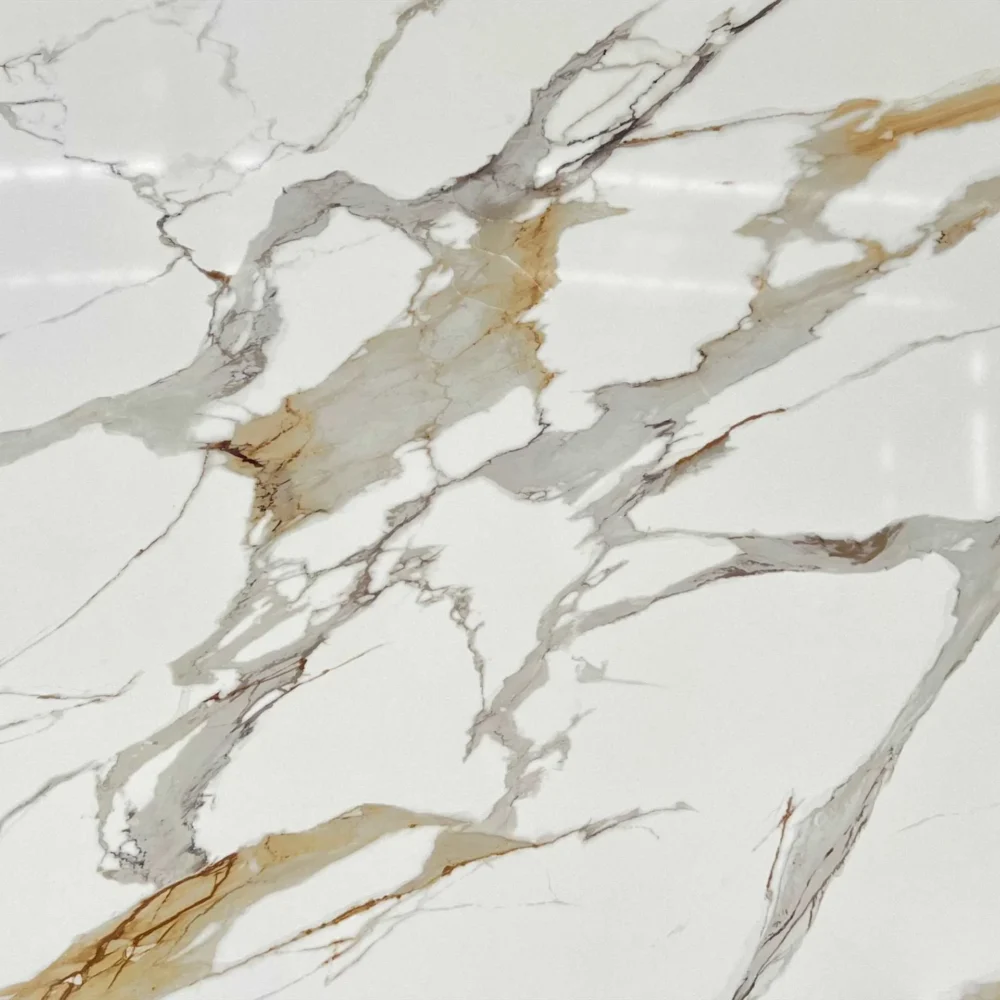
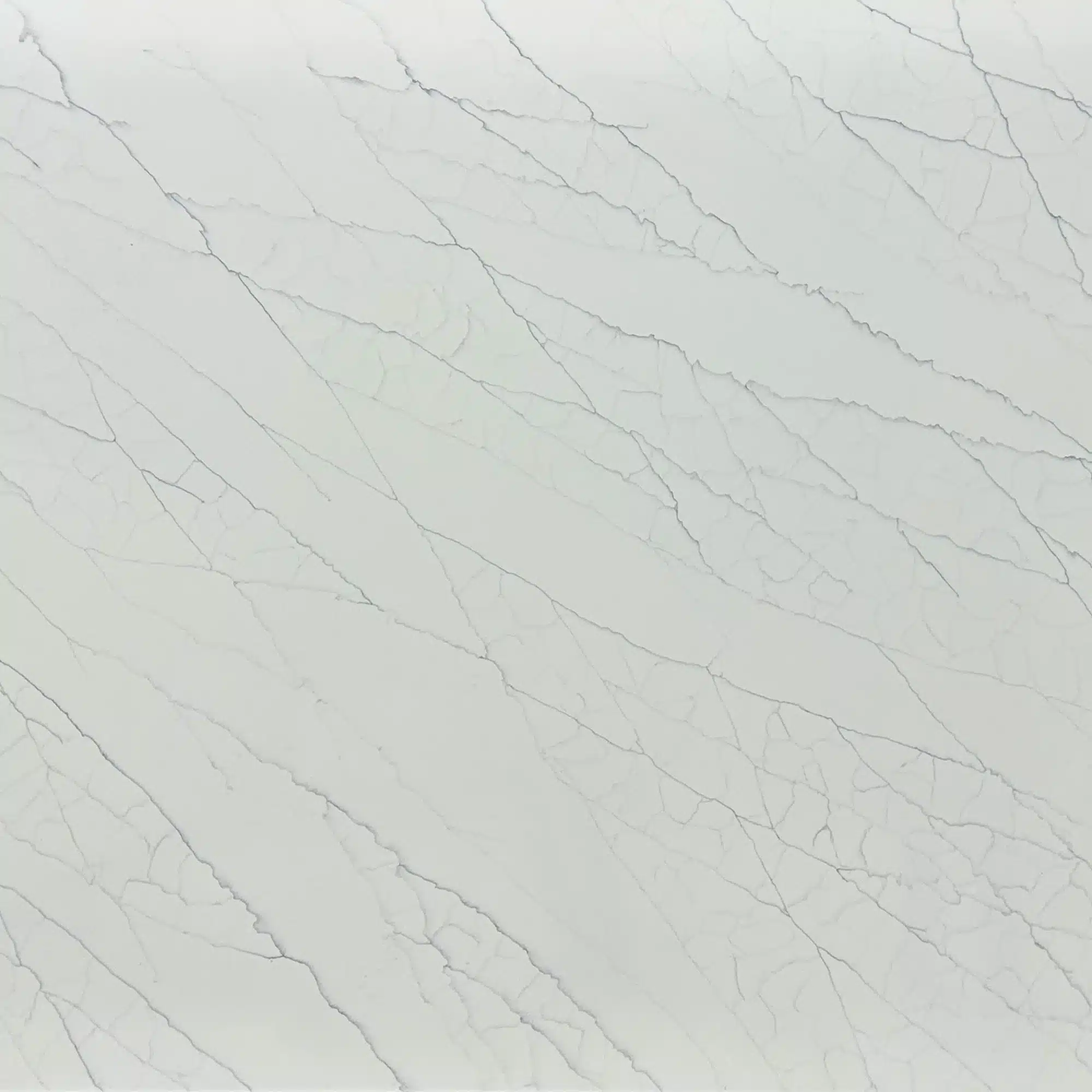
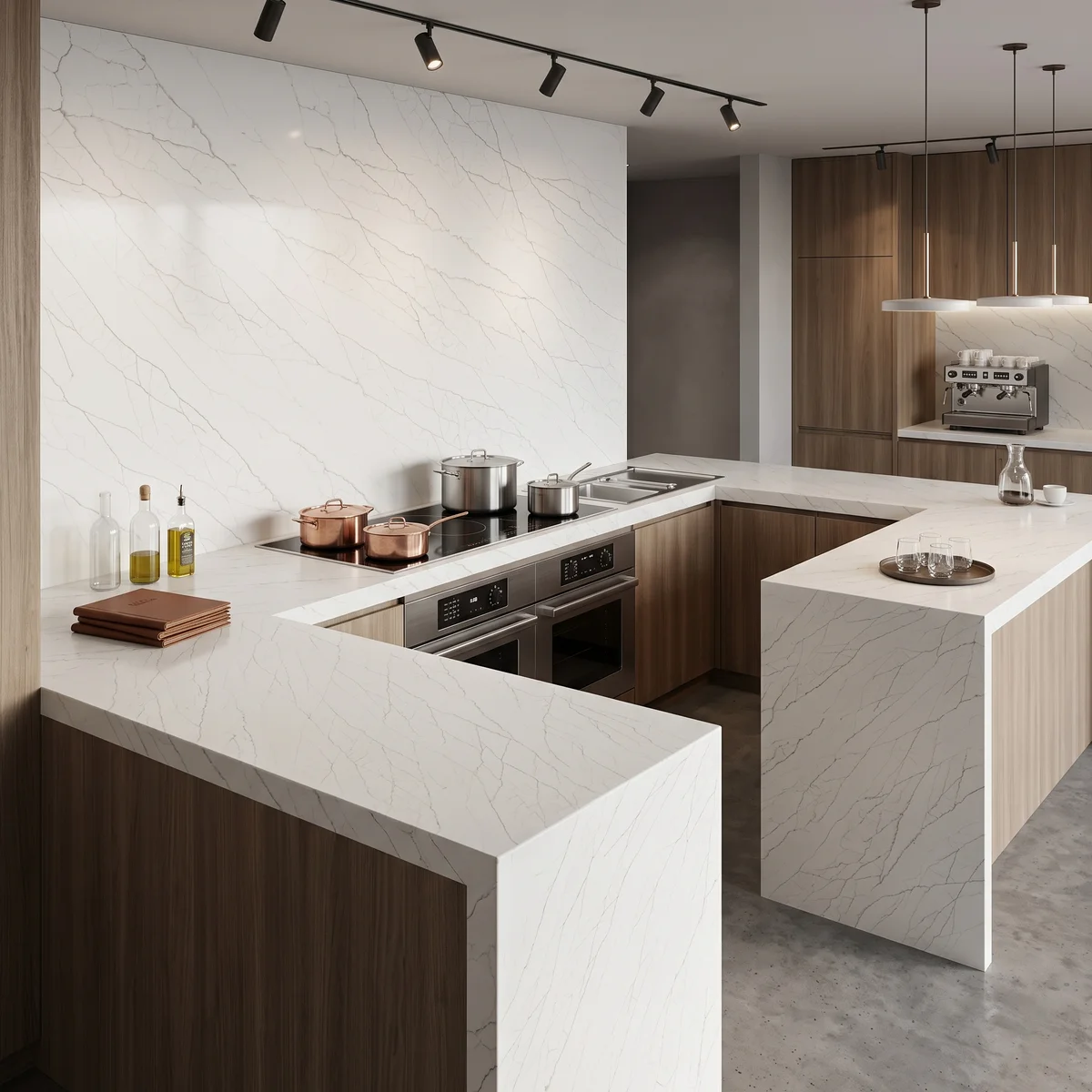
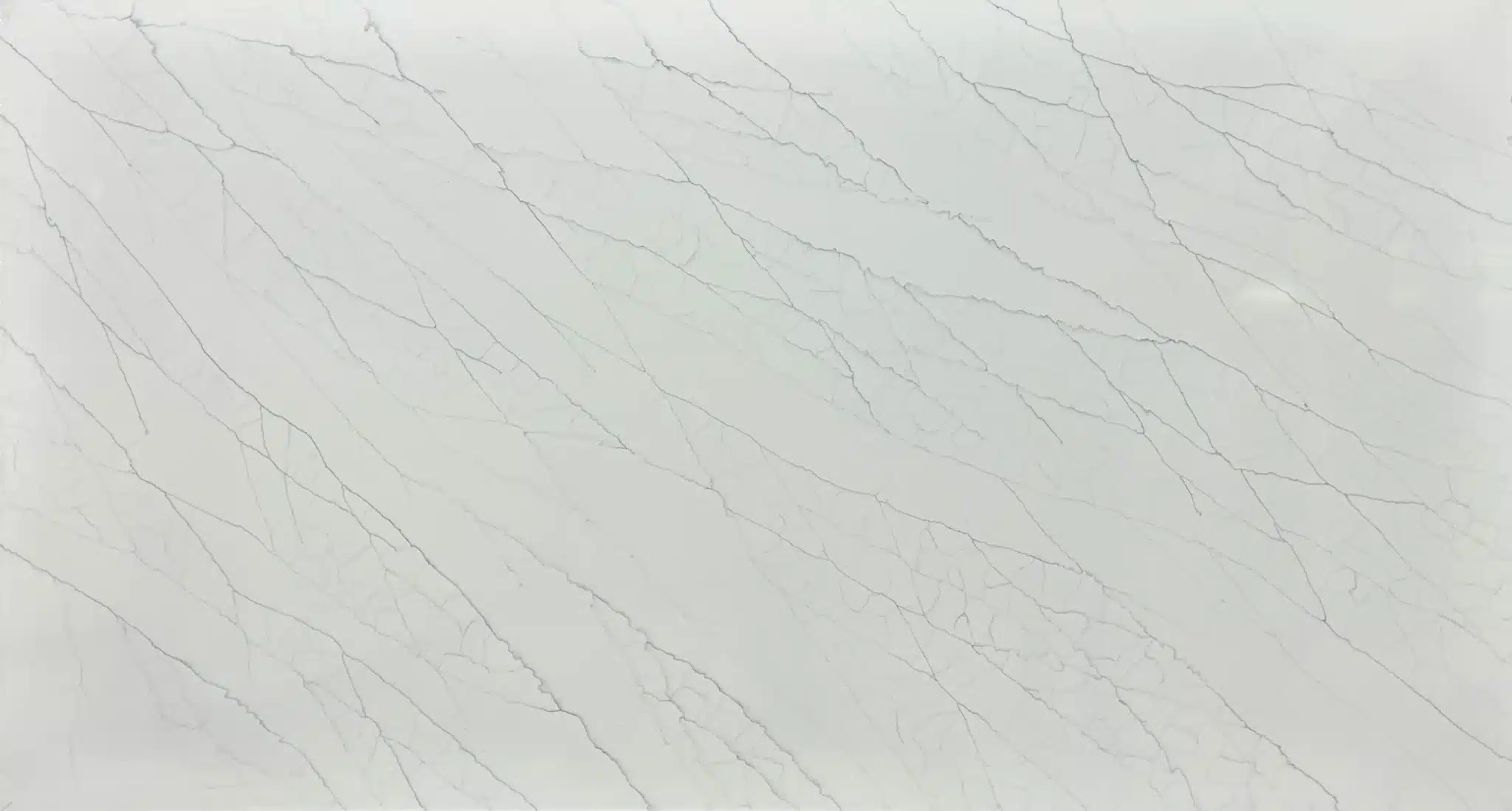
| Primary Color(s) | Bright Cool White |
| Accent Color(s) | Delicate Silver-Blue Vein |
| Craft | Regular |
| Finishes | Polished / Honed / Suede / Leathered |
| Customized Size | 138″ × 79″ / 126″ × 63″ / Customizable |
| Thickness | 20mm/30mm/Customizable |
| Edge Style | Eased polished edge/2+2cm laminated edge/Mitred edge |
| Full Body Quartz | Yes |
| Bookmatch Available | Yes |
| Place of Origin | Thailand |
| Port of Transportation | Thailand |
| Packaging | Foam or carton inside + strong wooden crates with reinforced straps outside and fumigation |
| Delivery time | 15-20 days / Express service is negotiable. |
| MOQ | 10 ㎡ |
| Payment terms | 30%T/T after confirm the order and the 70% T/T by copy of B/L |
| Countertops Residential: Yes Commercial: Yes |
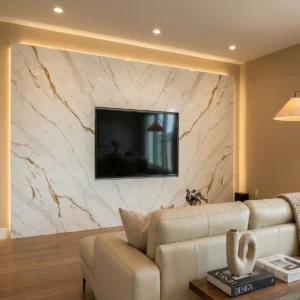
| Wall Residential: Yes Commercial: Yes |
| Flooring Residential: Yes Commercial: Yes |
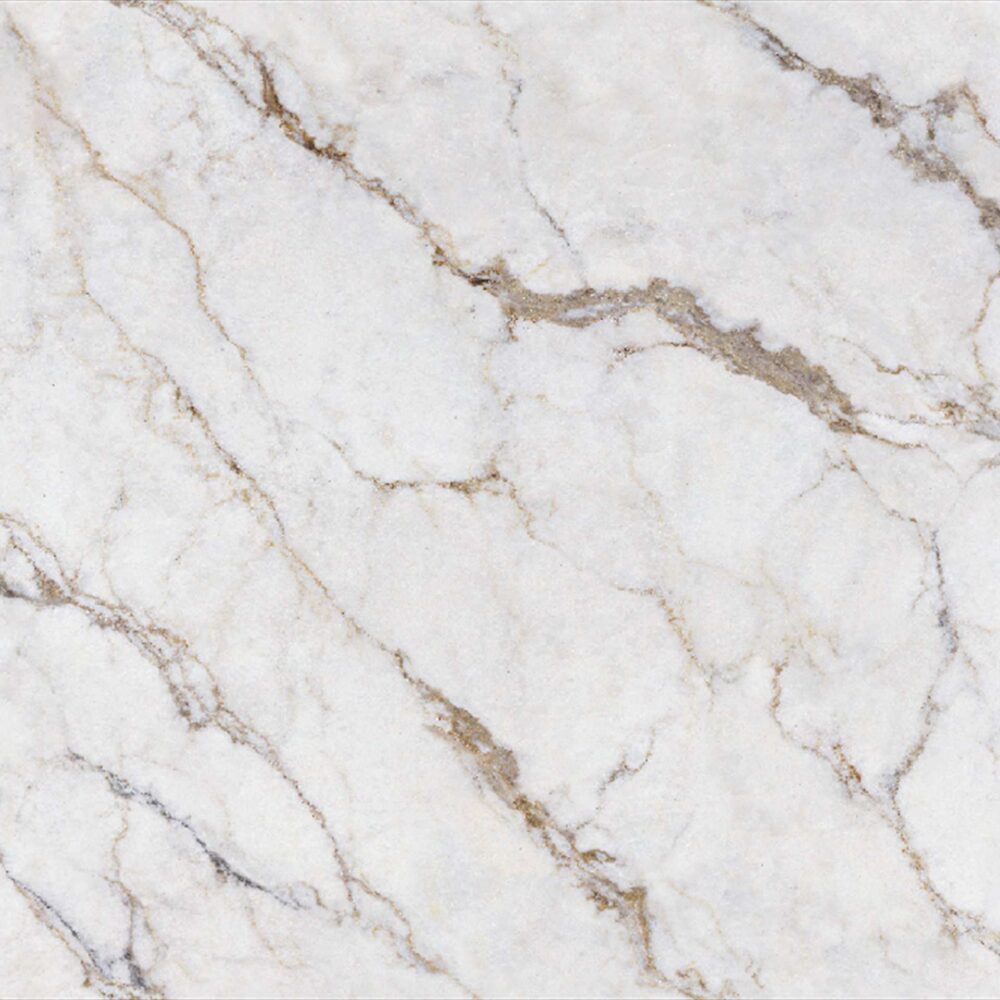
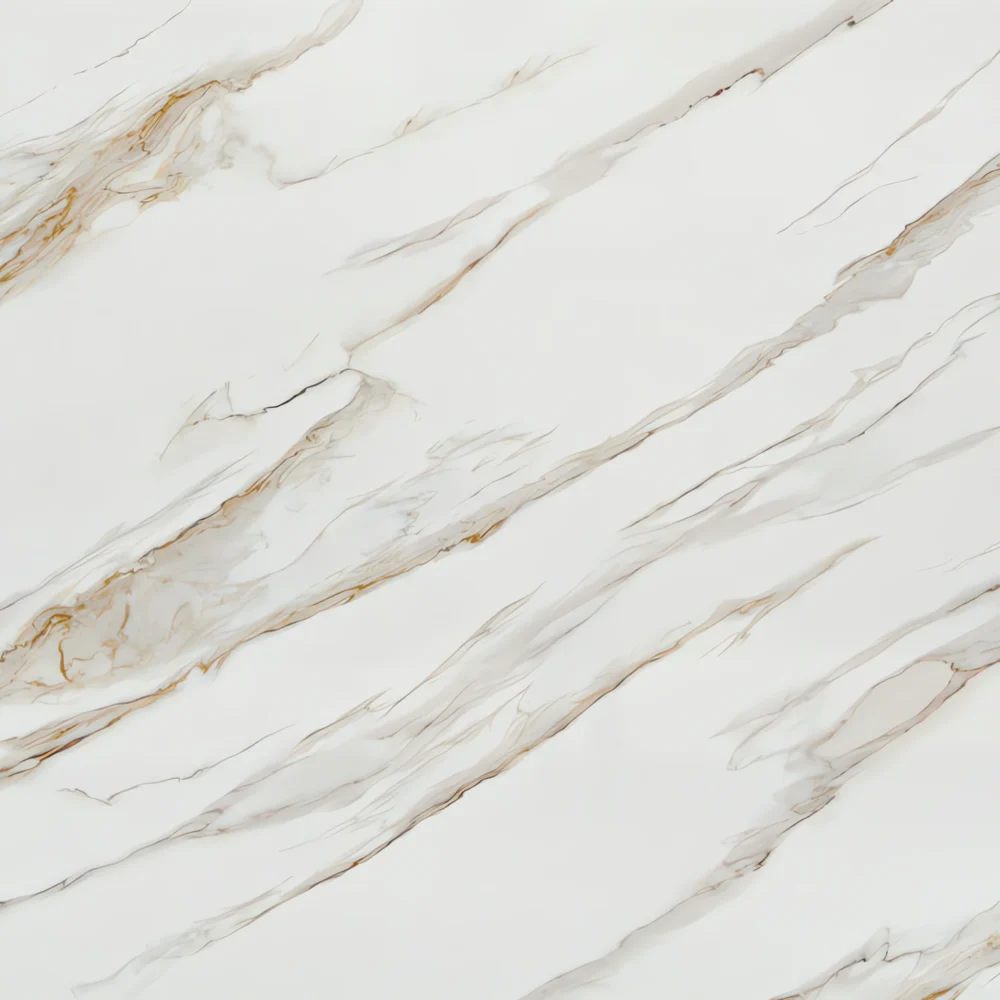
Calacatta quartz isn’t one single color—it’s a style, not a brand. The key is the look: bright white base with bold, dramatic gray or gold-tinged veining that mimics high-end Italian marble like Calacatta Gold. You’ll find variations from clean, minimal veining to full-on showstoppers with thick, swirling patterns. Some versions have subtle silver or blue undertones, while others lean warm with golden flecks. Manufacture like Grand Quartz Tech offer different interpretations—some more realistic, others more stylized. The ‘gold’ in Calacatta Gold quartz often comes from pigments or real metal flakes, so it can range from soft shimmer to flashy sparkle. Always ask for slab samples and check the batch consistency—vein patterns vary wildly. And yes, there’s also Calacatta Laza, Oro, and Venato—all with their own flavor of veins. Bottom line: Calacatta quartz is about drama and elegance, but the exact color? It depends on which manufacturer, pattern, and batch you pick.
The term “high-purity quartz” can refer to two completely different materials, so the answer depends on what you’re asking about.
If you’re referring to high-purity quartz sand (typically 99.99% SiO₂ or higher), it’s an industrial raw material rather than a countertop product. It’s used to manufacture semiconductors, optical glass, laboratory equipment, and solar panels. Depending on its purity, processing, and market conditions, it typically costs around $100–$300 per ton.
If you’re shopping for a kitchen or bathroom countertop, you’re most likely referring to engineered quartz. These surfaces usually contain 90%–95% natural quartz combined with resins and pigments, and installed prices generally range from $70–$120 per square foot, depending on the brand, design, edge profile, and local fabrication costs.
This is where confusion often happens. In the countertop industry, the phrase “high-purity quartz” is largely a marketing term. Since engineered quartz already contains a very high percentage of natural quartz, purity itself is rarely what differentiates one product from another.
Instead of focusing on “purity,” pay attention to factors that have a real impact on performance and appearance, such as manufacturing quality, pattern consistency, color stability, warranty, and the reputation of the manufacturer. Those are the characteristics that determine the long-term value of an engineered quartz countertop.
Your trusted quartz
manufactory since 1989.
Our team is available 24/7.




-1000x1000.webp)