


- Home
- Quartz
- Quartz Slabs
- Light Concrete Quartz Slab GQ-T126 for Wholesale
Light Concrete Quartz Slab GQ-T126 for Wholesale
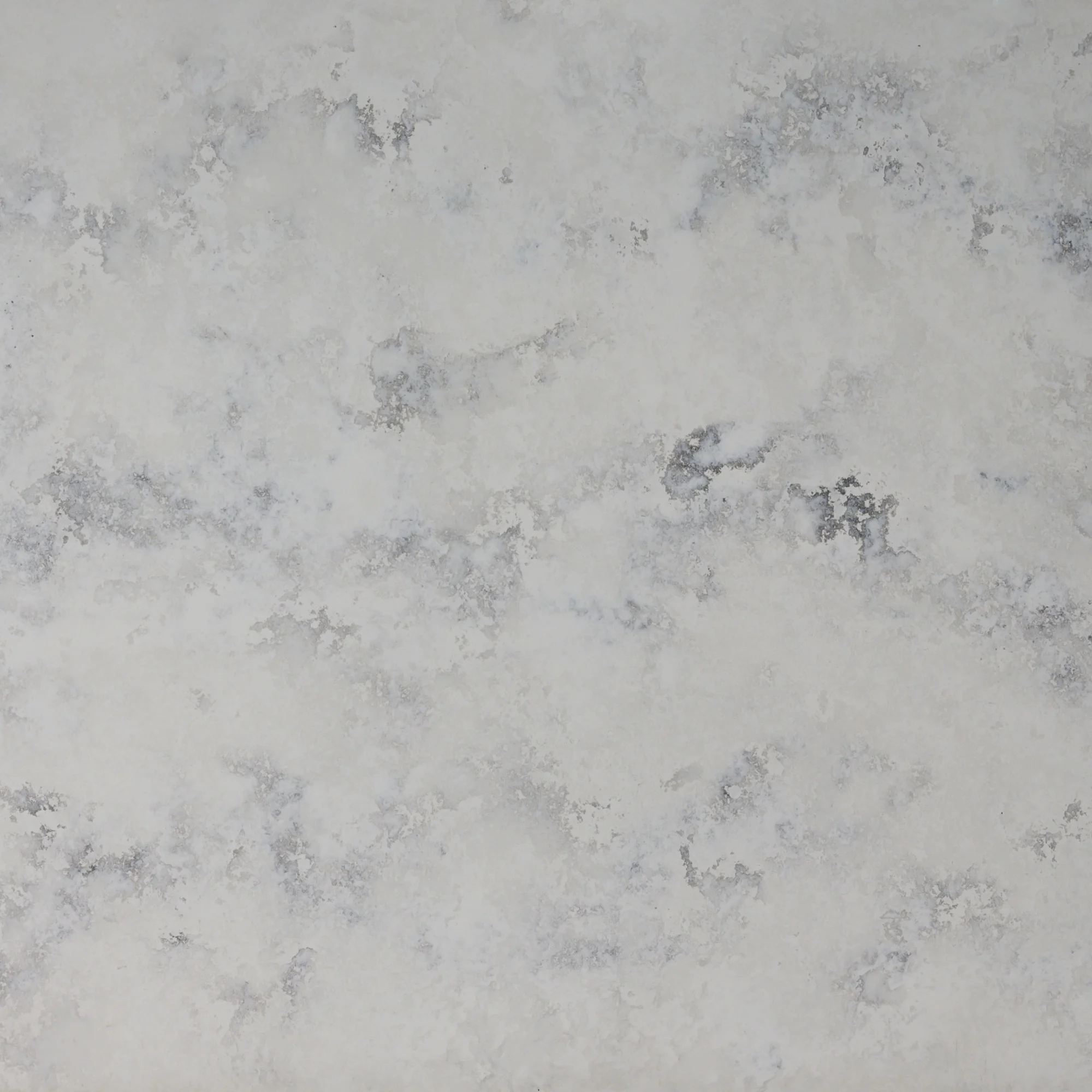
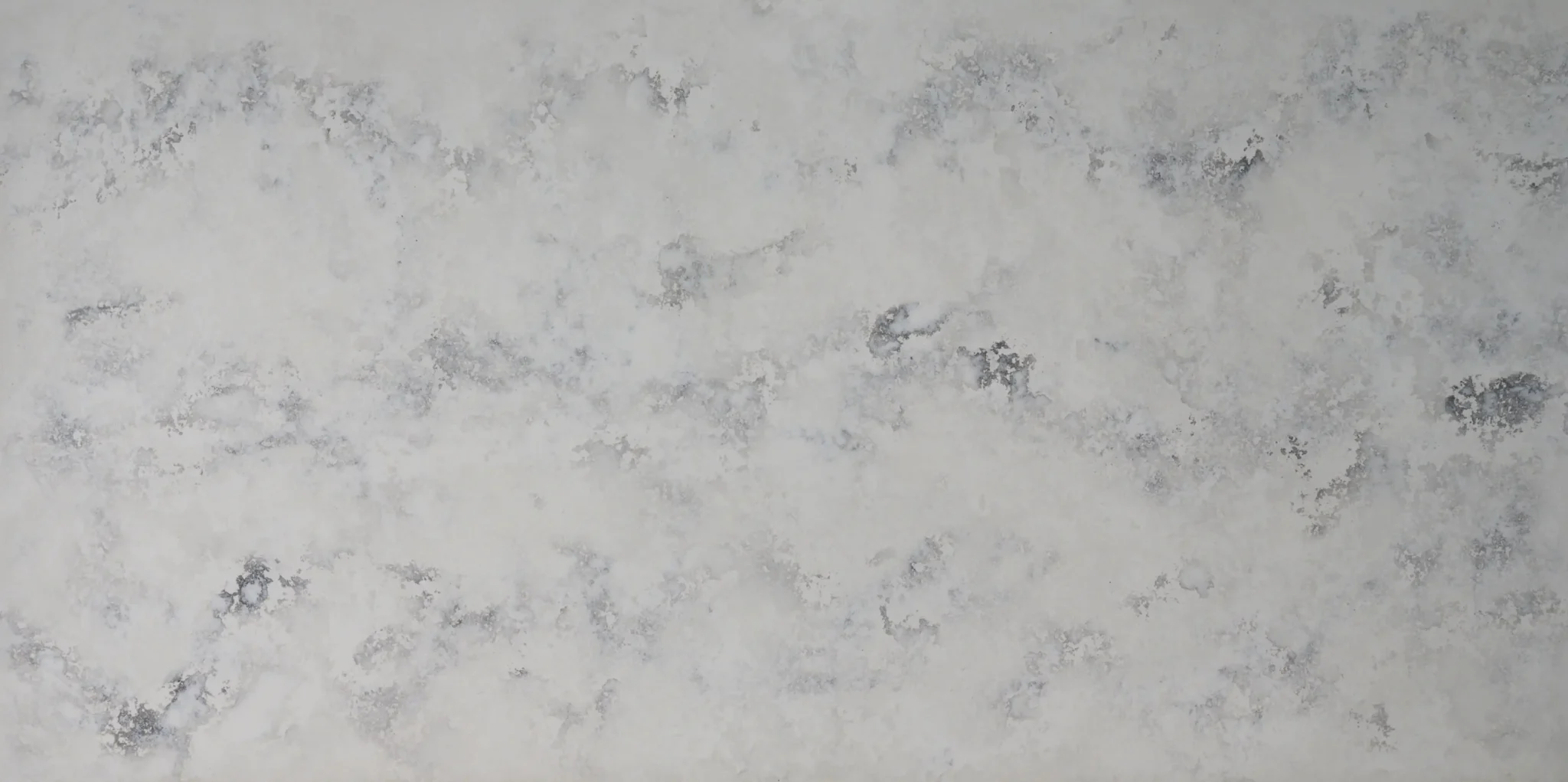
| Primary Color(s) | Cool Light Grey |
| Accent Color(s) | Medium Grey Mottled Patch + Subtle Darker Grey Spot |
| Craft | Regular |
| Finishes | Polished / Honed / Suede / Leathered |
| Customized Size | 138″ × 79″ / 126″ × 63″ / Customizable |
| Thickness | 20mm/30mm/Customizable |
| Edge Style | Eased polished edge/2+2cm laminated edge/Mitred edge |
| Full Body Quartz | Yes |
| Bookmatch Available | Yes |
| Place of Origin | Thailand |
| Port of Transportation | Thailand |
| Packaging | Foam or carton inside + strong wooden crates with reinforced straps outside and fumigation |
| Delivery time | 15-20 days / Express service is negotiable. |
| MOQ | 10 ㎡ |
| Payment terms | 30%T/T after confirm the order and the 70% T/T by copy of B/L |
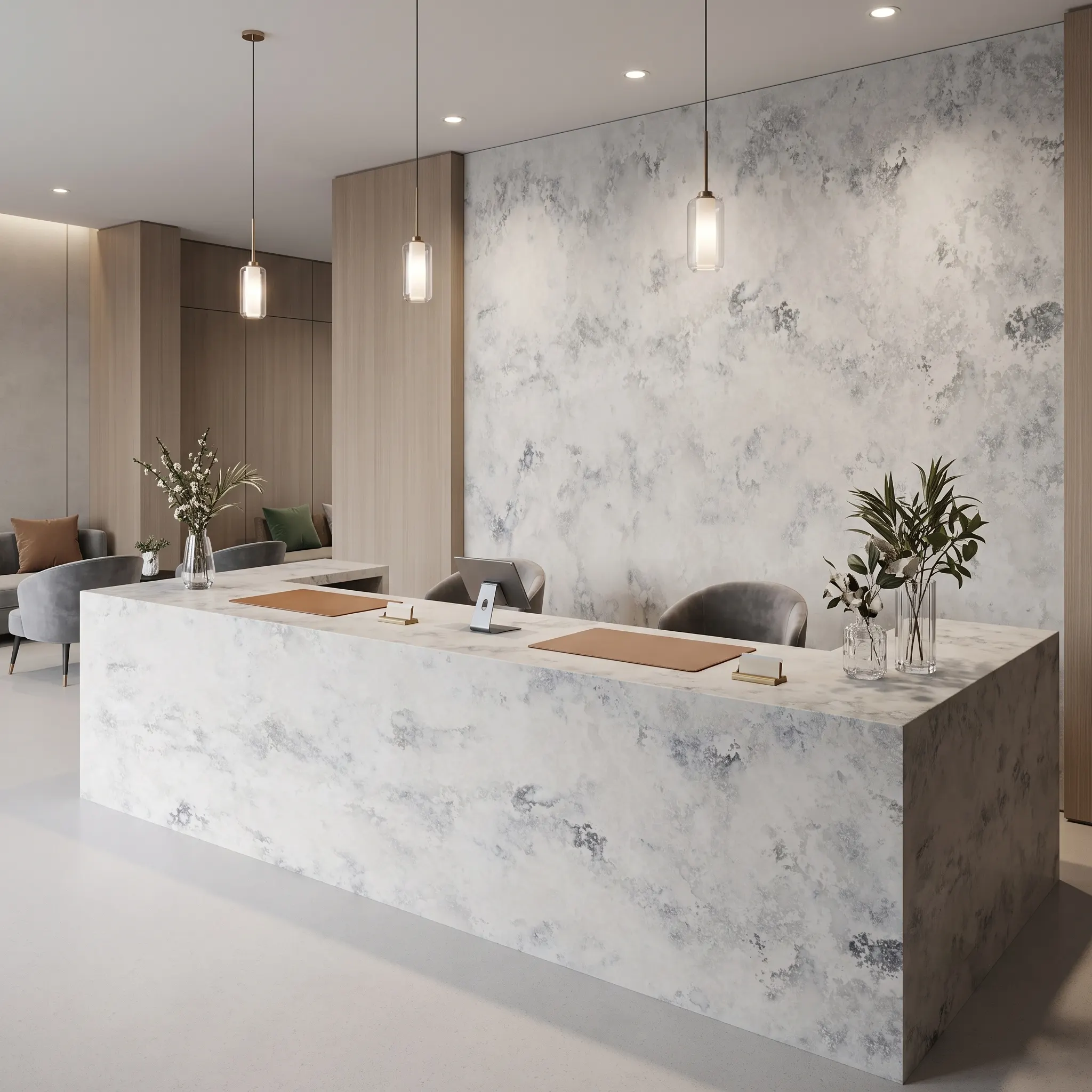
| Countertops Residential: Yes Commercial: Yes |
| Wall Residential: Yes Commercial: Yes |
| Flooring Residential: Yes Commercial: Yes |
Description:
Frequently asked questions
How to Identify Quartz Crystals – Rockhounding and Mineral ?
Most rockhounds will tell you the first thing to check is hardness—quartz rates a 7 on the Mohs scale, so it scratches glass but won’t be scratched by a steel knife.
Look for a glassy luster, typically clear to milky white, though it can be tinted by impurities like iron or manganese.
Natural quartz often has a hexagonal prism shape with a pointed termination.
If you're out in the field, test for cleavage: quartz doesn’t have true cleavage—it breaks with a conchoidal fracture, like glass.
In real-world rockhounding, you’ll often find quartz in veins or quartzite formations, especially in metamorphic or igneous rocks.
A frequent complaint is mistaking quartz for feldspar—feldspar has cleavage and usually a more blocky shape.
For engineered quartz products, the 'crystal' look is printed or embedded, not natural.
Grand Quartz Tech uses full-body printed technology to mimic these natural patterns, but the material itself is resin-bound, not crystalline.
So if you’re looking at a countertop, it’s not a mineral specimen—just a very convincing visual simulation.
Which is more expensive, quartz or onyx?
In real-world kitchens and commercial spaces, onyx usually costs more than engineered quartz.
The price difference comes down to material rarity, mining logistics, and fabrication challenges.
Natural onyx is a soft, translucent stone—often used in backsplashes or decorative elements—while quartz is a manufactured composite that’s stronger and more consistent.
Onyx requires careful handling; it’s prone to scratching, etching, and staining, especially from acidic cleaners.
It also needs sealing and can’t handle heat well.
Most fabricators will tell you that onyx slabs are thinner and more fragile, limiting their use in high-traffic areas.
Engineered quartz, like the slabs produced by Grand Quartz Tech, is more durable and widely available, especially in super jumbo sizes up to 138"x79".
The cost of onyx also includes freight and import duties due to its limited sourcing.
So while quartz may have a higher base price in some lines, onyx typically commands a higher price point due to material scarcity and installation complexity.
Can you use Clorox wipes on Grand Quartz Tech quartz?
A frequent complaint we hear is that people assume all quartz is the same—so if it’s 'non-porous,' anything goes.
But the truth is, even though engineered quartz like Grand Quartz Tech (or any brand) resists stains, Clorox wipes can still cause issues over time.
The alcohol and bleach in these wipes can degrade the surface resin, especially on polished finishes.
Installers usually recommend using a mild dish soap and water or a dedicated quartz cleaner.
In high-traffic commercial spaces, you’ll see more damage from harsh wipes—clouding, dulling, or even micro-scratches.
Some wipes leave residue that attracts dust and smudges.
For daily cleaning, a microfiber cloth with a little vinegar or pH-neutral cleaner works better.
Grand Quartz Tech’s slabs, like the GQ-T126 Cloudburst Concrete Quartz, are designed for durability, but they still respond to aggressive cleaning agents.
Always check the manufacturer’s care guide—what’s safe for one brand isn’t always safe for another.
And never use abrasive pads or scouring powders.
What color quartz is most valuable?
There’s no single 'most valuable' quartz color—it depends on market trends, project scope, and fabrication complexity.
In residential kitchens, white or light gray quartz with subtle veining often sells well because it pairs easily with cabinets and backsplashes.
But in commercial or projects, darker tones like black, charcoal, or deep blue with gold flecks tend to command higher bids due to their perceived richness and rarity.
A frequent complaint from wholesalers is that '' colors come with tighter tolerances in printing and more material waste during fabrication.
For example, a full-body printed slab that mimics Calacatta or Taj Mahal quartzite can be more expensive than solid white due to pattern consistency and visual depth.
Grand Quartz Tech uses advanced printing tech to replicate these looks, especially in their concrete-look lines like Cloudburst Concrete Quartz.
But value isn’t just about color—it’s about slab size, finish, lead time, and consistency across batches.
A large, low-variation slab in a trending shade might be more valuable than a small, busy patterned one.
And in real-world installations, a color that looks great in the showroom can appear too stark under different lighting, so it’s not just about price—it’s about performance and perception.